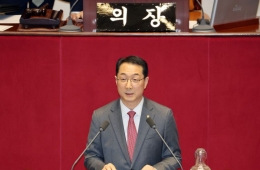
[Reporter’s Notebook] For the National Assembly Audit to Truly Become the Opposition’s Time
![[Reporter’s Notebook] For the National Assembly Audit to Truly Become the Opposition’s Time](http://www.asiae.co.kr/news/img_view.htm?img=2026100609061351027_1791245173.jpg)
The National Assembly's regular session audit, considered the 'highlight' of the session, kicked off today (October 6). The parliamentary audit is a system in which the National Assembly inspects the overall work of the government, and with opposition parties concentrating their efforts to hold the government and the ruling party in check, it is often called "the time for the opposition."
This is why the People Power Party converted its floor countermeasures meeting to a parliamentary audit countermeasures meeting on October 2 and immediately entered audit mode. Notably, this year’s audit is drawing significant attention as it marks the first official audit since the inauguration of the Lee Jaemyung administration in June 2025. The upcoming 23rd National Assembly general election in 2028 has also heightened lawmakers' motivation to be active during this audit period.
However, prospects for the opposition party to mount an easy audit this year do not seem bright. With the current political landscape favoring the ruling party, opposition aides have expressed frustration, saying, "It's difficult to obtain materials from government ministries and agencies even when requested." The opposition party’s attempts to request multiple witnesses in each standing committee have also failed. For example, in the Political Affairs Committee, not a single key witness regarding the highly controversial single-item leveraged Exchange Traded Fund (ETF) was summoned. This has led to concerns that the audit may be as lackluster as the recent perfunctory confirmation hearings.
Still, the opposition cannot simply blame external factors. In recent times, the People Power Party has benefited from the missteps of the administration and the ruling party. Issues such as the leadership vacuum surrounding the party leadership and internal factional discord have existed beneath the surface, yet the party has managed to maintain its presence by leveraging issues like the withdrawal of indictments, real estate controversies, and North Korea’s planting of landmines—all of which could fuel further confrontation. This is why many see the rise in support for the People Power Party largely as a result of political side effects, rather than achievements earned through the party’s own capabilities. The fall of former Justice Minister nominee Kim Seungwon, often criticized by the opposition, is also attributed largely to the actions of Han Donghoon, an independent lawmaker outside of the party. In other words, this was not a political accomplishment achieved solely through the People Power Party’s own strength.
This year’s parliamentary audit serves as a litmus test for the opposition to prove its claim of being a "competent conservative" force. The People Power Party leadership has declared, "We will transform this audit into one that fights for the people," and "this parliamentary audit will restore truth, livelihood, and hope." For these promises to be sincere, the party must move beyond political gains reaped from administration and ruling party mistakes and instead deliver concrete achievements.
Hot Picks Today
 "I Came to Korea and Easily Made 3.3 Million Won a Month"... The "Easy Gig" Everyone's Talking About Among International Students Turns Out to Be...
- More Than 900 Schools Shut One After Another... Japan in Turmoil Over 'Infectious Disease' Outbreak
- North Korean Landmine Incident... Angry Male Support for Ruling Party Falls 10.5 Points [Asia Business Daily-Realmeter Poll]
- "Hand in Your Resignation and Get a Year's Salary"... This Country Pushes Early Retirement for Civil Servants
- "Oh Eunyoung's Consultation Fee: Millions of Won? Not Expensive"... Yonsei Professor's Sharp Rebuke over "300,000-Won Lecture Fee"
Rather than seeking the spotlight through provocative statements or political strife, the focus should be on pinpointing weaknesses in government policy through precise, fact- and data-based scrutiny. Furthermore, by offering alternatives for institutional improvement, such as follow-up legislation, the parliamentary audit will yield results that meet public expectations.
© The Asia Business Daily. All rights reserved. Unauthorized AI training and use prohibited.