[New York Stock Exchange] Nvidia Hits Record High for Second Day... Indices Close Higher Despite Rate Concerns (Comprehensive)
Indices Rise on AI and Big Tech Buying
Nvidia’s Market Cap Nears $6 Trillion
U.S. 30-Year Yield Hits 5.664%
WTI Falls Below $90
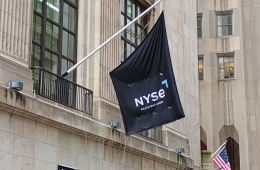
AI-related stocks showed strong performance, and despite concerns about the burden from long-term U.S. Treasury yields, all three major New York stock indexes ended higher on October 5 (local time). Nvidia hit a record high for a second consecutive session and is approaching a market capitalization of 6 trillion dollars.
On the New York Stock Exchange, the Dow Jones Industrial Average closed at 51,267.90, up 90.94 points (0.18%) from the previous session. The large-cap S&P 500 index rose 51.23 points (0.66%) to 7,773.95, and the tech-heavy Nasdaq Composite jumped 286.44 points (1.05%) to close at 27,477.31.

On this day, strong buying in large-cap AI-related tech stocks lifted all three main indexes. Investor sentiment was more strongly driven by expectations for corporate earnings and AI investment than by concerns over high interest rates or energy costs.
By stock, SpaceX gained 7.63%, Meta 1.90%, Microsoft (MS) 1.48%, Nvidia 2.12%, and Tesla 2.20%, all posting notable increases.
In particular, Nvidia rose 2.1% from the previous session to close at $238.90. Nvidia broke its all-time high for a second straight day, with its market capitalization expanding to 5.76 trillion dollars.
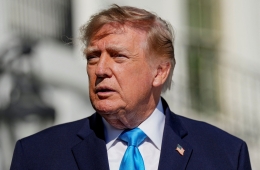
Nvidia’s stock price has gained momentum since it announced on September 28 an increase in its share buyback authorization to a record-high 150 billion dollars (approximately 204 trillion won). The day after the buyback announcement, U.S. President Donald Trump held a meeting with Jensen Huang, CEO of Nvidia, and other AI company leaders, making Nvidia one of the most closely watched companies in the stock market recently.
Ben Emons, Managing Director at Highline Asset Management, commented, "Share buybacks are not simply a return to shareholders, but a capital allocation event that demonstrates confidence in long-term AI demand."
Jay Hatfield, Founder and CEO of Infrastructure Capital Advisors, told CNBC that robust profit growth among tech companies and strong AI computing demand are offsetting the impact of rising interest rates. He explained that even as financing costs rise, the overwhelming demand for AI infrastructure means the shock to related companies remains relatively limited.
Ulrike Hoffmann-Burchardi, Chief Investment Officer (CIO) at UBS, also noted that based on solid growth and earnings, there is potential for further stock price increases over the next 6 to 12 months, although she forecasted potential volatility along the way.

In the bond market that day, long-term Treasury yields continued to climb. According to CNBC, the U.S. 10-year Treasury yield rose more than 3 basis points to 5.311%, and the 30-year yield increased over 3 basis points to 5.664%. Concerns that the Federal Reserve may maintain high interest rates for an extended period due to inflation served as upward pressure on yields.
The day's released economic data showed that, while the service sector continued to expand, costs were also on the rise. The U.S. Institute for Supply Management’s (ISM) Services Purchasing Managers’ Index (PMI) for September was 54.9, down from 55.4 the previous month but broadly in line with market expectations of 55. A PMI above 50 indicates expansion, while below 50 indicates contraction.
The price index rose from 72.6 in the previous month to 74.0, reaching the highest point since July 2022. The employment index increased from 47.8 to 50.1, returning to an expansion phase. While the growth rate has somewhat slowed, inflationary pressures remain significant.
International oil prices declined. Brent crude futures fell 1.89% from the previous day to $100.32 per barrel, and West Texas Intermediate (WTI) futures dropped 1.8% to $89.43 per barrel. Despite the drop, high energy costs remain a burden for the market.
According to Bloomberg, U.S. President Donald Trump is preparing measures to ease restrictions on the use of duty-free diesel fuel in order to lower diesel price pressures.
Hot Picks Today
!["Didn't Want to Buy a Home"... Seoul Apartment Buyers Flocked to Mid- to Low-Priced Segment After Tax Reform Plan [Real Estate AtoZ]](https://cwcontent.asiae.co.kr/asiaresize/93/2026100516014950577_1791183709.jpg) "Didn't Want to Buy a Home"... Seoul Apartment Buyers Flocked to Mid- to Low-Priced Segment After Tax Reform Plan [Real Estate AtoZ]
"Didn't Want to Buy a Home"... Seoul Apartment Buyers Flocked to Mid- to Low-Priced Segment After Tax Reform Plan [Real Estate AtoZ]
- Flight Attendant Kneeled to Apologize... China Eastern Airlines Bans Passenger Who Continued to Complain
- An Apartment Once Worth 400 Million Won Nears 1 Billion... "Still Worth It" as 1990s-Born Pangyo Workers Flock to Gyeonggi Gwangju [Report]
- "Huge Sum in Pension Account He Never Knew About... What Happened to Chinese Man in His 70s Who Collected Scrap for 21 Years?"
- Musk's Partner Reveals Sudden Breakup Just a Week After Saying "I Love You"
Investors are watching for the release of the Federal Reserve’s Federal Open Market Committee (FOMC) minutes for September, scheduled to be made public on October 7. Last week’s weaker-than-expected jobs data eased some concerns about an additional rate hike this month; the minutes are expected to provide insight into the context behind last month’s 0.25 percentage point increase and the committee members’ views on further tightening.
© The Asia Business Daily. All rights reserved. Unauthorized AI training and use prohibited.