[Nagoya AG] Fewest Gold Medals in 44 Years... 'Strong Performances in Team Sports'
The Gap with Host Nation Japan Widens Further
Gold Medals in Basketball, Football, Baseball, and Handball
China Wins Twelfth Consecutive Title, Zhang Zhanshuo Secures Seven Golds
Asia’s top three were maintained. Despite strong performances, there remains a sense of disappointment.
The 2026 Aichi-Nagoya Asian Games, which began on September 19, concluded on October 4, 2026. Korea took home 39 gold, 43 silver, and 68 bronze medals. This allowed Korea to defend its 3rd place ranking, just as in the previous Games, but the goal of winning more than 40 gold medals was not met. In terms of gold medals, this was Korea’s lowest performance since the 1982 New Delhi Games, where they earned 28 gold, 28 silver, and 37 bronze medals. China claimed first place with 169 gold, 89 silver, and 83 bronze medals. Japan was second with 83 gold, 95 silver, and 91 bronze medals.
The Korean Sports Council had set a target of winning between 40 and 45 gold medals at these Games. Only fencing met its target. eSports also achieved its mission of “two gold medals.” For the first time in its history, the women’s recurve archery team failed to capture any gold medals. Table tennis also underperformed, finishing without any silver medals. Several events, including athletics, sepak takraw, wushu, and jiu-jitsu, did not produce any gold medals for Korea.

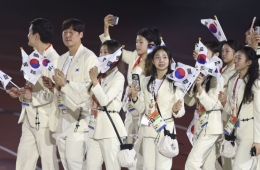
The Korean delegation secured the third place at the 2026 Aichi-Nagoya Asian Games. The team members entered the closing ceremony waving the Taegeukgi flag at the Mizuho Park Athletics Stadium in Nagoya, Japan, on the 4th. Nagoya=Yonhap News Agency
View original imageTeam sports performed well. Both the men’s and women’s basketball teams became Asian champions, while the baseball and men’s football teams claimed their fifth and fourth consecutive gold medals, respectively. The women’s handball team also reclaimed the top position for the first time in eight years.
China continued to dominate the Asian Games. Zhang Zhanshuo became the first athlete in history to win seven gold medals in swimming. The Chinese team swept 30 gold medals in swimming events alone, adding 17 in athletics, 16 in shooting, 12 in wushu, and 10 in diving, securing the overall victory for the twelfth consecutive Games.
Japan, for the first time in the history of the Summer Asian Games, surpassed 80 gold medals. They steadily accumulated gold in athletics (10), judo (9), cycling (8), and swimming and wrestling (7 each), widening the gap with Korea even further.
North Korea sent a delegation of 107 athletes, fewer than the 185 that participated in the previous Hangzhou Games, and finished 12th overall, winning seven gold, 13 silver, and nine bronze medals. All seven gold medals for North Korea came from weightlifting.

Yoo Seungmin, President of the Korean Sport & Olympic Committee, is speaking at the Korean delegation's closing press conference held at the Korea House for the 2026 Aichi-Nagoya Asian Games in Nagoya, Japan, on the 4th. Nagoya=Yonhap News Agency
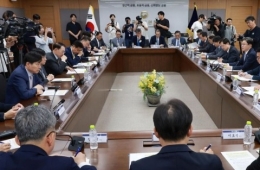
View original imageThe operation of the Games was disappointing. The event exposed fundamental problems in all aspects of operation, including accommodations, transportation, training, and competition environments. National delegations voiced discomfort and hardship throughout the Games, but there were no significant signs of improvement until the very end. Yoo Seung-min, President of the Korean Sports Council, criticized, “In all my years participating in international competitions as both an athlete and official, this is the first time I’ve seen an event with so many problems,” adding, “If I were to grade it ABC-style, it would be a failing F.”
Hot Picks Today
 "I Ate at Home to Save Money, But My Account Balance Was Still a Shock"
- Suddenly Called Out During Class, Awarded $100,000 as Students Cheer in the Gym
- "Bought It Cheaper in Japan Than Korea"... Improper Use Leads to Vomiting and Abdominal Pain, Official Warning Issued
- "Well, It's for Koreans Anyway"... Laughing While Boiling a Week-Old Fish
- "Uncle Will Buy Them All for Wonie"... Men in Their 30s Sweep Up 600,000 'RESCENE Bread'
The many issues that surfaced at this edition of the Games have led to calls for change in how the Asian Games are managed and positioned. The Olympic Council of Asia (OCA) is already searching for drastic measures to restore the Games’ prestige, reputation, popularity, and competitiveness. There is speculation that the 2030 Doha Asian Games, originally scheduled for that year in Qatar, could even be postponed to 2031.
© The Asia Business Daily. All rights reserved. Unauthorized AI training and use prohibited.