"Oh Se-hoon Doesn't Know"… The Weight of the Recording Ahead of the Appellate Verdict
First Trial Recognized Proxy Payment for 5 Polls (21 Million Won)
Conflicting Interpretations of the Same Recording—Credibility at Issue
Only 3 Out of 35 Recordings Submitted—Special Prosecutor Points to Selectivity
Was Testimony Abou
"Oh Sehoon doesn't know."
This statement was found in a recorded phone call with Myung Taekyun, submitted as evidence in the appeals trial over Seoul Mayor Oh Sehoon's alleged proxy payment for opinion poll expenses. Kim Hanjung, a businessman on the other end of the call, also said, "I worked because I wanted to help this person," and added, "It's not that anyone there wanted it, nor did I do it for them--I just did it myself." The mayor's side presented this as evidence that there was no request for the poll or its payment. Myung, however, countered that he was referring not to the poll itself, but to an opposition candidate unification strategy as something Oh was unaware of. Essentially, both sides are using the same conversation to explain different parts of the case.
According to the legal community on October 3, the 7th Criminal Division of the Seoul High Court (Chief Judge Koo Hoeguen) concluded arguments the previous day in the appeals trial of Mayor Oh, former Seoul Deputy Mayor for Political Affairs Kang Chulwon, and Kim, in their case of alleged violation of the Political Funds Act. The special prosecutor sought 1 year and 6 months in prison for Mayor Oh and a forfeiture order of 33 million won. Sentencing is scheduled for the 23rd. In the first trial, Mayor Oh received a fine of 10 million won. In the appeal, central issues included whether Myung's testimony in court and the contemporaneous phone recordings could coexist, and whether, with the newly submitted audio files, the guilty verdict from the first trial could still stand.

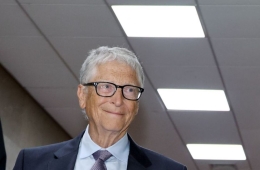
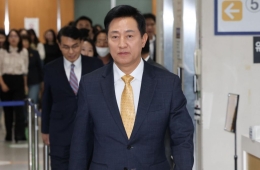
Seoul Mayor Oh Se-hoon is attending the appeal trial verdict hearing of the Myeong Taegyun polling scandal case held at the Seoul High Court in Seocho-gu, Seoul, on the 2nd. Photo by Yonhap News.
View original imageThe First Trial Focused on the Timing of the Polls, Payments, and Results Reporting
The crux of the charges is whether Mayor Oh commissioned Myung to conduct public opinion polls and then had Kim pay for them on his behalf. The special prosecutor claimed that ahead of the 2021 Seoul mayoral by-election, Mayor Oh requested the survey, and that Kang, then chief of staff for Oh's campaign, was involved in the survey process, including exchanging questionnaires. The view was that the 33 million won paid by Kim was to cover costs that should have been borne by Mayor Oh.
During the first trial's closing argument, the special prosecutor argued, "Having the cost of opinion polls closely tied to political activity paid through a third party, outside of legal procedures, undermines the legislative intent to ensure transparency of political funds." Oh's side insisted the case was a result of Myung's fraud and extortion, and denied both the commissioning of the poll and the payment request.
In the first trial, the court found that of the ten polls included in the charges, five involved requests and third-party payments. Specifically, it cited the first survey on January 22, 2021, the second to fourth polls, and the sixth poll on February 18. The verdict was based on the timing of the surveys and Kim's corresponding payments, as well as evidence showing that Kang and other members of Oh's team regularly received results before they were released publicly. The court recognized 21 million won out of the charged amount as proven.
However, not all of Myung's testimony was accepted. The court found some exaggeration in statements such as Oh calling while crying, or the promise of the presidency of SH Corporation. But parts of the testimony that matched objective evidence—such as messages, texts, and call records—were deemed credible. The claim by Oh's side that he had no motive to ask Myung for a survey was not accepted. Given the political circumstances at the time, and Oh's relationship with former People Power Party interim leader Kim Jongin, the court found Oh had motives to commission the polls to demonstrate his competitiveness and build a connection with Kim.
The other polls yielded a different conclusion. In four polls, the court did not acknowledge a request from Mayor Oh. For the final, tenth survey conducted on February 28, the court recognized the request but not a third-party payment. Thus, the court judged the request and payment matters separately. In the appeals trial, it now must be proven not only that Kim paid the money, but also that the funds covered surveys requested by Oh, and that Oh was involved in the proxy payment.

Political broker Myung Taekyun is appearing as a witness at the second trial continuation hearing for Seoul Mayor Oh Se-hoon's violation of the Political Funds Act held at the Seoul High Court in Seocho-gu, Seoul. Photo by Yonhap News
View original image"Oh Sehoon Doesn't Know"... Can This Coexist With Testimony of Requests and Payments?
During the closing hearing, Oh's team insisted, "It is clear there was no request for the poll or any third-party payment." They argued that Myung's testimony in court about how the request and payment transpired did not match the contents of his conversation with Kim, which indicated that it happened without any prompting from Oh.
The evidence presented by Oh's team was the recorded call between Myung and Kim, made public at the appeals hearing on the 16th of last month. In it, Myung says, "Anyway, Oh Sehoon doesn't know, he isn't aware. But don't worry. I'll take care of it." Kim likewise says he acted of his own accord, because he wanted to help, not because Oh or his circle had requested it. In the same call, Myung notes that he wasn't introduced to Kim via Oh.
This recording contradicted Myung's prior courtroom testimony. At an appeals hearing on August 28, when the court asked if he decided to have Kim cover the survey costs after hearing from Oh that a poll was needed, Myung answered yes. During the investigation, he also testified that Oh introduced Kim as the person who would pay the expenses. If the conversation in the recording refers to the polls at issue in the indictment and their payments, its content could undermine the credibility of Myung's testimony tying request and payment together.
However, Myung argued that the context of the call was different. In a written statement to the court, he claimed, "The call with Kim Hanjung concerned the opposition candidate unification strategy between People Power Party's Oh Sehoon and People's Party's Ahn Cheolsoo." According to Myung, what Oh was unaware of was not the opinion poll itself, but Myung's own unification strategy and the details of its implementation.
Myung further pointed to the timing of the call. The ten polls listed in the indictment were conducted in January and February 2021. The recordings were of calls made on March 6 and 13, during which Oh—now the official People Power Party candidate—was pursuing unification talks with Ahn Cheolsoo. Myung argued that after the party primary had ended, he had no reason to discuss primary polls anymore.
The defense also presented the contents of a phone conversation between Myung and Kim on March 20, 2021, during the final argument. Myung said, "What am I supposed to do if Oh Sehoon refuses to listen to me?" and criticized Oh's conduct, saying this was why he did not call him. The defense emphasized that this was a natural conversation before any investigation or trial had begun. They cited Myung's strong negative attitude in this call as grounds to question his claim that he had ever been asked by Oh to arrange a poll.
In contrast, the special prosecutor questioned the circumstances under which the audio files were submitted, regardless of their content. At the hearing, the prosecutor pointed out that Kim's phone contained 35 recordings, but only three were submitted, and not the ones covering the period when the proxy payments allegedly happened.
Previously, on the 16th of last month, the court had accepted three audio files as impeachment evidence to challenge Myung's credibility. The judge is expected to examine the broader context around each call to determine what activities the two men were discussing. A key question is whether the March 6 and 13 calls supposed to revisit the polls and the payments previously made, or if they relate to a separate activity related to the opposition merging campaign. The court will consider whether Myung's explanation can also account for Kim's claim to have acted alone and the circumstances of his introduction. For the March 20 conversation, the issue will be whether the antagonism reflects a lack of prior arrangements, or a fallout after business relations soured.

Counterargument: The Poll Had Already Begun—Sequence of Testimony and Records
From the first trial, Oh's team challenged Myung's testimony by comparing it with existing records. At a hearing on April 3, they raised the issue of when the first poll began. Forensic evidence showed the poll started at around 2:00 p.m. on January 22, 2021, while Myung claimed he received the request call after 3:30 p.m. The defense pressed whether a request made after the poll had already started could serve as evidence.
The defense also argued that if Oh had truly requested the survey, there should be records of consultations about election strategy or questionnaire design, but none existed. Myung responded by saying he had explained everything by phone. Determining whether there were any discussions prior to the call in question, and whether that call was the initial request or a follow-up, may change the conclusion. Both the existence of the call and the content described in the testimony must be compared in tandem.
Another point of dispute was whether officials at the Future Korea Research Institute directly confirmed Oh's commissioning of the survey, or whether they only heard about it from Myung. At the initial hearing, Kang Hyekyung testified that she had heard from Myung that Oh wanted a poll that would be favorable to him. But at a subsequent hearing, she said she did not recall hearing about the request or payment directly from Oh or Kim. Former director Kim Taeyeol also testified that he had heard from Myung that Oh had asked for help.
The testimony from Kang and Kim about their direct involvement in survey and payment work serves to confirm that polls were conducted and money was paid. However, whether hearing about the request only from Myung suffices to confirm that Oh actually commissioned the polls is a separate legal issue. If Myung was the source of the explanation, then several people testifying to the same effect does not increase the independent weight of the evidence. In the appeals trial, it seems likely the court will work to distinguish between parts where Myung's credibility is shaken by new audio, and facts that can be confirmed even without relying on his testimony.

Former People Power Party emergency committee chairman Kim Jongin is appearing as a witness at the Seoul High Court in Seocho-gu for the continuation of the second trial regarding the alleged public opinion manipulation case involving Seoul mayor Oh Sehoon and Myeong Taekyun. Photo by Yonhap News
View original imageKim Jongin: "I Did Not Request It... I Don't Trust What Myung Taekyun Says Either"
From the first trial, Oh's team claimed the poll was actually commissioned by former interim leader Kim Jongin. However, on the 11th of last month, Kim appeared in court as a witness and stated he had never requested Myung to conduct a poll for the Seoul mayoral by-election. Kim went on to say, "He is someone who makes things up to inflate his own importance," and "I've never trusted what that person (Myung) said." Thus, while Kim denied ever requesting a poll, his skepticism toward Myung's testimony bolstered Oh's team's challenge to its credibility.
Nevertheless, just because Kim denied commissioning the survey does not automatically prove that Oh did. Nor does Myung's exaggeration in parts of his testimony justify discarding all statements on the request and the payments. In the first trial, the court accepted those parts of the testimony that matched existing records. The appeals court must now weigh whether, in light of the new audio recordings, each poll's commissioning and payment can be proven beyond reasonable doubt. This reflects the standard set forth in Article 307(2) of the Criminal Procedure Act.
Hot Picks Today
 Three Days After Blame Game Over Landmine Blast... North Korea Launches Ballistic Missile Into East Sea (Comprehensive)
The verdict will have a direct impact on Mayor Oh's political career. If he is finally convicted of violating political funding laws and given a fine of 1 million won or more, he will be removed from office and barred from holding public office for five years. The first trial imposed a fine of 10 million won, exceeding this threshold. However, Oh will not lose his mayoral position immediately upon the appeals verdict on the 23rd. The loss of public office only comes once the conviction becomes final.
© The Asia Business Daily. All rights reserved. Unauthorized AI training and use prohibited.