Lee: "Civil Complaint Resolution Allowance Worth Considering... Civil Petitions Are a Treasure Trove for National Policy"
Attendance at the Civil Complaint Innovation Case Reporting Session
"Minimizing Chronic Civil Complaints Is One of the Government's Top Challenges"
"Whether It's a Hundred People Beating Clappers or a Single Email, Treat Them the Same"
"Civil Complaint Officials Are Like Doctors Relieving Citizens' Pain—Strengthening Workforce, Compensation, and Recognition"
On October 2, President Lee Jae-myung suggested considering the creation of measures such as a "civil complaint resolution allowance" to support frontline civil complaint officials, calling for an expansion in personnel and improvements in the treatment and recognition for those handling civil affairs. His core message was that persistent and repetitive civil petitions should not simply be regarded as routine administrative burdens, but as matters that can seriously disrupt citizens' lives. He emphasized that on-site civil complaints should serve as a starting point for policy improvement.

President Lee Jae-myung listens to Song Hyung-geun, Local Facility Chief of Jeonnam Gwangju Integrated Special City, presenting an outstanding case of civil petition resolution at the Civil Petition Innovation Case Report Meeting held in Sejong Special Self-Governing City on October 2, 2026. Photo by Yonhap News Agency
View original imageSpeaking at the "Citizen Voices, Changing Korea" Civil Complaint Innovation Case Reporting Session held at the Sejong Convention Center on this day, President Lee stated, "Eliminating civil complaints entirely may not be attainable, but minimizing them is one of our government's biggest challenges." The event was attended by about 500 people, including Yun Ho-jung, Minister of the Interior and Safety; Chung Il-young, Chairman of the Anti-Corruption and Civil Rights Commission; Kang Hoon-sik, Presidential Chief of Staff; Jeon Sung-hwan, Senior Secretary for Listening and Integration; as well as civil complaint officers from central government agencies, local governments, and education offices.
President Lee particularly stressed that in order to resolve chronic, repetitive civil complaints, it is essential to view complainants not merely as administrative counterparts, but to respect each one as "an individual citizen." President Lee noted, "There are quite a few chronic civil complaints that have no feasible solution," and explained, "Some are neither realistically achievable, nor legally possible, and in some cases, should not be done." However, regarding the prolonged nature of these conflicts, he identified the main causes independently: "First, it is because people do not feel respected; they feel ignored." He also emphasized, "It is important to ask whether they have had full opportunity to express what they want to say."
He also shared his experiences as mayor of Seongnam. President Lee explained that he had opened the mayor's office and met directly with groups of petitioners, listening to their concerns for hours. "After about two or three hours, they would usually have said everything they needed to. Sometimes, the very act of being heard was enough to resolve a considerable portion of the problem," he recalled. If a complaint could not be solved legally, he would have experts look for possible solutions, and review it again if necessary. Through this process, the number of group petitions dropped significantly in a matter of months.
President Lee further urged that repetitive civil complaints should be addressed in the context of individuals' lives. He stressed, "People waste their lives on this endlessly—it consumes someone precious, the resentment grows, and eventually, their life itself is destroyed." He questioned, "Should we just stand by and let this happen?" He continued, "These people are the protagonists of our country, and each person is a precious universe. Taking care of others' lives is our responsibility."
He also called for the active use of civil petitions as a mechanism to discover and develop government policies. President Lee said, "There is a tremendous amount that we need to do contained within the voices and petitions of the people. That is why civil complaints are considered a treasure trove for national policy." He continued, "It is important to accurately identify what people want and what they need on the ground—how great is it to have that information brought to you directly?"
President Lee introduced a practice from his time as mayor of Seongnam, where civil servants were encouraged to proactively discover residents' inconveniences, and had their efforts reflected in personnel evaluations. "If civil servants found many issues to report, they were considered for promotion," he explained, noting that frontline officials were encouraged to ask residents directly about their needs and examine conditions on-site. However, he quipped, "Eventually, I noticed some were splitting up complaints," which drew laughter from the audience.
He also addressed the need to improve the practice of administrative agencies responding differently based on the scale of collective action in civil complaint processing. President Lee said, "Treat the sound made by one hundred people banging clappers and a single e-mail exactly the same," emphasizing that "if numbers grow and it gets noisy, petitions are processed quickly out of respect, but if someone sends a personal e-mail or letter, they do not get the same attention. This leads to unnecessary group actions." He explained that if trust in the civil complaint process increases, the need for police and security personnel to respond to group complaints can also be reduced.

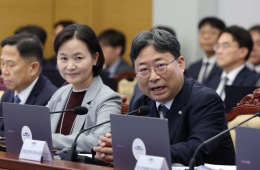
President Lee Jae-myung is delivering a welcome speech at the Civil Petition Innovation Case Report Meeting held in Sejong Special Self-Governing City on October 2, 2026. Photo by Yonhap News
View original imagePresident Lee repeatedly stressed the need to improve the working conditions of civil complaint officers. When Minister Yun explained that the government is now using the term "special civil complaints" instead of "malicious civil complaints," President Lee responded, "We have taken steps to increase compensation and recognition for the hard work on the frontlines, but I believe we should also expand personnel. For example, why not create a civil complaint resolution allowance if needed?" He added, "Resolving the grievances and resentments that have accumulated over years, or even decades, is truly challenging. The more dedication someone invests, the more we must care for and compensate them in return."
Hot Picks Today
 "Why Work a White-Collar Job? This Chinese Occupation Now Earns Over 5 Million Won a Month"
Earlier, President Lee awarded the Presidential Citation to six officials who made significant contributions to civil complaint innovation. He remarked, "Serving the people and working on their behalf is our fundamental objective and the reason for our existence. The best policy is to specifically and effectively address the concrete needs of individual citizens on the ground—this is how we prove that we are a government of popular sovereignty and a democratic republic."
© The Asia Business Daily. All rights reserved. Unauthorized AI training and use prohibited.