Amazon Seeks to Sell $8 Billion Worth of Nvidia AI Chips to Ease Financial Burden
Amazon is pursuing a plan to transfer approximately USD 8 billion worth of advanced Nvidia artificial intelligence (AI) chips to external investors, aiming to alleviate its financial burden.

On October 1 (local time), the Financial Times (FT), citing sources familiar with the matter, reported that Amazon has reached out to investors in recent weeks to gauge demand for such a transaction. The approach being considered involves transferring thousands of Nvidia Grace Blackwell chips—currently being deployed by Amazon in U.S. data centers—to a Special Purpose Vehicle (SPV), which Amazon would then lease back.
The SPV would raise funds from external investors by issuing bonds. By switching to leasing, rather than directly holding these high-priced AI semiconductors, Amazon would be able to reduce the asset burden on its balance sheet.
This move comes as Big Tech companies seek various funding solutions to finance their massive investment in data centers. A significant portion of the cost of building data centers is accounted for by expensive semiconductors necessary for advanced AI model training.
To maintain their credit ratings, Big Tech firms have also been using a variety of financial engineering techniques to reduce balance sheet debt. For example, instead of directly borrowing project funds themselves, companies have increasingly utilized residual value guarantees for AI chips or data centers—providing lenders with assurance about future asset values. However, this approach makes it more difficult to accurately assess the actual risk borne by these companies.
Investors expect that the SPV will receive an investment-grade rating based on Amazon's current AA credit rating. Accordingly, a wide range of institutional investors—including insurers and pension funds—are likely to participate in the transaction. Amazon plans to allow investors to take up to a 10 percent stake in the SPV, while Amazon itself would not retain any equity in the entity. However, negotiations between Amazon and the investors are ongoing and the details may change.
The Grace Blackwell chips involved in the deal have been either purchased directly by Amazon or obtained through lease agreements, and have already been deployed in over a dozen data centers across five U.S. states, including Nevada and Virginia. While the Grace Blackwell is among Nvidia's most advanced AI semiconductors, it will soon lose its status as the latest model with the upcoming launch of the next-generation Vera Rubin chip.
Even so, previous-generation semiconductors still retain utility. Major AI companies such as OpenAI and Anthropic use the latest chips for training their models, while earlier-generation chips continue to be used to operate applications. In documents submitted to regulators, Amazon has projected a minimum useful lifespan of five years for each semiconductor generation.
According to the FT, the motivation behind Amazon's pursuit of this funding approach is the heavy burden of AI-related investment. Amazon’s capital expenditures this year are expected to reach USD 220 billion, with most of that sum dedicated to the purchase of advanced semiconductors and expansion of AI data centers within its cloud business unit, Amazon Web Services (AWS).
Amazon has also raised investment capital through the issuance of corporate bonds. In March, fueled by strong investor demand, Amazon raised its corporate bond issuance target from USD 37 billion to around USD 50 billion. However, when it issued USD 25 billion in bonds in July, weakening demand for long-term debt led investors to demand higher yields.
Hot Picks Today
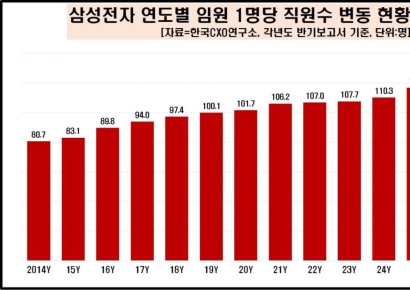 "I thought getting into a big company was the goal"... The 'position' only 1 in 121 employees reaches
- President Lee Jaemyung at 37.3%... Approval Rating Rebounds for First Time in 3 Weeks [Asia Business Daily-Realmeter Poll]
- "Enough Is Enough: 700,000 Won, Not 70,000?"... 'K-Overcharging' Hits Foreign Tourists
- "'No! Dad, Run!'... Father Moved by 5-Year-Old Son Who Shielded Him from Ghost at Korean Folk Village"
- "Jealous of Koreans" - Now a Must-Do on Every Trip... The Place Where Foreigners Spent KRW 229.8 Billion
Within the AI industry, securing funds by using graphics processing units (GPUs) as collateral has also become increasingly popular. Firms such as CoreWeave have raised debt efficiently by leveraging their ability to readily obtain chips. In August, Nvidia also proposed to provide credit enhancements of up to USD 125 billion for relevant debt through a USD 500 billion financial platform set up with major Wall Street financial firms, aimed at reducing its clients’ procurement costs.
© The Asia Business Daily. All rights reserved. Unauthorized AI training and use prohibited.