Kim Junggwan Draws a Line on Alaska Investment... Park Jungsung Defends the 15% Tariff
Rebuttal on Alaska LNG Investment Agreement
Kim: "No Project without Commercial Viability"
Park Urges U.S. to Honor Tariff Agreement
"This is a matter that has not been agreed upon."
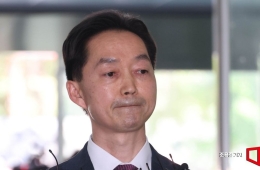
On October 1, the day U.S. President Donald Trump announced South Korea's investment plans in the United States, Kim Jungkwan, Minister of Trade, Industry and Energy, stated this clearly in the press briefing room at the Government Complex Sejong. He was addressing the formalization by the United States of the Alaska liquefied natural gas (LNG) project, including the specific figure of over $50 billion. Kim's rebuttal was based not on emotion, but on documentation. He said, "Everything included in the Korea-U.S. joint fact sheet constitutes the entirety of the agreement," emphasizing, "Both countries agree that if there is no commercial rationale, the project will not proceed." He further stated, "Expressions that definitively state a number or South Korean participation go far beyond what both nations actually agreed upon." Howard Lutnick, U.S. Secretary of Commerce, reportedly responded by saying he understood South Korea's concerns and would do his best to ensure the project's success.

Kim Jungkwan, Minister of Trade, Industry, and Energy, is giving a briefing on the investment project in the United States at the Government Complex Sejong on the 1st. Ministry of Trade, Industry, and Energy.
View original imageMinister Kim was described as "a very tough negotiator" by President Trump immediately after the conclusion of the Korea-U.S. tariff negotiations in October last year. Over approximately three months, he led the negotiations by traveling back and forth between Washington, D.C. and Scotland, securing annual investment caps and safeguards for principal repayment. Even when the threat of tariff re-increases emerged in January this year, he flew to Washington, D.C. and had back-to-back meetings with Secretary Lutnick for two consecutive days.
On this day, Minister Kim did not merely voice opposition. He demanded active involvement from the U.S. federal government as a prerequisite for ensuring business feasibility. He explained that the United States had communicated plans to transfer business rights from private operators to the federal government, adding that federal government engagement could help resolve permitting and workforce supply issues. Both of these issues are the greatest hurdles he identified for the Alaska project. He also pointedly highlighted inconsistencies in the numbers. He remarked, "The fact that the project scale has dropped by more than $10 billion in just a few days, from the original $67 billion to $50 billion, indicates that it has not yet been thoroughly reviewed even within the United States." He added that if the United States provides more specifics, the Korean side would thoroughly scrutinize them and conduct an on-site inspection. Considering that even major American energy companies like ExxonMobil abandoned this project in the past, this is being interpreted as a signal not to rush.

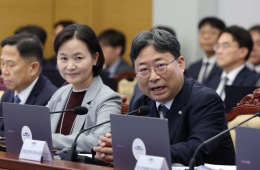
Jungseong Park, Director General for Trade Negotiations at the Ministry of Trade, Industry and Energy.
View original imageThe issue of tariffs is entwined behind the scenes of the investment negotiations. Minister Kim revealed in last month's briefing that as there is a provision to raise tariffs if investments are suspended, this is being approached cautiously. The defense of tariffs has been handled by Jungseong Park, Director General for Trade Negotiations at the Ministry of Trade, Industry and Energy.
Hot Picks Today
![[Report] "It's Not 500 Million, It's 700 Million?"... Why Newlyweds Who Sought All-in Loans for Bongcheon-dong Apartments Have Gone Silent](https://cwcontent.asiae.co.kr/asiaresize/93/2026100110075947113_1790816879.jpg) [Report] "It's Not 500 Million, It's 700 Million?"... Why Newlyweds Who Sought All-in Loans for Bongcheon-dong Apartments Have Gone Silent
[Report] "It's Not 500 Million, It's 700 Million?"... Why Newlyweds Who Sought All-in Loans for Bongcheon-dong Apartments Have Gone Silent
- "Only 3 Passengers on a 180-Seat Flight"... The Shocking State of the 'Honeymoon Hotspot'
- "He Helped With Love, Marriage, and Even a Child": 10-Year Close Friend Turned Out to Be a Chinese Spy... A 27-Year Veteran at the Fed Brought Down by Friendship
- "She Was Fine for Six Months": What Is the 'Hamburger Disease' That Struck After Drinking Raw Milk?
- "Part-Time Experience Now Reflected in Starting Salary, Monthly Pay Reaches 4.2 Million Won... 85.6% of Japanese University Students Secure Jobs Before Graduation"
Director Park met with Jamieson Greer, Representative of the U.S. Trade Representative (USTR), during the G20 Trade Ministers' Meeting held over two days from September 30, urging him to respect the 15% tariff agreement, and since the first phase of the U.S. investment project has been announced, they agreed to coordinate a specific schedule for the joint Korea-U.S. committee. Last year, Korea pledged a total of $350 billion in investments in the United States, including shipbuilding cooperation ($150 billion) and strategic investment ($200 billion), on the condition that tariffs would be reduced from 25% to 15%. The South Korean government has continuously emphasized that the combined impact of the forced labor tariff (12.5%) and future overproduction tariffs should never exceed the upper limit of 15% that was agreed upon between Korea and the United States.
© The Asia Business Daily. All rights reserved. Unauthorized AI training and use prohibited.