Prosecution Begins Anew as Public Prosecution Office... Reorganized to Focus on Indictments and Trials
Abolishment of 42 Intelligence and Joint Investigation Teams; Establishment of 29 Indictment Divisions
New Division for Non-Prosecution Case Review Introduced, with Stronger Oversight on Illegal and Inadequate Investigations
On October 2, the prosecutor’s office embarked on a new beginning as the Public Prosecution Service. The office shifted its main focus from direct investigation to prosecution and maintaining indictments. It will now review the results of investigations conducted by law enforcement agencies to determine whether to indict, prove crimes in court, and handle the enforcement of sentences as well as the protection of victims.

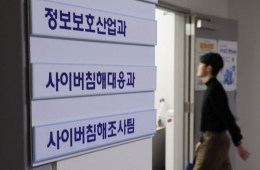
On October 2, 2026, at the Prosecutor's Office in Seocho-gu, Seoul, employees are arriving as the prosecutor's office, which held both investigation and prosecution powers, closes its doors for the first time in 78 years following criminal justice reforms under the Lee Jae-myung administration, with the official launch of the Public Prosecution Service and the Serious Crime Investigation Agency. Photo by Kang Jinhyung
View original imageOn its inaugural day, the Public Prosecution Service issued a press release stating, “We have restructured our organization and systems to focus on such functions as filing and maintaining public prosecutions, enforcing sentences, victim protection, recovery of criminal proceeds, and representing the public interest.” The Public Prosecution Service has abolished 42 district and joint investigation units across the country that were previously responsible for direct investigations, and has established 29 Serious Crime Indictment Divisions. Related departments at the headquarters handling serious crimes have also been consolidated and reorganized. For important and major cases, the agency plans to support the lawful collection of evidence by investigative bodies and focus on prosecution and maintaining indictments based on specialized expertise in each field.
To strengthen the public trial function, the prosecutor staffing in existing offices has been reassigned to trial-related divisions, and the number of administrative staff has been increased. All trial divisions nationwide have been reorganized as either Trial & Litigation Divisions or Trial & Recovery Divisions, with responsibilities including maintaining indictments, representing the state in lawsuits, and recovering criminal proceeds. A new Non-Indictment Review Division has been established to inspect illegal or inadequate investigations by investigative agencies. This division is tasked with requesting reinvestigations into cases where a decision not to prosecute has been made due to unlawful or incomplete investigations. It will also review response measures when investigative agencies fail to comply with or inadequately carry out requests for supplementary investigations.
Criteria have also been prepared for conducting pre-arrest warrant interviews and fact-checking procedures. Prosecutors will now review investigation records, interview suspects, and solicit views from persons involved in cases, experts, and judicial police officers before determining whether to request a warrant or file charges. In line with the transformation of its duties, the Public Prosecution Service has completely revised 1,022 regulations, ordinances, directives, and guidelines previously governed by the Supreme Prosecutors’ Office. Regulations related to direct investigations have been abolished and others have been amended to reflect the changed role of prosecutors.
Standards have also been established for transferring pending cases to investigative agencies. Based on transfer criteria for cases in which prosecution has been suspended, for those initiated by prosecutors, and for those already transferred, cases will be promptly handed over to the police or the Serious Crime Investigation Agency. For some unavoidable cases that must still be handled after the agency’s launch, the goal is to complete processing within a 90-day grace period. As for election-related cases subject to short statutes of limitations—such as offenses relating to the 9th Nationwide Local Elections, whose statute of limitations will expire on December 3—they will be resolved in cooperation with relevant agencies.
Hot Picks Today
 "300,000 Won Grant" Shelved at Chuseok to Go to All Residents After All... This City Says It Will Pay Before Lunar New Year
- "Didn't Save This Money to Leave to Our Kids?"... Retired Couples Spend $10,000 on a Single Trip
- "Make $10 Million by Flipping It Right After Delivery?"... The Market Drawing the World's Ultra-Rich in ‘This Market’
- Friend Who Went Abroad Goes "Silent"... 617 South Koreans Out of Contact, What's Going On?
- "Stockpile 9 Liters of Bottled Water and Three Days' Worth of Food"... UK on Edge as Nationwide Emergency Preparedness Alert Issued
The Public Prosecution Service stated, “Through objective review of the lawfulness and adequacy of investigations, the fair exercise of prosecutorial authority, strict enforcement of sentences, and recovery of criminal proceeds, we will protect the human rights and interests of the people.” It added, “We will continue to faithfully fulfill our role as an institution dedicated to delivering criminal justice services centered on the public.”
© The Asia Business Daily. All rights reserved. Unauthorized AI training and use prohibited.