"Even With Fewer Students, Spending Needs Remain High"... Superintendents Nationwide Oppose Cuts to Education Finance
Meeting With Kim Minseok:
"Economic Logic Alone Will Shake Our Future"
Explosive New Demands for Digital and Neulbom Programs...
Appeal for a Reconsideration of the Government Proposal
Kim: "Recognizing the Need for Education Funding...
Party Will Seek Alternatives"
The Korean Council of Superintendents of Education met on October 1 with Kim Minseok, leader of the Democratic Party, to convey concerns from the education sector regarding the government's proposed local education finance reform and the future response fund.
During the meeting, the Council emphatically called for institutional improvements to ensure stable funding for primary and secondary education. The meeting was attended by seven superintendents, including Kwon Soonki, Chair of the Special Committee on Local Education Finance (Gyeongnam), as well as Kim Daejoong (Jeonnam-Gwangju), Kang Eunhee (Daegu), Do Seonghoon (Incheon), Cho Yongsik (Ulsan), Yoon Geonyeong (Chungbuk), and Lee Byeongdo (Chungnam), who united on the issue.

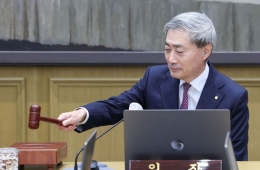
The Korean Council of Superintendents of Education met with Kim Minseok, leader of the Democratic Party of Korea, to convey concerns from the education sector about the government's proposed local education finance reform and future response fund. Provided by the Korean Council of Superintendents of Education
View original image"Education Finance Should Not Be Reduced Solely Due to Declining Student Numbers... It Is an Investment for the Future"
The provincial and metropolitan superintendents all agreed that local education finance should not be reduced solely on the basis of declining student numbers. They emphasized that policy should be approached as an investment aimed at improving the quality of education and preparing for the country's future.
They explained that even as student numbers decline, the basic costs necessary for running schools and classes continue to arise, while new financial demands—such as building AI and digital education environments, ensuring fundamental academic skills, closing educational gaps, expanding care programs, and upgrading aging educational facilities—are actually increasing.
They also raised key issues such as comparing the fiscal outlook between the current system, where 20.79% of domestic taxes are allocated to education, and the government's proposed reform, as well as the method for determining the allocation and use of the education talent account within the future response fund. They urged the National Assembly to fully incorporate education sector opinions and to conduct a thorough review of the reform proposal.
Specific demands were also made regarding the proposed new "future response fund." The superintendents said that if the fund is established, the law should clearly stipulate the allocation principles and uses so that the fund will reliably secure resources for primary and secondary education.
In particular, they shared concerns that the future response fund could absorb a significant portion of surplus tax revenue currently allocated to local education finance under the existing system, causing a dilution or destabilization of education resources.
Additionally, they urged that the contents of the negotiation on the future response fund, which was held on September 29 among the ruling party, the government, and provincial governors, be shared with the education community. They stressed the need to establish a council in which superintendents and education sector representatives can participate meaningfully in key decisions regarding the composition, scale, and allocation of the fund in the future.
Concerns Over Unfulfilled Transfers From Local Governments... Risk of Fiscal Burden Transfer Due to State-Local Projects
Problems stemming from the high dependence on transfers from local governments were also addressed during the meeting.
The superintendents pointed out incidents in some regions of non-payment or delayed payment of required statutory transfers, as well as reductions in non-statutory transfers. They stated that a systematic public disclosure of unpaid amounts and delays—based on existing data—was needed.
They also emphasized the need for institutional mechanisms enabling disclosure and regular checks of non-statutory transfers, such as funding for free school meals or education cooperation projects, by each municipality or province. In particular, they expressed concern that if the burdens from joint state-local projects—such as Neulbom Schools, arts instructors, or free school meals—are reduced or terminated, the fiscal burden will be passed directly onto the provincial and metropolitan offices of education.
Chairman Kwon Soonki stated, "Regardless of political affiliation or ideology, every member of the education community has expressed concern and opposition to the government's proposal. We hope that you, as party leader, will help find a constructive solution through your role in mediation." In addition, the superintendents shared various regional budget issues, including concerns about reductions in statutory transfers during the Jeonnam-Gwangju merger process, new school establishment needs, and increases in multicultural students.
Hot Picks Today
 "Two Spend 500,000 Won in a Flash, Yet Wait Two Hours?" ... 'Dreamland' Shunned by Kids and Foreign Tourists
- The Era of Getting 200 Million Won After 30 Years Is Over... A Japanese Bank's "Perpetual Department Head" Who Just Clocked In Cries Out
- Spain Hit by Its Worst Tragedy... Lee Kangin, Moreno and Real Madrid Join Soccer World in Mourning
- They Said, “Make It Your Home for Life” - Then Suddenly Kicked 200 Passengers Off... What Happened to the Around-the-World Cruise?
- "130 Rice Bowls Sold Out in a Day"... 'Unfiltered Face' Adds 8 Million Won to Night Market Sales: China's Bungeunwoo
In response, Kim Minseok, leader of the Democratic Party, said, "Even if the number of students decreases, more funding for education might be needed to respond to future challenges and train talent. We will have thorough discussions on the direction and alternatives for education finance and will also hold a party-level forum."
© The Asia Business Daily. All rights reserved. Unauthorized AI training and use prohibited.