Trump Says "Possible to Intensify Strikes on Iran After Midterms"... U.S. Considers Additional Carrier Deployment (Comprehensive)
Sanctions on Automobile and Railway Companies and Overseas Supply Network
U.S. Demands Departure of Iranian Delegation as Talks Remain Stalled
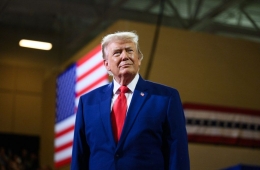
U.S. President Donald Trump stated that following next month’s midterm elections, the United States may intensify airstrikes against Iran. At the same time, the U.S. is considering an additional deployment of an aircraft carrier strike group and around 10,000 troops to the Middle East, while imposing sweeping sanctions on Iranian automobile and railway corporations as well as foreign suppliers. As negotiations remain deadlocked, the Trump Administration continues to apply pressure on Iran through a combination of military threats and economic sanctions.

In a Time magazine interview released on the 1st, President Trump was asked if he would increase the intensity of airstrikes on Iran after the midterm elections on November 3. He responded, "It's possible." The interview took place at the White House on September 28.
When asked about his statement at the United Nations General Assembly that the U.S. could "annihilate" Iran, he said, "Yes. I would. It's possible." He added, "As long as Iran exists, I don't think we can ever have peace."
Regarding why he rejected Iran’s so-called "seven-day plan" for reopening the Strait of Hormuz, he stated, "The proposal simply wasn't sufficient." Previously, Iran had proposed the "seven-day plan" to the United States, but President Trump declined the offer.
Aircraft Carrier and Amphibious Ready Groups Depart... Final Decision on Middle East Deployment Not Yet Made
Following President Trump's hardline remarks, Bloomberg reported—citing U.S. officials—that the Department of Defense (the War Department) could deploy an additional aircraft carrier and approximately 10,000 Navy and Marine personnel to the Persian Gulf. According to Bloomberg, this would serve to expand the options available to U.S. military leaders if President Trump decides to escalate operations.
According to these officials, the aircraft carrier USS Theodore Roosevelt left its homeport of San Diego on September 27. However, its final destination has not yet been determined.
Should the Roosevelt arrive in the Middle East, the number of U.S. carrier strike groups in the region would increase to three, including the USS George H.W. Bush and the USS George Washington—the same scale as at the outbreak of the Iran war. The Roosevelt carries around 5,000 Navy and Marine personnel, with thousands more deployed on its escort ships.
On September 28, the Makin Island Amphibious Ready Group, comprising an amphibious assault ship, aircraft, and 2,200 Marines, also set sail. Currently, the Boxer Amphibious Ready Group is conducting operations near the Strait of Hormuz. U.S. Central Command, which oversees operations in the Middle East, stated, "We do not disclose unit schedules for operational security."
Automobile and Railway Sanctions... Targeting Iran’s Overseas Procurement Network

Economic pressure has also been heightened. The U.S. Department of the Treasury announced that, as part of the so-called "economic isolation operation," Iran's two largest automobile manufacturers—Iran Khodro (IKCO) and SAIPA—as well as their commercial vehicle subsidiaries, have been designated for sanctions. Iran's largest motorcycle manufacturer, Nirou Motor Shiraz, along with auto parts suppliers based in Indonesia, the United Arab Emirates (UAE), Turkey, and Hong Kong, were also included.
In the railway sector, state-owned Iranian Railway Company (RAI) and Raja Passenger Train Company were sanctioned. HEPCO, a mining and road construction equipment manufacturer, its Chinese subsidiaries, and foreign companies supplying raw materials to Iranian steel producers were also added to the list.
The Treasury Department noted that Iran’s automotive industry is intertwined with the Islamic Revolutionary Guard Corps (IRGC) support network, vowing to cut off related sources of funding. The Treasury also explained that, in response to U.S. naval blockades around the Strait of Hormuz, Iran has been relying on railways to maintain its oil transportation and trade.
Treasury Secretary Scott Bessent said, "Today's actions lay the foundation for the United States and our partners to forever deprive this regime of its revenue."
The conflict was also evident in diplomatic negotiations. U.S. online outlet Axios reported that on September 28, Secretary of State Marco Rubio demanded that Iranian Foreign Minister Abbas Araghchi and the rest of the Iranian delegation leave the United States immediately while they were in New York for the UN General Assembly.
Hot Picks Today
!["I Got Hired but Can't Use a Keyboard"... The Challenge Making Gen Z New Hires Sweat [The World is Z-Gold]](https://cwcontent.asiae.co.kr/asiaresize/93/2026100113552847569_1790830528.png) "I Got Hired but Can't Use a Keyboard"... The Challenge Making Gen Z New Hires Sweat [The World is Z-Gold]
"I Got Hired but Can't Use a Keyboard"... The Challenge Making Gen Z New Hires Sweat [The World is Z-Gold]
- "Turning a Fatal Shooting Into Merchandise"... Controversy Over 'Assassin(s)' Megabox Ticket
- "Oh Se-hoon Doesn't Know"… The Weight of the Recording Ahead of the Appellate Verdict
- "Who Knew Yesterday’s Photo Would Be the Last"...550-Year-Old Hawaiian Landmark Disappears Overnight
- Shark "Bukangyi" Jumps Over 7m Net and Returns Inside the Canal
The delegation headed to the airport several hours later and departed New York in the early hours of September 29. Axios reported that, although the delegation had originally planned to return home around that time, the immediate departure was a highly unusual diplomatic action, coming after the U.S. saw no progress in negotiations as it had hoped.
© The Asia Business Daily. All rights reserved. Unauthorized AI training and use prohibited.