Government Moves to Curb Surging Yields... Slashes Government Bond Issuance by 5 Trillion Won Using Excess Tax Revenue
Total Government Bond Issuance Cut by 5 Trillion Won by Maturity
2-Year Bonds Reduced by 1 Trillion Won Each, 3-Year and 5-Year Bonds by 800 Billion Won Each
Longer-Term Bonds (10, 30, and 50-Year) Also Decreased

Lee Hyung-il, Deputy Prime Minister and Minister of Finance and Economy, is taking a commemorative photo with participants before the start of the "Expanded Macroeconomic Fiscal and Financial Meeting" held on the 30th at the Government Seoul Office in Jongno-gu, Seoul. From left, Park Hong-geun, Minister of Planning and Budget; Deputy Prime Minister Lee; Shin Hyun-song, Governor of the Bank of Korea; Lee Eok-won, Chairman of the Financial Services Commission. Ministry of Finance and Economy
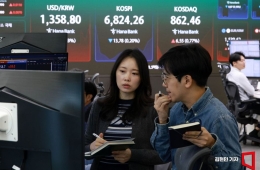
View original imageAs government bond yields continue to rise, the government has decided to reduce the issuance volume of government bonds by 5 trillion won this month. The funds will be sourced from additional tax revenues collected this year, which have surpassed initial expectations due to the semiconductor boom.
On October 1, the Ministry of Finance and Economy announced, "We will reduce the amount of government bonds issued in October by 5 trillion won compared to the original plan, and going forward, we plan to monitor market conditions and consider further reductions in bond issuance if necessary." The reduction by maturity will be 1 trillion won for 2-year bonds, 800 billion won each for 3-year and 5-year bonds, 700 billion won for 10-year bonds, 700 billion won for 30-year bonds, and 200 billion won for 50-year bonds.
Market observers anticipate that the government may further reduce government bond issuance by maturity in November and December, cutting supply by more than 10 trillion won.
Earlier, as government bond yields surged, the government announced its plan to scale back bond issuance by using 63.2 trillion won in excess tax revenue.
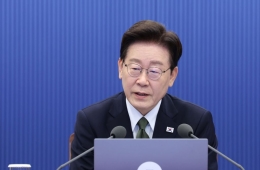
On September 30, Deputy Prime Minister and Minister of Finance and Economy Lee Hyung-il, Minister of Planning and Budget Park Hong-geun, Governor of the Bank of Korea Shin Hyun-song, and Chairman of the Financial Services Commission Lee Eok-won held an "Expanded Macroeconomic Fiscal and Financial Meeting" and stated, "We will closely monitor the government bond market, and implement necessary market stabilization measures such as emergency buybacks and reducing bond issuance using part of the excess tax revenue."
The government previously announced that, during next year's budget planning, it would reduce next year's government bond issuance by 12.5 trillion won. However, criticism has arisen that this reduction is small compared to the 162.3 trillion won in additional tax revenue generated by the semiconductor boom and other factors.
Meanwhile, in October, 12 trillion won in government bonds will be issued through competitive bidding with participation from primary dealers, and 500 billion won will be issued through exchange methods.
By maturity, the issuance for October will be: 2.1 trillion won for 2-year bonds, 2.4 trillion won for 3-year bonds, 2.2 trillion won for 5-year bonds, 2.1 trillion won for 10-year bonds, 700 billion won for 20-year bonds, 1.8 trillion won for 30-year bonds, 600 billion won for 50-year bonds, and 100 billion won for inflation-linked government bonds.
Additionally, the government plans to conduct buybacks of government bonds that have passed their original issue date but have not yet matured—specifically, 2-year, 3-year, 5-year, and 10-year bonds—totaling about 3.5 trillion won.
No fiscal securities will be issued next month. Fiscal securities are a tool to offset temporary funding shortfalls that may arise within the same fiscal year due to timing mismatches between government revenue and expenditure, alongside temporary borrowings from the Bank of Korea. Currently, the balance of outstanding fiscal securities stands at 4 trillion won, with no temporary borrowings from the Bank of Korea. The average outstanding balances this year, based on data from January 1 to September 30, are 10.5 trillion won for fiscal securities and 3 trillion won for Bank of Korea temporary borrowings.
Hot Picks Today
 "Such chaos for the first time in 140 years"... Even illnesses surge, Tokyo stunned by 'unbelievable' event
- "Returning Excess Fees Collected Under Previous Administration"...$680 Per Person Refund for 950,000 Americans
- Defendant in 'Cafe Freezer Murder' Sought Tens of Billions of Won in Penalties
- Couple Stranded on Remote Island Holds Special Wedding by Inviting All Residents
- "Nothing Left to Buy, Feeling Indifferent"... 'Rich Daughter' Vibe in Department Stores with 'Hyunbaek Core'
The 1-year won-denominated Foreign Exchange Stabilization Bond (FX Stabilization Bond) will be issued in the same amount as last month—1 trillion won.
© The Asia Business Daily. All rights reserved. Unauthorized AI training and use prohibited.