How Does AI Investment Financing Affect U.S. Long-Term Treasury Yields [Weekend Money]
Upward Pressure Not Only on Corporate Bonds,
but Also on Long-Term Treasury Yields
There is an analysis suggesting that the recent rapid increase in artificial intelligence (AI) investments has contributed to the rise in U.S. long-term Treasury yields.
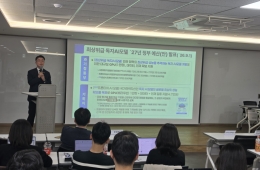
Youngjoo Lee, a researcher at Hana Securities, stated, “AI-related financing is a new supply variable for long-term interest rates.” According to Lee, long-term bond issuances by tech companies and data center special purpose vehicles (SPVs) directly increase bond supply, competing with government bonds. Swaps used to fix floating-rate loans, which go through dollar hedging, indirectly affect the Treasury market. In particular, if tech-related bonds are added while existing financial bond issuance is maintained, the total long-term duration (the time until principal is recovered) that the market must absorb may increase compared to previous levels.
![How Does AI Investment Financing Affect U.S. Long-Term Treasury Yields [Weekend Money]](http://www.asiae.co.kr/news/img_view.htm?img=2026082511133891760_1787624018.gif)
Lee emphasized, “Therefore, when assessing U.S. long-term interest rates, it is necessary to monitor not only government bond issuance, but also AI-related corporate bonds, project finance bonds, and interest rate swaps tied to private debt.” However, she added that transactions involving non-consolidated SPVs and the private market may not be fully captured in official statistics, meaning that the actual supply burden could be larger than the publicly disclosed issuance figures.
Lee also warned that an expansion in the supply of long-term duration instruments beyond Treasuries could limit the extent of future interest rate declines. If the economy slows, expected short-term interest rates may fall; however, continuing supply of long-term government and corporate bonds may prevent term premiums from declining sufficiently. As a result, even during an economic downturn, long-term interest rates may fall less than they have in the past, and the curve between 10-year and 30-year bonds could remain relatively steep.
Hot Picks Today
![An Apartment Once Worth 400 Million Won Nears 1 Billion... "Still Worth It" as 1990s-Born Pangyo Workers Flock to Gyeonggi Gwangju [Report]](https://cwcontent.asiae.co.kr/asiaresize/93/2026100211322949134_1790908349.jpg) An Apartment Once Worth 400 Million Won Nears 1 Billion... "Still Worth It" as 1990s-Born Pangyo Workers Flock to Gyeonggi Gwangju [Report]
An Apartment Once Worth 400 Million Won Nears 1 Billion... "Still Worth It" as 1990s-Born Pangyo Workers Flock to Gyeonggi Gwangju [Report]
- Suddenly Called Out During Class, Awarded $100,000 as Students Cheer in the Gym
- "After a Dream About Feces, Bought a Lottery Ticket and Won 20,000 Won... Scratched Again and Hit a 2 Billion Won Jackpot"
- Daycare Center Management Who Embezzled 100 Million Won in Subsidies Lose Lawsuit Over 'Brazen' Protest Against Name Disclosure
- "What Is This?" Jensen Huang Amazed... Korea's Iconic 'Health Gift' Captivates Foreigners [K-Holic]
Lee pointed out that the AI industry is transforming from being a source of long-term capital demand to a supplier influencing the formation of long-term interest rates. She further noted, “The issue is that, in this process, the elevated government bond yields and swap rates ultimately return as higher funding costs for AI companies and data centers.”
© The Asia Business Daily. All rights reserved. Unauthorized AI training and use prohibited.