One Year Since Ministry of Climate Launch... Kim Sung-hwan Says "Expansion of Total Renewable Energy Insufficient, Over 10GW to Be Added Starting Next Year"
Utilizing ESS and Flexible Connections Instead of Unconditional Expansion of Transmission Lines
Tangible Outcomes: Transition to Electric Vehicles, Avoiding a Waste Crisis
Carbon Reduction Progress Falls Short of Expectations... "I Apologize"
On October 1, marking the first anniversary of the Ministry of Climate, Energy and Environment, Minister Kim Sung-hwan cited key achievements such as innovation in the power grid, the transition to electric vehicles, and initiatives responding to the ban on direct landfill of waste in the Seoul metropolitan area. In contrast, he acknowledged shortcomings in achieving the targeted total capacity of renewable energy.
At a meeting with reporters at the Government Complex Sejong that afternoon, Minister Kim stated, "The evaluation of the past year is up to the public, rather than for us to judge ourselves," as he explained the progress of policy implementation over the past year and outlined future tasks.

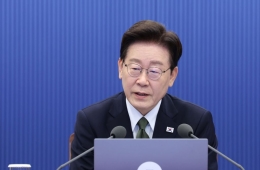
Kim Sung-hwan, Minister of the Ministry of Climate, Energy and Environment, held a meeting on the 1st at the Government Complex Sejong to mark the first anniversary of the Ministry of Climate. Ministry of Climate, Energy and Environment
View original imageInstitutional Reforms Targeting 100GW in Renewable Energy..."Expansion of Total Capacity Still Lacking"
The most significant accomplishments cited were institutional reforms to expand renewable energy and innovations in the power grid. The government has set a target of securing 100GW (gigawatts) of renewable energy by 2030, with the current secured capacity at about 40GW. Minister Kim explained, "We have established the institutional foundation to expand renewable energy by improving setback regulations, reforming the Renewable Portfolio Standard (RPS), and introducing systems related to so-called 'sunlight income.' Additionally, instead of unconditional expansion of transmission lines, we are pursuing measures to maximize the utilization of the existing grid by leveraging Energy Storage Systems (ESS) and flexible connection systems."
However, expanding the total visible capacity of renewable energy remains a challenge. Minister Kim noted, "Solar power is relatively fast, but even so, it takes at least six months to over a year. Starting next year, I expect at least 10GW of new solar power and some progress with wind power each year."
He projected that, because there are significant volumes of renewable energy awaiting grid connection in the Honam region, the actual growth rate will become more pronounced from next year. "It may be difficult for the aircraft to take off initially, but once it does, it will soar high and travel far," is how he described the situation. Regarding power grid innovation, he estimated that tens of trillions of won could be saved. However, he stated that the previously suggested scale of savings was only a provisional estimate and further calculations are necessary. The intent is to reduce costs by deploying ESS at the distribution, substation, and transmission stages, rather than building large-scale new transmission lines.
23% Electric Vehicles, Avoided Waste Crisis..."Results That the Public Can Feel"
Among changes tangible to the public, he pointed to the transition to electric vehicles. By establishing new subsidies and incentives for those switching from internal combustion engine vehicles to electric cars and improving perceptions of EVs, he explained that the proportion of new cars that are electric has reached 23% this year. Minister Kim said, "Once more than 30% of consumers choose a new product, it becomes a trend psychologically. The fact that people are starting to consider an EV as their next car is a major shift."
He also mentioned the transition of buildings to cleaner energy sources. "I recently proposed to new apartment construction associations to build without gas pipelines," Kim said. While the adoption of air, water, and geothermal heat pumps remains low, he assessed that the move to reduce gas dependency and electrify buildings is growing. As a tangible public outcome, he cited the control of 'lovebug' pests. "There used to be many lovebugs around Gyeyangsan," he said, "but through disaster prevention activities from agencies under the Ministry of Climate, the number has dropped across the metropolitan area, reducing public inconvenience."
He also presented their response to the ban on direct landfill of waste in the Seoul metropolitan area as a major achievement. "In accordance with commitments from the local governments in the Seoul area, we have prepared measures to begin implementing the ban on direct landfill of household waste from November," Minister Kim said. "Some waste was relocated to the Chungcheong region, but had we not responded actively, it could have escalated into a so-called 'waste crisis.'"

Kim Sung-hwan, Minister of the Ministry of Climate, Energy and Environment, held a meeting at the Government Sejong Complex on the 1st to commemorate the first anniversary of the Ministry of Climate. Ministry of Climate, Energy and Environment
View original imageCarbon Reduction Falling Short of Expectations..."Meaningful Progress Expected Next Year"
Conversely, Minister Kim evaluated the expansion of renewable energy and the reduction of greenhouse gas emissions as areas needing improvement. With regard to the issue of algal blooms, he admitted, "Personally, the lack of progress on countermeasures for algal blooms is disappointing. We achieved virtually no results this year," explaining that this was due in part to climatic conditions and insufficient rainfall. He further conceded that the speed of greenhouse gas reduction has not met targets.
Minister Kim stated, "It is true that we have not achieved as much carbon reduction as we aimed for. I apologize." He identified rising energy and gas prices after the Middle East conflict and the resulting difficulty in reducing coal-fired generation as causes. By operating coal-fired power plants—originally scheduled for decommissioning—for longer, there was a short-term reversal in greenhouse gas reduction. He added, "Expanding renewables and reducing coal must go hand in hand with reductions in industry, buildings, and transportation. We will pursue our international commitments to carbon reduction as scheduled." However, he warned that rapid increases in electricity demand due to the growth of AI and the semiconductor industry could become a variable in the reduction pathway.
Minister Kim also acknowledged that achieving carbon reduction targets is not possible through renewable energy expansion alone. Reductions in coal-fired generation, as well as in industry, buildings, and transportation, must be pursued concurrently, and the government must maximize domestic reductions. The government plans to summarize these points and report them to the public early next year.
Not Raising the Height of Dongbok Dam, but Adding a 15m Facility Beside It
Regarding water supply issues for the Honam semiconductor cluster, Minister Kim explained that rather than raising the height of the existing Dongbok Dam, the plan is to build an additional facility 15 meters tall next to it. Since the original Dongbok Dam was constructed of gravel and earth, simply adding concrete would pose safety concerns, hence the choice to add a separate structure. "Because of the safety issues with the original dam, it is not being raised, but rather an additional 15-meter facility is being constructed. The intent has not changed, but we've chosen a safer method," he said.
The southwestern semiconductor cluster is expected to require about 600,000 tons of water per day. By factoring in the water from the Yeongsan and Seomjin river systems, existing dams, and wastewater recycling in Gwangju, he believed the supply would be sufficient for four semiconductor fabricators. On the issue of managing the four major rivers' weirs, relevant research projects are ongoing and are anticipated to be completed by October. For the Geum River, there is considerable data on ecological changes due to extended weir opening periods, but for the Yeongsan, Nakdong, and Han rivers, enough data on ecosystem changes after full weir opening are yet to be accumulated.
Regarding the expansion of nuclear power, he drew a line, stating it is under the jurisdiction of the Ministry of Trade, Industry and Energy, and refrained from offering specific answers. He did note, however, that comparing the impact of nuclear construction on the domestic power industry’s workforce and business capability is difficult, as the nuclear industry ecosystems of the United States and Korea are fundamentally different.

Kim Sung-hwan, Minister of Climate Energy and Environment, is holding a meeting at the Government Complex Sejong on the 1st to commemorate the 1st anniversary of the Ministry of Climate Energy and Environment. Ministry of Climate Energy and Environment
View original imageEvaluating Special Electric Rates for AIDC
On electricity rate reform, he suggested a direction that considers industrial competitiveness while ensuring that power generation costs are not shifted to other citizens. In particular, he revealed that the Ministry is considering applying a special electricity rate exclusively for Artificial Intelligence Data Centers (AIDC). "We will design the system considering both Korea Electric Power Corporation's investment costs and the special characteristics of AIDC," he said, "and ensure that the cost or deficit burden on KEPCO does not end up increasing the burden on other citizens."
Hot Picks Today
 "Such chaos for the first time in 140 years"... Even illnesses surge, Tokyo stunned by 'unbelievable' event
- Furious After Elbow Was Touched While Sleeping, Passenger Threatens to Kick and Forces Flight Attendant to Kneel
- "With the Push of a Remote Button, Cash Pours Out"... U.S. Cartel Steals 55.2 Billion Won by Hacking ATMs
- "What Are You Doing Squatting There?"... Picking Up a Few on the Trail Could Result in a Fine
- "Nothing Left to Buy, Feeling Indifferent"... 'Rich Daughter' Vibe in Department Stores with 'Hyunbaek Core'
He also noted that, since the launch of the Ministry of Climate, the integration of environmental and energy policies is still not complete. While personnel from the Ministry of Environment and the Ministry of Trade, Industry and Energy have been assigned appropriately and fairness was prioritized during appointments, there are still outstanding issues to be resolved in the organizational integration process. Minister Kim identified three key challenges for the Ministry going forward: responding to the climate crisis, handling power demand in the era of artificial intelligence, and enhancing the competitiveness of electricity rates. The government must scale up renewable energy, lower electricity prices, boost the competitiveness of related industries such as the domestic solar sector, and achieve carbon reduction goals at the same time. "South Korea must solve all three puzzles together," he said, "working to address the climate crisis, prepare for the AI era, and ensure the competitiveness of electricity rates in order to accomplish an energy transition."
© The Asia Business Daily. All rights reserved. Unauthorized AI training and use prohibited.