'Namwon National Medical Graduate School' to Begin Classes in 2030... Securing Faculty Remains the Biggest Challenge
At Least 112 Full-Time Professors Needed to Educate 100 Students per Grade Across Four Years
First Graduates Expected in 2034... Specialists Will Follow Thereafter
Namwon Medical Center to Be Converted into 'National Medical Center Namwon Hospital' with 500 Beds
The government has officially selected Namwon City in North Jeolla Special Self-Governing Province as the final site for the National Medical Graduate School, effectively putting an end to eight years of controversy over its location. With plans to open in 2029 and admit its first students in 2030, the key challenges now will be how to secure a qualified faculty and develop an effective system for education and training.

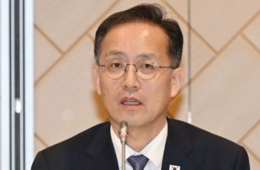
Lee Hyung-Hoon, Vice Minister of Health and Welfare, is announcing the results of the National Medical School Establishment Preparation Committee meeting on the 1st at the Government Seoul Office in Jongno-gu, Seoul. The national medical school for training “public doctors” will be established in Namwon, Jeonbuk, opening in 2029 with the first curriculum starting in 2030. 2026.10.1 Photo by Jo Yongjun
View original imageThe Ministry of Health and Welfare announced on the 1st, following the fourth meeting of the "Preparatory Committee for the Establishment of the National Medical Graduate School," that Namwon has been confirmed as the school's location. The decision took into account the government's announcement in 2018 to establish the school in Namwon, subsequent legislative and budgeting processes, and the city's ongoing preparations, such as securing the site and determining city planning facilities.
Lee Hyunghoon, Second Vice Minister of Health and Welfare, explained during a briefing, "We prioritized an on-site inspection in Namwon, considering the government's existing policies, credibility and consistency of those policies, Namwon City's preparedness, and the securing of the site."
The greatest advantage of the Namwon site is its connection with Namwon Medical Center. The government plans to convert the existing Namwon Medical Center into the "National Medical Center Namwon Hospital" and gradually expand its capacity to around 500 hospital beds. By specializing in essential medical services such as cardiovascular diseases and dementia, the hospital will serve both as a clinical training hospital for the National Medical Graduate School and as a regional hub for the southeastern area of North Jeolla Province. Furthermore, while utilizing Namwon Hospital as the closest teaching hospital affiliated with the school, a variety of other institutions specified by law—including the National Medical Center in Seoul, local medical centers across the country, and various public healthcare facilities—will also be used for teaching and clinical practice.
The most immediate challenge is the recruitment of faculty. Vice Minister Lee also acknowledged, "While facilities and equipment can be secured through investment of time and budget, there are concerns about securing a sufficient number of professors and instructors. This is the most significant obstacle." In response, the Ministry of Health and Welfare is considering a broad approach to appointing faculty members, not only from local universities but also from national medical institutions such as the National Medical Center, National Cancer Center, National Rehabilitation Center, and National Center for Mental Health—as well as specialists trained in the region.
Ko Hyungwoo, Director of Regional Essential Medical Policy at the Ministry of Health and Welfare, stated, "According to the standards of the Korea Institute of Medical Education and Evaluation, a minimum of 112 full-time professors will be required to educate 400 students across four academic years. This includes 25 in basic medical sciences, 1 in medical education, 1 in medical humanities, and 85 in clinical medicine." He added, "We will work together with the education expert committee under the establishment promotion committee to develop a solution for recruiting faculty members."

The Effect of '100 New Doctors per Year' to Be Seen After 2034
Even after the National Medical Graduate School opens, it will not immediately start producing public medical doctors. Vice Minister Lee explained, "If 100 students are admitted each year starting in 2030, the first graduates will emerge in 2034 after completing the four-year program. Additional time is needed for them to complete their residency before they become fully-fledged specialists. Once that point is reached, around 100 new professionals will continue to be trained each year, contributing to the public healthcare workforce."
The curriculum at the National Medical Graduate School is expected to differ from that of standard medical schools. Since the school is designed to train public healthcare professionals, it is unlikely that residents will be able to freely select their subspecialty from the full range of medical fields. Vice Minister Lee clarified, "We plan to specify which specialties can be trained through governmental notices, taking into account the needs of public health care and the characteristics of mandatory service institutions. Therefore, it is unlikely that all specialties, as seen in university and general hospitals, will be available."
The relationship between the new National Medical Graduate School and plans for additional regional medical schools in Mokpo, Suncheon, and other areas has also drawn attention. The Ministry of Health and Welfare has emphasized that "the purpose of the National Medical Graduate School is fundamentally different from regional medical schools." The National Medical Graduate School is not simply an institution for training local doctors to supply the regions—rather, it is intended to train physicians who will work in national hospitals, public healthcare institutions, infectious disease response, and public health policy at the national level. The school is also expected to help resolve shortages in public healthcare, such as epidemiological investigators for the Korea Disease Control and Prevention Agency and medical staff at various national institutions.
Hot Picks Today
 "I Don't Want to Marry a Salaried Man"... Women Flock to 'This Place' to Find Husbands Amid the AI Boom
- "I thought getting into a big company was the goal"... The 'position' only 1 in 121 employees reaches
- "Jealous of Koreans" - Now a Must-Do on Every Trip... The Place Where Foreigners Spent KRW 229.8 Billion
- "'No! Dad, Run!'... Father Moved by 5-Year-Old Son Who Shielded Him from Ghost at Korean Folk Village"
- "Please Let Me Go Home"... Customers Trapped in Department Store Parking Lot for 5 Hours Vent Their Anger
Vice Minister Lee stated, "We will work closely with North Jeolla Province, Namwon City, the National Medical Center, and other relevant agencies to ensure that the National Medical Graduate School opens as scheduled in 2029 and becomes a center for nurturing top talent in public healthcare, with the nation bearing full responsibility for this training."
© The Asia Business Daily. All rights reserved. Unauthorized AI training and use prohibited.