Climate Ministry Highlights One-Year Achievements: "Over 1 Million EVs, Power Grid Overhaul"
Marking its first anniversary since its launch, the Ministry of Climate Energy and Environment has highlighted key achievements such as the expansion of renewable energy, innovation in the power grid, reduction of greenhouse gas emissions, and enhanced response to climate disasters. Going forward, the government plans to accelerate the transition to renewable energy while focusing policy capacity on meeting the soaring demand for electricity and water from advanced industries.

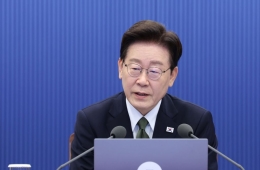
With the government reorganization plan expanding the central functions of energy policy to the Ministry of Environment, renamed as the Ministry of Climate, Energy, and Environment, confirmed by the Cabinet meeting on the 30th, the expanded Ministry of Climate, Energy, and Environment will officially launch on the 1st of next month. Yonhap News Agency
View original image100GW Renewable Energy Target... Expansion of Grid Capacity
On October 1, the Ministry cited the expansion of renewable energy and the overhaul of the power grid as the most significant changes since its establishment. The government established the 1st Basic Renewable Energy Plan, aiming for the early achievement of 100GW (gigawatts) of renewable energy by 2030, while revising regulations such as solar power setback distances and the Renewable Portfolio Standard (RPS). To expand renewable energy supply, it has launched large-scale projects in border areas, reclaimed land, and solar farms for agriculture, and moved to increase offshore wind power capacity. In order to lower the cost and broaden the supply of renewable energy, the spot market for Renewable Energy Certificates (RECs) was abolished and the criteria for RPS compliance shifted from power generation-based to facility capacity-based.
Power grid innovation was also carried out in parallel. The government introduced a flexible grid connection system, permitting generator connections beyond grid capacity where necessary and allowing temporary output control, thereby securing an additional 2.6GW of solar connection capacity in the Honam region alone. To address saturated distribution lines and transformers, the installation of energy storage systems was promoted, enabling extra solar connections. By 2030, grid-side renewable energy capacity is set to rise from 119GW to 171GW (an increase of 52GW), and the distribution side from 84GW to 110GW (an increase of 26GW). As a result, the combined expansion in total capacity across transmission and distribution is projected to reach 78GW. The government also expects higher utilization of the existing grid will reduce costs associated with new grid construction.
The electricity tariff structure was also revised to reflect the characteristics of renewable generation. Daytime tariffs, when renewable supply is plentiful, were lowered, while evening and late-night rates—when demand is higher—were raised to shift consumption to daytime. The introduction of regional industrial electricity tariffs reflecting local power supply and demand is also planned.
Surpassing 1 Million EVs... Expansion of Heat Pump Deployment
Electrification of transportation and heating sectors accelerated as well. The total number of registered electric vehicles surpassed 1 million, with electric vehicles accounting for 23.2% of new car sales. In addition to purchase subsidies, up to 1 million won was provided to support the transition of internal combustion vehicles, and an insurance support system was established to cover up to 15 billion won in excess insurance costs in the event of an EV fire. To reduce the cost burden of EV charging, the tariff structure was subdivided from two to five tiers, resulting in a 9.1% reduction in slow-charging fees.
The proportion of domestic electric buses, which fell to 45% in 2023 due to competition from Chinese imports, rebounded to 77.7% in the first half of this year. The government attributed this to strengthened management standards. For heating, the rollout of heat pumps accelerated, focusing on single-family homes and social welfare facilities, with up to 70–80% of installation costs subsidized, thus driving greater domestic adoption. The Ministry stated, "During this process, production lines for related manufacturing have been established domestically, and full-scale production began in September."
In the industrial sector, a Korean-style Green Transformation Strategy was formulated to shift the five major high-carbon industries—steel, petrochemicals, oil refining, cement, and semiconductors—towards decarbonization and high added value. This will be officially announced and launched in early October alongside major companies' flagship businesses.
53–61% GHG Reduction Target for 2035... Emissions Permit Prices Triple
The government set the national greenhouse gas reduction target for 2035 and charted a medium- to long-term pathway toward carbon neutrality by 2050. Policy authorities reviewed the effectiveness and feasibility of reduction measures for each sector, conducted seven rounds of public forums, and held discussions with the Special Commission on Climate Change. As a result, a reduction path of 53–61% compared to 2018 levels was officially submitted to the UNFCCC Secretariat. The Framework Act on Carbon Neutrality and Green Growth was also revised to reflect Constitutional Court decisions and public consultation outcomes.
The government also formulated the National Emission Allowance Allocation Plan for the 4th plan period to normalize the emissions trading market. Paid allocation for the power generation sector will be gradually increased, while the industrial sector will receive adjustment periods reflecting sector-specific characteristics. For power generation, the paid allocation ratio will be gradually raised from 15% in 2026 to 50% by 2030.
The price of emission allowances rose from about 10,000 won in November last year to about 30,000 won at the end of September this year. The government commented that the setting of total emission caps and the strengthening of paid allocation have helped normalize the emission trading market.

Flood Forecasts Every 10 Minutes... 1.04 Billion Tons Additional Water Storage Secured
Strengthening the response system to climate disasters was also a key achievement. In six districts of Seoul deemed vulnerable to urban flooding, a pilot urban flood forecasting system was operated by linking data from the Korea Meteorological Administration, Ministry of Land, Infrastructure and Transport, and the Seoul Metropolitan Government in real time. Flood situations were automatically analyzed and forecast every 10 minutes. Based on the results of this year's pilot operation, the government intends to formulate a plan to expand the system nationwide within this year.
By linking the operation of existing dams and reservoirs, an additional 1.04 billion tons of flood control storage capacity was secured. By operating existing facilities in tandem instead of building new ones, the government estimates a budget saving of about 4 trillion won. The construction of three new dams and upgrades or gate installations at two existing dams are planned. Of the 1.4 million households eligible for energy voucher support in 2025, 1,274,000 will be automatically converted to recipients in 2026, resulting in an estimated benefit expansion to over 270,000 additional households.
Free Collection of All Used Appliances... Shift to Plastic-Free Solutions
In the environmental sector, the shift to a circular economy proceeded apace. Previously, producers were only responsible for recycling 50 items among waste electrical and electronic products, but this has now been expanded to all categories. By September, a cumulative total of 55,000 integrated collection boxes for used appliances and waste batteries had been deployed. A “last-minute food discount” service—sharing discount information on food approaching its expiration date—was also launched, leveraging a platform to share stock information and promote discount sales, thereby reducing food waste.
As for anti-plastic measures, starting this year, bottled water and beverage producers using over 5,000 tons of PET bottles annually are required to use at least 10% recycled content. The government expects this will replace around 18,000 tons of virgin material.

Second-Year Tasks: Decarbonizing Industry, Electricity, and Water
The Ministry considers its first year since launch as a period for laying the foundations for policy and institutional transformation. For the second year, it plans to focus on translating these changes into tangible improvements for citizens and the industrial field. In particular, the goal is not just to set targets and pathways for greenhouse gas reduction, but to ensure these lead to actual reductions in industry through the full-scale implementation of the Korean-style Green Transition Strategy. The plan is to harmoniously utilize renewables and nuclear power to meet rapidly rising electricity demand and to concretize the coal phase-out strategy. Addressing algal blooms and the circularity of key minerals are also on the agenda. The state will create focused algae management projects for major rivers such as the Nakdong and Seomjin, concentrating pollution reduction and algae removal facilities. For critical minerals, the focus will be on building an industrial ecosystem for collection, processing, and recycling, anchored by resource collection centers for waste materials.
Hot Picks Today
 "Such chaos for the first time in 140 years"... Even illnesses surge, Tokyo stunned by 'unbelievable' event
- Furious After Elbow Was Touched While Sleeping, Passenger Threatens to Kick and Forces Flight Attendant to Kneel
- "With the Push of a Remote Button, Cash Pours Out"... U.S. Cartel Steals 55.2 Billion Won by Hacking ATMs
- "What Are You Doing Squatting There?"... Picking Up a Few on the Trail Could Result in a Fine
- "Nothing Left to Buy, Feeling Indifferent"... 'Rich Daughter' Vibe in Department Stores with 'Hyunbaek Core'
Marking the first anniversary, the Ministry completed the transfer of energy-related departments and merged offices on September 20. The new entity combines 2,686 former Ministry of Environment employees with 219 in the energy sector, finalizing the integration of personnel and resources and further strengthening synergy in responding to the climate crisis, energy transition, and environmental policy going into its second year. Minister Kim Seonghwan stated, "As the lead ministry for decarbonization, we will do our utmost to overcome the climate crisis and pass on a sustainable society to future generations."
© The Asia Business Daily. All rights reserved. Unauthorized AI training and use prohibited.