"High Risk of Cost Overruns"...Skepticism Over Alaska LNG Project Profitability
Construction Cost of 1,300km Pipeline
FT Estimates "Up to $17 Billion"
ExxonMobil and BP Among Early Withdrawals
Buyer Shortages and Concerns Over Rising Project Costs
The administration of U.S. President Donald Trump is pushing the Alaska liquefied natural gas (LNG) development project as an investment opportunity for Korea. However, skepticism over the project's profitability is already emerging. Experts within the U.S. industry point out that the construction cost of the 1,300-kilometer pipeline, which would cut through the heart of Alaska, could far exceed initial estimates.
Even Major Companies Like ExxonMobil and BP Have Withdrawn
According to various foreign media reports, the total cost of the Alaska LNG project is estimated at approximately $44.5 billion to $54.5 billion (about 60 trillion to 74 trillion won). U.S. Secretary of Commerce Howard Lutnick announced during the unveiling of Korea’s investment initiative at the White House that “more than $50 billion will be invested in the Alaska LNG project.”

The core issue is the enormous expense required to construct a new pipeline, stretching about 1,300 kilometers, to transport gas from northern to southern Alaska. One foreign media outlet estimated the pipeline construction cost alone at $13.2 billion to $16.9 billion (about 18 trillion to 23 trillion won). The Financial Times (FT) mentioned an even higher figure of $17 billion, highlighting the substantial risk that the final cost could exceed projections.
Major U.S. energy companies have already exited the project due to these challenges. Initial investors ExxonMobil, BP, and ConocoPhillips withdrew at the end of 2016. Since then, Alaska’s state-owned Alaska Gasline Development Corporation (AGDC) has been leading the project alone. Alex Munton, an analyst at Rapidan Energy Group, told the FT, “Exxon and North Slope producers scrutinized this project extensively and determined that it was not a viable business for them.”
It was only in March 2025, after an eight-year hiatus, that a private energy company became involved again. Following the inauguration of the Trump administration’s second term in early 2025, U.S. energy developer Glenfarne Group acquired a 75% stake, becoming the largest shareholder and main developer. Currently, ExxonMobil and ConocoPhillips are reportedly participating only as long-term gas suppliers produced in Alaska, rather than investing directly in infrastructure construction.
'No Secured Buyers for 20 Million Tons Per Year of LNG Production'

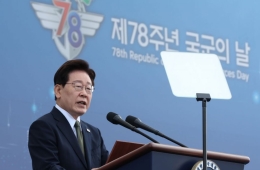
Howard Lutnick, US Secretary of Commerce, and US President Donald Trump are announcing the Korea-US investment project at the White House on the 30th (local time). Photo by AFP Yonhap News
View original imageIt is also a significant issue that buyers have not been sufficiently secured for the LNG volumes to be produced—an annual capacity of 20 million tons. Glenfarne must secure additional purchasers for the 20 million tons per year liquefaction facility before making a final investment decision (FID). Glenfarne CEO Brendan Duval stated, “Phase 1 of the project has clearly been delayed.” The U.S. side is targeting an FID for the liquefaction and export facility next year, with the first LNG exports slated for 2032. The U.S. has so far reached LNG supply agreements totaling 13 million tons with Japan, Korea, Taiwan, Thailand, and France's TotalEnergies. However, some potential buyers have still not been secured, and existing agreements must also be converted to binding contracts.
If the project costs increase beyond current projections, there is also a risk that LNG sale prices will rise. Reduced price competitiveness would make demand procurement even more difficult. Once the Alaska LNG project is complete, it will have to compete against LNG from the U.S. Gulf Coast—which already has established infrastructure—as well as Canadian LNG, which is geographically closer to Asia. Canadian Prime Minister Mark Carney is currently pursuing Canadian LNG projects to reduce the country's dependence on the United States.
Hot Picks Today
 "From 20s to 60s, Everyone Rushed In"...The 'Top License' Also Obtained by Actors Yoo Yeon-seok and Sung Hoon Revealed
- [Exclusive] "Extra Pension Without Ever Setting Foot in Korea"... Baffling Loophole in Foreigners' Childbirth Credit
- "Such chaos for the first time in 140 years"... Even illnesses surge, Tokyo stunned by 'unbelievable' event
- "Even Mushy When Pressed With a Fork": Family of Three Suffers Abdominal Pain and Diarrhea After Eating Chicken at Yeosu Island Expo, Another Food Safety Controversy Erupts
- "Nothing Left to Buy, Feeling Indifferent"... 'Rich Daughter' Vibe in Department Stores with 'Hyunbaek Core'
These factors are among the reasons why the Korean government is hesitant to make direct infrastructure investments in the Alaska project. The Japanese government, during investment negotiations with the U.S., has left open the possibility of participating in the project, but is prioritizing long-term purchase agreements over construction or equity investments.
© The Asia Business Daily. All rights reserved. Unauthorized AI training and use prohibited.