Parties Baffled by U.S. Unilateral Alaska LNG Announcement: "Commercial Viability Must Be Assessed"
U.S. President Donald Trump has unilaterally announced that approximately 50 billion dollars (about 68 trillion won) from South Korea's investment in the United States will be allocated to the Alaska liquefied natural gas (LNG) project. This move is causing deliberations among both the ruling and opposition parties. The project has long been considered lacking in "commercial viability," raising questions about the subsequent steps, including the need for parliamentary approval.
On October 1, both political parties expressed cautious responses to President Trump's unilateral announcement regarding South Korea's investment in the Alaska LNG project. The ruling party acknowledged that the signing of the "Korea-U.S. Strategic Investment Memorandum of Understanding (MOU)" itself is a meaningful achievement but quickly clarified that investment in the Alaska LNG project has not yet been finalized.

Kim Jungkwan, Minister of Trade, Industry and Energy, attended the full meeting of the Industry, Trade, Energy, Small and Medium Enterprises Committee held at the National Assembly on the 22nd. On that day, Minister Kim reported the progress and details of the investment negotiations with the United States confidentially. September 22, 2026 Photo by Dongju Yoon
View original imageOn this day, Kwon Chilseung, chair of the Policy Committee of the Democratic Party of Korea, stated, "This agreement is a meaningful accomplishment in that it protected the national interest based on commercial viability through intense negotiations between Korea and the U.S. In the nuclear power sector, Korean companies will expand their entry into the U.S. market, thus broadening their foundation for expansion into the global market as well."
However, there is a sense of unease surrounding the Alaska LNG project. Jo Seungrae, chairman of the National Assembly’s Planning and Finance Committee (Democratic Party of Korea), commented in a phone call that "a decision to invest has not been made; rather, discussions have only begun, and the government reported this to the National Assembly as well." He indicated that "reviewing the project’s commercial viability and related issues will require time."
Han Jeongae, Secretary General of the Democratic Party of Korea, also stated via social networking service (SNS), "Investment in the Alaska LNG project has not been finalized," adding, "President Trump's remarks served to emphasize the U.S. position on the project. Our government continues to make commercial viability the core principle in its review."
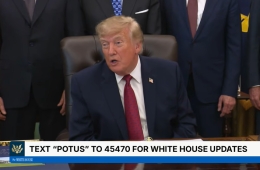
Previously, on September 30 (local time), President Trump announced that South Korea had agreed to invest in the Alaska LNG project as part of its investment in the United States. This statement went further than what was included in the fact sheet, which only said, "It has been agreed to begin reviewing the Alaska LNG project, provided commercial viability and all domestic legal requirements are met."
Regarding this unilateral announcement, Chairman Jo commented, "President Trump put the Alaska LNG project on the negotiating table in order to exaggerate his own political achievements," and added, "Everyone anticipated this." The move is interpreted as a political gesture by President Trump ahead of the U.S. midterm elections in November.
Given that the government had previously assessed the project as lacking commercial viability, attention is now focused on whether it will be referred to the National Assembly. According to Article 3 of the Korea-U.S. Strategic Investment Act, projects found lacking in commercial viability must receive the consent of the National Assembly’s Planning and Finance Committee and the Industry, Trade, Energy, Small and Medium Enterprises Committee.
Chairman Jo explained, "If commercial viability is established, the investment decision will be made and merely reported to the National Assembly. However, if not, the government will coordinate with the U.S. stating that investment is difficult. If, due to strategic considerations, an investment decision must be made despite a lack of commercial viability, this will require the consent of the relevant standing committee."
The opposition is also closely monitoring the situation. An opposition official from the Industry Committee said regarding the Alaska LNG project, "The information was unilaterally released by the U.S. side early in the morning, so we are still reviewing how to respond," adding, "At this point, confirmation of the facts at the government level is necessary."
Hot Picks Today
 "Returning Excess Fees Collected Under Previous Administration"...$680 Per Person Refund for 950,000 Americans
- "Such chaos for the first time in 140 years"... Even illnesses surge, Tokyo stunned by 'unbelievable' event
- "Please Start Dating"...Singapore Uses Nobel Prize-Winning Algorithm to Tackle Falling Birth Rate
- Couple Stranded on Remote Island Holds Special Wedding by Inviting All Residents
- "Nothing Left to Buy, Feeling Indifferent"... 'Rich Daughter' Vibe in Department Stores with 'Hyunbaek Core'
Bae Junyoung, ranking member of the Planning and Finance Committee from the People Power Party, said in a phone interview that, "According to the confidential report, the government has said it will not pursue the project due to a lack of commercial viability. Under the U.S. Investment Act, projects lacking commercial viability require parliamentary approval, but it appears the government is unlikely to proceed this way."
© The Asia Business Daily. All rights reserved. Unauthorized AI training and use prohibited.