Pilot Project for ALS Specialized Long-Term Care Hospitals to Launch in November... Enhanced Personalized Care and Emergency Response
Report on Operation of Four Major Services Including Multidisciplinary Personalized Care at Policy Committee
Expanded Differential Health Insurance Support for Hospitals Safeguarding Essential Regional Healthcare
The government will launch a pilot project for national health insurance coverage at specialized long-term care hospitals for patients with severe muscular rare diseases, such as ALS, starting in November 2026. The initiative focuses on providing medical and care services tailored to the distinct characteristics of these diseases, including specialized clinical care, short-term intensive management, emergency response, and community linkage based on the patient’s condition.

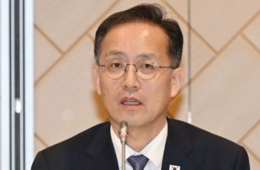
On August 28th, at the 15th Health Policy Deliberation Committee held at the Health Insurance Review and Assessment Service in Seocho-gu, Seoul, Lee Hyung-Hoon, Vice Minister of Health and Welfare and chairman of the committee, is speaking. Ministry of Health and Welfare
View original imageOn October 1, the Ministry of Health and Welfare announced at the 17th Health Insurance Policy Deliberation Committee meeting that it had reported the “Plan for the Promotion of the Pilot Project for National Health Insurance Coverage at Specialized Long-Term Care Hospitals for Severe Muscular Rare Diseases.” This project is a follow-up to the “First-Stage Health Insurance Coverage Innovation Plan” announced on September 8.
Severe muscular rare diseases, such as ALS, often progress to the point where patients become dependent on ventilators, tracheotomies, or tube feeding. According to the ministry, although ongoing medical care and rehabilitation or nursing services are required, existing care services have struggled to fully meet these complex medical needs. Therefore, the government aims to establish a reasonable compensation system that reflects the actual manpower and resources involved.
The pilot project will offer four major specialized services. First, a multidisciplinary team will comprehensively assess the patient’s disease and health status and provide personalized specialist care, nursing and caregiving, and communication support as conditions change. Short-term intensive care beds will be operated for patients who are unable to return home immediately after acute care, as well as those requiring medical management while receiving home care.
Additionally, given the disease’s tendency to rapidly deteriorate due to factors such as respiratory muscle paralysis, an emergency response system will be established. The goal is to detect and respond swiftly to emergencies in hospitalized patients. After discharge, community linkage services will be provided, connecting patients to health management, life-sustaining treatment, and family support.
The ministry will launch the pilot project in November after a preparation period, aiming to establish specialized long-term care services and payment compensation models tailored to severe rare diseases. Based on this, the ministry’s plan is to lay the foundation for alleviating the medical and caregiving burdens on patients with severe rare diseases and their families.
At the same meeting, plans were discussed for implementing subordinate legislation under the National Health Insurance Act, which would establish a differential health insurance compensation system for regional, essential, and public healthcare services.
The National Health Insurance Act, which was revised in May and is scheduled to take effect in January 2027, regulates as a public policy goal the reduction of disparities in medical resources, healthcare services, and health status between regions, as well as the fostering and support of essential healthcare. It also contains the basis for region- and healthcare institution-specific differentiated payments for the costs incurred in the constant provision of nursing benefits. In addition, it allows necessary expenditures for maintaining the clinical functions of regional, essential, and public healthcare, and for cooperation between medical institutions, to be contracted and paid as “public policy benefits.”
Based on the discussions at the meeting, the ministry plans to further specify adding “disaster response” as a public policy objective, as well as adopting performance-based, proportional, or fixed-rate differential compensation for nursing benefit costs, and institution-level compensation. The draft amendment to the subordinate legislation will be released for public notice and feedback within this month.
A report was also presented on the status of the pilot sickness benefits program, which has been in place since July 2022, along with plans for the implementation of the full-scale program. Sickness benefits support individuals who are unable to work due to injuries or illnesses unrelated to work, so that they can receive prompt treatment and return to the workplace. The pilot program is currently underway in eight local governments: Dalseo-gu in Daegu, Anyang-si and Yongin-si in Gyeonggi Province, Iksan-si in North Jeolla Province, Chungju-si in North Chungcheong Province, Hongseong-gun in South Chungcheong Province, Jeonju-si in North Jeolla Province, and Wonju-si in Gangwon Province.
Hot Picks Today
 "I Don't Want to Marry a Salaried Man"... Women Flock to 'This Place' to Find Husbands Amid the AI Boom
- "I thought getting into a big company was the goal"... The 'position' only 1 in 121 employees reaches
- "Jealous of Koreans" - Now a Must-Do on Every Trip... The Place Where Foreigners Spent KRW 229.8 Billion
- "'No! Dad, Run!'... Father Moved by 5-Year-Old Son Who Shielded Him from Ghost at Korean Folk Village"
- "Please Let Me Go Home"... Customers Trapped in Department Store Parking Lot for 5 Hours Vent Their Anger
The Ministry of Health and Welfare explained that, according to the pilot program evaluation, the initiative encouraged rest among workers at small businesses with fewer than 30 employees and other vulnerable workers, while also promoting timely medical utilization and reducing economic anxiety among recipients. To this end, the ministry will build infrastructure and legal grounds, as well as gather feedback from stakeholders and experts, to implement the full-scale program. The ministry stated, “We will do our utmost to prepare for the introduction of sickness benefits, so that people can receive sufficient treatment when ill and return to work on time after recovering their health.”
© The Asia Business Daily. All rights reserved. Unauthorized AI training and use prohibited.