September Exports Reach $120.9 Billion... First-Ever Surpass of $120 Billion Mark (Update)
Ministry of Trade Announces September Export-Import Trends
Semiconductors Drive Performance with 60.3 Billion Dollars
Cumulative Exports Surpass 800 Billion Dollars from January to September
"1 Trillion Dollar Goal Within Reach"
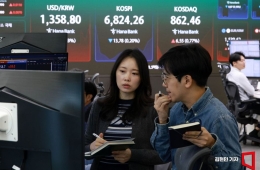
For the first time in history, South Korea's monthly exports have surpassed USD 120 billion. Despite a reduced number of working days due to the Chuseok holiday, semiconductors achieved record-high performance, driving exports in September to USD 120.9 billion.
According to the "September Export and Import Trends" released by the Ministry of Trade, Industry and Energy on October 1, total exports reached USD 120.94 billion, an 83.5% increase from the same period last year. This marks the first time that monthly exports have exceeded USD 120 billion. The previous all-time monthly record was USD 102 billion, set in June of this year. That record has now been broken again in just three months.

In September, due to Chuseok, the number of working days was 21.5, 2.5 days fewer than the same month last year (24 days), but the daily average export amount also hit an all-time high. Considering working days, daily average exports were USD 5.63 billion, a 105% increase. It is also the first time daily average exports have exceeded USD 5 billion.
The historic export performance was largely driven by semiconductors. Semiconductor exports in September jumped 262.8% year-on-year to USD 60.3 billion. With continued growth in memory demand, increased export volume, and sustained rises in fixed prices, semiconductor exports exceeded USD 60 billion for the first time ever, accounting for nearly half of all exports.
Automobile exports fell 5.5% year-on-year to USD 6.05 billion. The ministry explained that this slight drop was due to the shifting of the Chuseok holiday period (from October 2025 to September 2026), creating a base effect, as well as sluggish used car exports. However, daily average exports rose 5.5%. Ship exports rose 29.9%, achieving solid results thanks to increased deliveries of LNG carriers and very large gas carriers (VLGC).
Exports of petroleum products (72.0%) and petrochemicals (5.1%) recorded high growth rates as international oil prices surged, driven by a decrease in vessels passing through the Strait of Hormuz and heightened transport risks in the Red Sea. On the other hand, export volumes declined by 6.9% for petroleum products and 19.1% for petrochemicals. Secondary batteries (14.0%) continued growth for the fifth consecutive month, as both export volumes (due to the expanded ESS market) and unit prices (impacted by rising mineral prices) improved.

Steel exports (3.3%) remained steady, despite increasing import restrictions from major countries such as the US (tariffs) and the EU (tariff-rate quota system or TRQ), supported by rising demand for AI data centers, particularly in the US. General machinery exports (-3.2%) saw a slight overall decrease, as increases in machinery parts exports (driven by improved purchasing managers' indices in the US and China and expanded overseas plant investment) were offset by reduced working days and increased logistics costs.
Cosmetics exports reached USD 1.51 billion, a 31.4% year-on-year increase, setting a new all-time record. Growth was seen across key regions, including China, the US, ASEAN, and the EU. Agricultural, livestock, and marine products exports (-4.7%) saw categories like noodles and sauces perform well, but overall exports fell due to fewer working days and other factors.
Exports to China rose 22.7% year-on-year to USD 26.01 billion. While exports of certain items, such as petrochemicals, lagged, exports of advanced industrial goods like semiconductors, wireless communication devices, and computers increased, sending monthly exports above USD 20 billion for the fourth consecutive month. Exports to the US (137.0%) recorded robust growth across key items such as semiconductors, petroleum products, and general machinery, while automotive exports also rose due to increased US demand and new model releases. ASEAN exports (92.6%) exceeded USD 20 billion for the first time ever, driven by strong performance in semiconductors, petroleum products, and ships. EU exports (20.9%) continued their positive trend for the 10th consecutive month, with multiple categories, including semiconductors, automobiles, and petroleum products, performing strongly.
Imports in September increased by 26.0% year-on-year to USD 71.09 billion. Energy imports (USD 12.96 billion) were up 38.0%, and non-energy imports (USD 58.13 billion) rose 23.6%. Both the import volume (2.0%) and unit price (35.7%) for crude oil increased, sending the import amount up by 38.4% to USD 8 billion. Imports of non-energy items such as semiconductor equipment (50.8%) and wireless communication devices (27.3%) also increased.

Amid robust exports, the September trade surplus rose by USD 40.37 billion year-on-year to a record USD 49.85 billion, breaking the USD 40 billion mark for the first time ever. The cumulative surplus for January to September this year reached USD 252.5 billion, an increase of USD 202.7 billion compared to the same period last year.
Cumulative exports for January to September this year totaled USD 814.5 billion, surpassing last year’s record of USD 709.3 billion. Only USD 185.5 billion remains to reach the USD 1 trillion milestone. The only countries that have achieved annual exports of USD 1 trillion are China, the United States, and Germany.
Hot Picks Today
 "Such chaos for the first time in 140 years"... Even illnesses surge, Tokyo stunned by 'unbelievable' event
- Furious After Elbow Was Touched While Sleeping, Passenger Threatens to Kick and Forces Flight Attendant to Kneel
- "With the Push of a Remote Button, Cash Pours Out"... U.S. Cartel Steals 55.2 Billion Won by Hacking ATMs
- "What Are You Doing Squatting There?"... Picking Up a Few on the Trail Could Result in a Fine
- "Nothing Left to Buy, Feeling Indifferent"... 'Rich Daughter' Vibe in Department Stores with 'Hyunbaek Core'
Kim Jungkwan, Minister of Trade, Industry and Energy, said, “While we are now in a situation where annual exports of USD 1 trillion are within reach, strengthened global protectionism and ongoing tensions in the Middle East still pose significant variables for our exports. The government will keep high-level channels with trade authorities in major countries open at all times to closely monitor export regulations, and also respond preemptively to unexpected external variables so that South Korea can maintain its export growth momentum in the remaining fourth quarter.”
© The Asia Business Daily. All rights reserved. Unauthorized AI training and use prohibited.