Catholic University College of Medicine Registers AI Patent for Predicting Acute Kidney Injury Before Surgery
AI Model Developed Using Clinical Big Data from 240,000 Cases, Achieves AUC of 0.832
Enables Preoperative Identification of High-Risk Patients and Establishment of Personalized Preventive Strategies
A joint research team from the Catholic University of Korea College of Medicine has developed an artificial intelligence (AI) technology that predicts the risk of postoperative acute kidney injury (AKI) using only patient information available prior to surgery, and has registered a patent for the technology.
On October 1, Seoul St. Mary's Hospital announced that a research team led by Professor Hyeeun Yoon of the Department of Nephrology at Seoul St. Mary's Hospital and Professor Jiwon Min of the Department of Nephrology at Bucheon St. Mary's Hospital has developed an AI model named 'CMC-AKIX' to predict the risk of postoperative acute kidney injury, utilizing clinical big data collected from seven affiliate hospitals under the Catholic Medical Center. The patented technology is titled 'Method and System for Predicting Acute Kidney Injury After Surgery.'

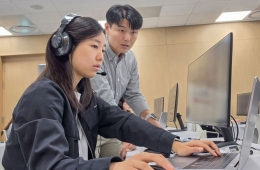
From left: Professors Hyeun Yoon and Jiwon Min of Seoul St. Mary's Hospital. Seoul St. Mary's Hospital
View original imageAcute kidney injury is a disease in which kidney function rapidly deteriorates over a short period. When it occurs after surgery, complications and the risk of death may significantly increase, making early identification of high-risk patients crucial. However, predicting the risk of acute kidney injury before surgery is challenging, as it is influenced by numerous factors, including the patient’s baseline kidney function, age, comorbidities, medications, and the type and duration of surgery.
The research team utilized data from 239,267 cases of non-cardiac surgeries under general anesthesia at seven hospitals—Seoul St. Mary's Hospital, Yeouido St. Mary's Hospital, Uijeongbu St. Mary's Hospital, Bucheon St. Mary's Hospital, Eunpyeong St. Mary's Hospital, Incheon St. Mary's Hospital, and St. Vincent's Hospital—spanning the years 2009 to 2019. Among these, 7,935 cases (3.3%) involved the occurrence of acute kidney injury within 30 days after surgery.
The AI model incorporated 38 preoperative clinical and laboratory variables. These included basic information such as age, gender, blood pressure, and body mass index; comorbidities such as chronic kidney disease, diabetes, and hypertension; information on medication use; test results including creatinine, glomerular filtration rate, albumin, potassium, and urine protein; as well as surgery time and department data.
The research team handled missing values and, recognizing that cases of acute kidney injury constituted only 3.3% of the total, adjusted the data to enhance learning from these minority cases before comparing the performance of various AI algorithms.
As a result, the deep neural network (DNN) model demonstrated the best performance, achieving an AUC of 0.832 in a comprehensive variable analysis. Based on this, the team implemented a web-based 'CMC-AKIX' system that calculates a patient's risk of postoperative acute kidney injury by inputting preoperative clinical data and test results.
The research team expects that this system will assist in identifying high-risk patients before surgery, and will help develop individualized preventive strategies, such as perioperative fluid and blood pressure management and minimizing the use of nephrotoxic drugs.
Professor Hyeeun Yoon stated, "If CMC-AKIX is applied in actual clinical practice, medical staff will be able to input a patient's clinical information and lab results prior to surgery to estimate the risk of postoperative acute kidney injury. This tool can be used to preemptively identify high-risk groups, establish patient-specific preventive strategies, and support clinical decision-making by healthcare professionals."
Hot Picks Today
 "Please Pay Me at Least 3 Million Won a Month": More Than Half of Young People Today Prioritize "Working Conditions" Over Company Size
- Selling Like Crazy Every Year... 30-Year-Old Hetbahn Takes on a New Challenge: Tastes Better Than "Mom's Home Cooking" [On-Site Report]
- "Americans Would Be Amazed If They Came": Wide-Eyed at a Sight They've Never Seen Before... Foreigners Also Fall for K-Baseball [K-Holic]
- "Hey, Lady, Teach Your Kids to Behave!" ... 300,000 Won in Cash and a Bodily Injury Claim Demanded Over Child's Door Ding
- Beachgoer Finds 'Plastic' That Turns Out to Be Perfume Ingredient Worth More Than Twice as Much as Gold
Professor Jiwon Min commented, "This patent not only covers the prediction algorithm but also encompasses the implementation of a web-based system that calculates risk by inputting preoperative clinical information. It is significant in that it enhances the possibility of clinical application and commercialization in the future." The results of this study were published in April last year in the Journal of Medical Internet Research.
© The Asia Business Daily. All rights reserved. Unauthorized AI training and use prohibited.