President Lee: "Hard to Accept Opposition to Kim Jiyong"—First Public Statement…Is Appointment Next?
First Public Statement After Additional Vetting
Direct Explanation of Kim Jiyong’s Nomination Process
"If You Reject Him Just for Being a Former Prosecutor,
It Is Tantamount to Sabotaging the Serious Crimes Investigation Agency"
"Prose
President Lee Jae-myung directly countered the controversy over attorney Kim Ji-yong, who was recommended as the inaugural chief of the Serious Crimes Investigation Office, being called a “pro-Yoon prosecutor,” saying that “it is hard to accept.” This is the first time President Lee has publicly stated his position since additional vetting began, prompted by opposition from some in the ruling party regarding Kim’s candidacy. Observers note that President Lee’s remarks, in which he confirmed that the label “pro-Yoon prosecutor” is not factually accurate even after further review, indicate he may be leaning toward proceeding with Kim’s appointment process.

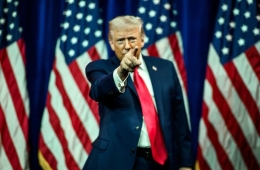
President Lee Jae-myung is speaking at the cabinet meeting held at the Blue House on the 29th. 2026.9.29 Photo by Yonhap News
View original imageAccording to the Blue House and ruling party sources on October 1, President Lee is carefully deliberating whether to submit a personnel hearing request for Kim’s confirmation to the National Assembly. Since Kim’s nomination on September 8, the Blue House has conducted further vetting into issues raised by ruling party members, including his handling of major cases during his time as a prosecutor and whether he could be classified as part of the so-called “Yoon Suk-yeol faction.”
Amid these developments, between the night of September 30 and the early hours of October 1, President Lee posted twice on X (formerly Twitter), elaborating on his perspective regarding Kim. In his first post, he directly refuted the “pro-Yoon” controversy when responding to a supporter’s statement labeling Kim as a “pro-Yoon political prosecutor.” President Lee stated, “As objectively confirmed by the government,” Kim was selected and promoted to chief prosecutor during the Moon Jae-in administration under Justice Minister Choo Mi-ae, and, as head of the criminal division at the Supreme Prosecutors’ Office under Prosecutor General Yoon Suk-yeol, he ordered a reinvestigation that led to the indictment of former President Yoon’s mother-in-law, Choi Eun-soon, in a perjury case that initially resulted in a not-guilty decision.
He went on to say that after Yoon’s election as president, Kim was transferred to a provincial deputy chief prosecutor position—a demotion—before resigning, adding, “Putting other issues aside, it’s hard to accept criticism of someone like him simply for being labeled ‘pro-Yoon prosecutor.’” President Lee emphasized, “I am the biggest victim of the political prosecutors under the Yoon Suk-yeol administration, and ensuring such incidents are never repeated is one of this administration’s greatest tasks.” He further stated, “If people knowingly make false and baseless claims just to attack and smear someone, that is slander, not criticism; it amounts to obstructing state affairs, not offering advice on governance.”
In his second post, several hours later, President Lee rejected calls for Kim’s exclusion solely because of his prosecutorial background. President Lee remarked, “If we are to disregard everyone with a prosecutorial background, what about Assemblywoman Park Eun-jung, Chief Prosecutor Im Eun-jung, or Assemblyman Lee Sung-yun? They are all current or former prosecutors. If we are told not to appoint former prosecutors—who are investigation experts—to head a major investigative agency just because they used to be prosecutors, that is tantamount to sabotaging the new Serious Crimes Investigation Office.”
President Lee also clarified his vision for prosecutorial reform, stating, “The goal of prosecutorial reform is not to exact revenge on the prosecution service or undermine it, but rather to separate investigation and indictment powers so that these functions are never again abused by those in office, ensuring both are carried out properly.” He added, “The aim of prosecutorial reform is to ensure investigation and indictment functions operate impartially for the people and the nation, free from political or governmental interference.”
He also provided additional details of the latest vetting process for Kim. President Lee said, “Given claims that Kim Ji-yong is a ‘pro-Yoon prosecutor’ and other opposition arguments, we conducted prolonged additional vetting, and found those claims to be mostly false or even entirely baseless.” He further explained the selection procedure for the final nominee: Candidates for chief of the office are narrowed down to four by an independent recommendation committee following public recommendations from citizens, after which the Minister of the Interior and Safety recommends a final candidate to the president. President Lee stated, “During discussions, Kim Ji-yong was determined to be the most suitable among the recommended four.”
Given that President Lee has declared that further vetting confirmed Kim is not a “pro-Yoon prosecutor,” there is growing speculation inside and outside the Blue House that a request to the National Assembly for a confirmation hearing may be imminent. However, President Lee has also suggested he will continue to deliberate before making a final decision. He said, “Even if there are some issues, we should not ignore the legally established recommendation process.” He also explained that if Kim is excluded, one of the remaining three candidates must be appointed in his place. President Lee concluded, “Whether there is sufficient reason for a new recommendation and whether any of the other three are suitable replacements for Kim Ji-yong remain matters for careful consideration and judgment.”
Hot Picks Today
 "Two Spend 500,000 Won in a Flash, Yet Wait Two Hours?" ... 'Dreamland' Shunned by Kids and Foreign Tourists
- The Era of Getting 200 Million Won After 30 Years Is Over... A Japanese Bank's "Perpetual Department Head" Who Just Clocked In Cries Out
- Spain Hit by Its Worst Tragedy... Lee Kangin, Moreno and Real Madrid Join Soccer World in Mourning
- They Said, “Make It Your Home for Life” - Then Suddenly Kicked 200 Passengers Off... What Happened to the Around-the-World Cruise?
- "130 Rice Bowls Sold Out in a Day"... 'Unfiltered Face' Adds 8 Million Won to Night Market Sales: China's Bungeunwoo
Meanwhile, with the selection process for Kim delayed, the Serious Crimes Investigation Office, scheduled to launch on October 2, will begin operations without an inaugural chief. In addition, the Prosecutors’ Office, which is to be in charge of prosecution and maintaining public indictments, has not selected its first chief either. With the Minister of Justice post also vacant, key positions needed to lead and coordinate the new criminal justice system remain empty, making the “leaving with the doors open”—launching institutions before leadership is in place—a reality.
© The Asia Business Daily. All rights reserved. Unauthorized AI training and use prohibited.