Gyeonggi Province Applies for Paju Peace Economic Zone Designation, Plans KRW 2 Trillion Mixed-Use Development
Gyeonggi Province Submits Paju City as First Candidate for Peace Economic Zone
Industrial, Tourism, and Logistics Hubs Planned on 6.9 km² in Paju-eup, Munsan-eup, and Wollong-myeon
Yeoncheon and Pocheon to Apply in Second Round Next August
Additional Candidate Recruitment in October; One More City or County to Be Selected by Year-End
Gyeonggi Province has officially nominated Paju City as the final candidate for the first phase of the Peace Economic Zone (PEZ) project being promoted by the government.

On September 30, Gyeonggi Province submitted a development plan to the Ministry of Unification and the Ministry of Land, Infrastructure and Transport, requesting that approximately 6.9 km² (about 2.08 million pyeong) in Paju-eup, Munsan-eup, and Wollong-myeon of Paju City be designated as a Peace Economic Zone, the province announced on October 1.
The Peace Economic Zone is a national special zone established in North Korea border regions to promote development in industries, tourism, and logistics, and to foster the foundation for inter-Korean economic cooperation and a joint economic community. If designated, it will receive benefits such as tax reductions, relief from levies, special administrative permissions, and infrastructure support. The Ministry of Unification plans to designate a total of around four such zones.
The Paju development plan adopts a mixed-use approach, combining industrial, tourism, and residential functions. The site will consist of five districts: two industrial complexes, a mixed-use complex, a cultural tourism district, and an inter-Korean logistics district. Six strategic industries will be actively promoted, including artificial intelligence (AI), advanced manufacturing, pharmaceuticals, and smart logistics.
About 1.4 km², accounting for approximately 20% of the total area, is allocated as a peace zone. So far, 210 companies have expressed their intention to move in, and the overall project cost is estimated at around 2 trillion won.
The province highlighted the advantages of Paju’s existing advanced industrial base, its connectivity to the Gaeseong Industrial Complex, and its metropolitan transportation infrastructure. Since the Ministry of Unification’s master plan designates the western inland area, including Paju, as a "smart and converged industrial cooperation zone," Gyeonggi Province plans to respond to the government’s evaluation based on location competitiveness and corporate demand.
Since 2016, Gyeonggi Province has prepared for the creation and attraction of the Peace Economic Zone system through 80 policy initiatives—such as proposals to the National Assembly and central government, as well as forums and meetings—and eight related research projects.
The province expects this application to strengthen Gyeonggi Province Governor Choo Mi-ae's vision for a "Major Transformation of Northeastern Gyeonggi." The plan is to attract industries and investment in fields such as aerospace, space aviation maintenance (MRO), climate and energy technology, and advanced smart farming by linking returned US military sites and idle military land with the Peace Economic Zone and Opportunity Development Zone, among others.
Governor Choo said, "Gyeonggi Province has done its utmost for the designation of the Peace Economic Zone, from the legislative phase to establishing the master plan, selecting candidate sites, and preparing the development plan," and added, "We will do our best to secure designation for the first pilot zone, leveraging Paju’s locational and industrial competitiveness."
She further emphasized, "Starting with the Paju Peace Economic Zone, we will focus our administrative capacity on ensuring the successful establishment of a peace economy hub in northeastern Gyeonggi."
Hot Picks Today
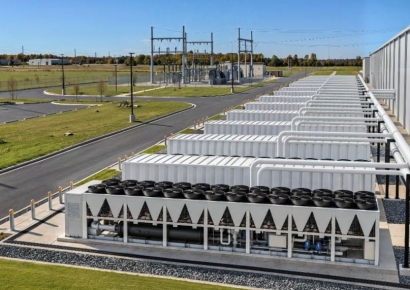 "The Real Winner Controls the Heat"...LG Electronics Bets 150 Billion Won on New Chiller Plant in Virginia, US
- SK hynix Maintains 3.4 Million Won Target Price: "Strong Memory Demand" [Click eJongmok]
- SNU Students Line Up for This Recruitment Fair: "Better Than Large Corporations" [Report]
- Minister Kim Jeonggwan: "No Alaska LNG Investment Without Commercial Viability"
- "Did They Really Use That Pot for Cooking?" Outrage as Chinese Kindergarten Caught Washing Rags in Kitchen
Meanwhile, Yeoncheon County and Pocheon City, which were selected as candidate sites along with Paju in March, are carrying out preliminary administrative procedures such as establishing development plans and conducting strategic environmental assessments. Once these procedures are completed, the province plans to apply for designation by the deadline of August 31, 2027. Separately, Gyeonggi Province will also begin soliciting additional candidate sites this month, aiming to select one more city or county in the province by the end of the year.
© The Asia Business Daily. All rights reserved. Unauthorized AI training and use prohibited.