Preventing a Second Seosomun Overpass Collapse... Seoul City to Implement Comprehensive Demolition Management for Aging Overpasses
Reinforced Safety Management from Planning and Design
Pre-Verification of Demolition Plans, Securing Sufficient Work Hours
Enhanced Demolition Expertise... Supervisors Stationed On Site
Swift Response to Abnormal Signs... Principle of Unmanned Inspections
The Seoul Metropolitan Government will comprehensively strengthen its safety management system for the demolition of aging bridges and overpasses. Demolition plans will be subject to expert review prior to construction, and it will be standard policy to have supervisors stationed on site. These are supplementary measures taken in response to the collapse of the Seosomun Overpass in May.
The safety management enhancement measures for the demolition of aging overpasses, announced by the Seoul Metropolitan Government on October 1, include actions that can be implemented immediately ahead of any institutional improvements by the central government.

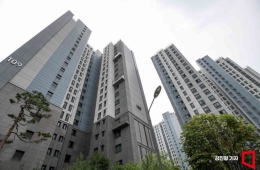
The scene at the time of the Seosomun Overpass collapse accident in Seodaemun-gu, Seoul. The Asia Business Daily
View original imageFirst, safety management will be reinforced from the planning and design stages before construction begins. A pre-verification process for demolition designs of civil structures will be introduced, whereby each stage of the demolition will be assessed for safety risks, and experts will conduct pre-verification through construction technology reviews.
Currently, for overpasses above railways, work is only permitted for around 2 hours and 30 minutes at night when trains are not running. However, in the future, the Seoul Metropolitan Government will secure sufficient working hours for safe demolition by coordinating with relevant organizations such as the Ministry of Land, Infrastructure and Transport and Korea Railroad Corporation.
During the construction phase, the selection criteria for supervisory companies will be improved to ensure that experienced technical experts manage the site. A new criterion evaluating 'demolition project experience' of technical personnel will be added to the Project Performance Evaluation (PQ).
Video documentation for key processes—such as cutting or lifting structures—will also be strengthened. In addition to routine site and panoramic recordings, major processes requiring documentation, as determined during the demolition design review stage, will be filmed step-by-step throughout the work processes.
The emergency response system will be enhanced to enable a swift reaction to abnormal signs. If there is sagging or deformation of the structure, the relevant organizations will be immediately alerted. Following a meeting, the site will be controlled, and emergency inspections and response measures will be carried out.
To prevent secondary accidents that may occur during manual inspections, 'non-contact unmanned inspection' using drones, robots, and endoscopes will be institutionalized as the principle. If direct inspection is inevitable, only the minimum required personnel will be deployed. In addition, the city will pursue the introduction of 'worker disaster liability insurance' through construction companies, so that relevant experts are covered and can be protected in the event of an accident.
Institutional support will also be reinforced to ensure that the necessary manpower and technology for safety management are appropriately allocated to the site. When calculating demolition design, supervision, and construction costs, the budget for safety management—including structural integrity verification and unmanned inspections—will be generously reflected.
The Seoul Metropolitan Government will immediately apply measures that can be put into effect right away, while sequentially implementing those requiring consultation with relevant organizations. In addition, in coordination with the Ministry of Land, Infrastructure and Transport’s ongoing institutional improvement discussions, the city will continue to propose issues that require regulatory changes, such as securing working hours for railway sections.
Hot Picks Today
 "From 20s to 60s, Everyone Rushed In"...The 'Top License' Also Obtained by Actors Yoo Yeon-seok and Sung Hoon Revealed
- "Unbelievable Event" in Tokyo Leaves Japan Stunned...Even 'Weather-Related Illnesses' Emerge
- Smoking Cigarettes and Taking Photos at Gyeongbokgung Palace..."I Don't Know How to Smoke," Foreign Tourists Deny Accusations
- "The Real Winner Controls the Heat"...LG Electronics Bets 150 Billion Won on New Chiller Plant in Virginia, US
- The Effortlessly Chic "Rich Daughter" Mood... Have You Heard of the Latest Trend, "Hyunbaekcore"?
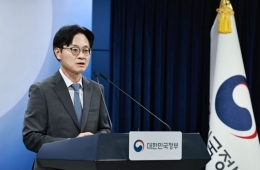
Kim Yonghak, Director of Construction Technology Policy at the Seoul Metropolitan Government, said, "Since the structural condition of aging civil structures continues to change during the demolition process, we will thoroughly block risk factors arising in the field through a proactive safety management system. We will quickly implement measures that can be enforced immediately, ahead of any government institutional improvements, to ensure that the safety of citizens and on-site workers remains our top priority."
© The Asia Business Daily. All rights reserved. Unauthorized AI training and use prohibited.