"Korean Firms Seek to Acquire 5–10% Stake in Westinghouse... Board Entry Is Key"
KEPCO and KHNP Consider Symbolic Participation, While Private Firms Show Greater Investment Interest
Board Participation Possible with 10% Stake, but WEC Hesitant about Management Involvement
Equity Stake Expected to Partially Offset 50-Year Global Agreement's Technology and Procurement Costs

Korean companies are pushing to acquire a 5–10% stake in U.S. nuclear power company Westinghouse Electric Company (WEC). Linked to the "Project Power," which involves the construction of eight large nuclear power plants in the United States, the plan aims not only to participate in the nuclear plant construction but also to become Westinghouse shareholders, thereby sharing in the potential profits arising from both the U.S. and global nuclear markets. However, as participation on the board of directors is contingent on holding around a 10% stake, the final shareholding ratio and the extent of management involvement are expected to become key points in forthcoming negotiations.
According to a joint fact sheet released by South Korea and the United States on October 1, the two countries have agreed to pursue investment in a "significant minority interest" in Westinghouse by Korean companies, as part of Project Power. The specific Korean companies to participate in the investment and the final size of the investment have yet to be determined. The two governments intend to share in the commercial benefits generated from these large-scale U.S. nuclear power projects.
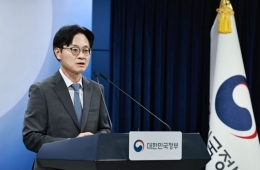
The government is currently considering an equity stake in the range of 5–10%. Minister of Trade, Industry and Energy Kim Joungkwan stated at an investment-related briefing on September 22 that, in regard to the Westinghouse equity investment, "We are considering between 5 and 10%; the specific amount will be determined through future negotiations." In addition to Korea Electric Power Corporation and Korea Hydro & Nuclear Power, the participation of domestic private-sector companies as investors is also under review.
In particular, Korea Electric Power Corporation and Korea Hydro & Nuclear Power are considering a symbolic level of equity participation rather than making a direct, large-scale capital injection. This is due to the significant financial burden involved, and also because there are private companies that see expanding into the global nuclear market as a new business opportunity and are showing interest in equity investment. Minister Kim explained, "Korea Electric Power Corporation and Korea Hydro & Nuclear Power are thinking at only a minimum symbolic level, while private companies are relatively more willing to invest."
The shareholding ratio is a key issue. The government regards a 10% stake as the threshold for gaining board participation rights, taking into account existing shareholder agreements at Westinghouse. While some Korean companies wish to secure a larger stake, the government explains that Westinghouse is uneasy about Korean firms participating directly on the board of directors.
Minister Kim further stated, "We set the maximum shareholding at 10% because this is the level at which a director can be appointed. From Westinghouse's perspective, having Korean counterparts directly participate on the board presents challenges."
The mutual interests of both parties underpin South Korea's move to invest in Westinghouse. While Westinghouse possesses the core technology and intellectual property (IP) for the AP1000 reactor, its challenge is to secure the required engineering, procurement, and construction (EPC) capabilities and supply chains needed to build multiple large nuclear power plants simultaneously in the U.S. In contrast, South Korea has a mature industrial ecosystem capable of constructing such facilities and supplying equipment, yet it has faced certain limitations entering the U.S. and European markets.
Minister Kim noted, "Westinghouse has the designs and IP, but lacks enough EPC capacity and suppliers to actually build nuclear plants," stressing that partnership with South Korea is a necessary option for Westinghouse as well.
Consideration has also been given to the long-term business relationship between both parties. The basic term of the global agreement signed last year—ending an intellectual property dispute between Korea Electric Power Corporation, Korea Hydro & Nuclear Power, and Westinghouse—was for 50 years. Under this deal, South Korea is required to pay Westinghouse technology usage fees and purchase a certain volume of goods and services when exporting nuclear plants. At the time, there were criticisms within the domestic nuclear industry that the prolonged financial obligation to Westinghouse was unfavorable for South Korea. By securing a stake in Westinghouse, Korean companies expect to at least partially offset this burden.
The future shareholding policy of Brookfield, Westinghouse's largest shareholder, is also a variable. The government has held multiple rounds of discussions with Brookfield. Given the characteristics of private equity funds, there was speculation that Brookfield might seek to recover its investment by pursuing an initial public offering (IPO) of Westinghouse. However, the government believes that, as the value of Westinghouse has risen in tandem with nuclear market expansion, Brookfield is now more likely to retain a certain stake even after the company's listing.
Hot Picks Today
 "The Real Winner Controls the Heat"...LG Electronics Bets 150 Billion Won on New Chiller Plant in Virginia, US
- SK hynix Maintains 3.4 Million Won Target Price: "Strong Memory Demand" [Click eJongmok]
- SNU Students Line Up for This Recruitment Fair: "Better Than Large Corporations" [Report]
- Minister Kim Jeonggwan: "No Alaska LNG Investment Without Commercial Viability"
- "Did They Really Use That Pot for Cooking?" Outrage as Chinese Kindergarten Caught Washing Rags in Kitchen
Minister Kim commented, "Brookfield previously intended to exit and withdraw its investment, but that does not seem to be the case anymore. Now, they are strongly inclined to hold on to their shares." He further added, "Although Brookfield holds 51%, even if their stake decreases, it seems maintaining a shareholding is considered advantageous with regard to the increasing corporate value."
© The Asia Business Daily. All rights reserved. Unauthorized AI training and use prohibited.