Minister Kim Jeonggwan: "No Alaska LNG Investment Without Commercial Viability"
"It Is True That Commercial Viability Is Lacking... We Will Scrutinize Every Detail"
However, Risks in LNG Transport Routes Such as the Strait of Hormuz, the Malacca Strait, and the Taiwan Strait Are Increasing
Negotiations Underway with the

Minister of Trade, Industry and Energy Kim Jungkwan stated that, with regard to the Alaska liquefied natural gas (LNG) development project, which is one of Korea's strategic investment initiatives in the United States, "Despite its strategic benefits, we will not proceed if it lacks commercial viability." Until last year, the government had determined the project was insufficiently profitable, but following the war and the resulting increase in global LNG supply chain uncertainty, the project began to be reconsidered from the perspective of energy security. However, the government maintains that actual investment will only proceed if certain conditions—such as improved tax, tariff, and LNG import terms—can enhance the project's commercial feasibility.
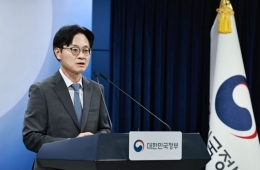
In a briefing on U.S.-related investments held at the Government Complex Seoul on September 22, Minister Kim said regarding the Alaska LNG project, "Last year, from our perspective, we judged that the Alaska LNG project was not commercially viable, and I testified accordingly during the National Assembly audit." He added, "However, after the war, we have come to see the Alaska project differently."
The government's shift in position to revisit the project stems from growing concerns over LNG import sources. Korea currently imports LNG from Qatar, Australia, Malaysia, the United States, and Russia, but the government evaluates that geopolitical and climate risks have been increasing along key shipping routes.
Minister Kim cited not only the Strait of Hormuz but also the Strait of Malacca and the Taiwan Strait as areas of geopolitical tension. He explained that while U.S. LNG exports to Asia typically used the Panama Canal, drought and other factors have hindered transit, resulting in the need to reroute shipping around the Cape of Good Hope to Asia.
He also discussed uncertainty surrounding natural gas from Australia and Russia. Minister Kim noted that Australia prioritizes domestic gas supply, which could reduce the volume shipped to Korea, while stable Russian supply is difficult to guarantee under wartime conditions. "We judge that the overall gas supply situation is vulnerable," Minister Kim commented, adding, "From my position as the minister in charge, I believe gas import routes are too concentrated on certain paths." He continued, "We are concerned about what would happen should problems arise in the Malacca Strait or Taiwan Strait."
This is why the government is also seeking new LNG supply routes along North America's west coast, including Canada. The Alaska LNG project is considered to have strategic value in that it could help diversify LNG import routes, which are currently concentrated in the Middle East, Australia, and the U.S. South.
Nevertheless, the government emphasizes that the need for energy security does not translate directly into an investment decision. Minister Kim said about Alaska LNG, "It is true that the project currently lacks commercial viability," adding, "We need to examine all strategic aspects, but we will carefully consider each factor."
The government is particularly focused on factors that undermine the project's economic feasibility, including regulatory approvals and labor availability. Climate conditions in Alaska and technical issues related to the construction of long-distance pipelines are also under review. "The U.S. is also aware of the lack of commercial viability, as well as the reasons for delays in the project," Minister Kim explained. "The biggest issues are regulatory approvals and the securing of labor."
Accordingly, the government is consulting with the U.S. side on improvements to enhance the commercial feasibility of the Alaska LNG project. The main points of negotiation include reducing the tax burden imposed by state and local governments and lowering tariffs on materials such as steel required for the project. Discussions are also underway regarding improved purchase terms that would allow for long-term, stable LNG procurement.
Some of these conditions have been reflected in the Korea-U.S. strategic investment implementation plan announced by the two countries. The U.S. side has agreed, should the project proceed, to create favorable conditions for Korean company participation and to grant tariff reductions on related materials such as steel. In addition, Korea will be assisted with preferential access to LNG produced by the project and the ability to sign economically viable long-term LNG purchase contracts.
Hot Picks Today
 "From 20s to 60s, Everyone Rushed In"...The 'Top License' Also Obtained by Actors Yoo Yeon-seok and Sung Hoon Revealed
- "Unbelievable Event" in Tokyo Leaves Japan Stunned...Even 'Weather-Related Illnesses' Emerge
- Smoking Cigarettes and Taking Photos at Gyeongbokgung Palace..."I Don't Know How to Smoke," Foreign Tourists Deny Accusations
- “3.5-Meter Shark Becomes a Celebrity”… Busan’s PR Ambassador ‘Bukangyi’ Draws International Attention
- The Effortlessly Chic "Rich Daughter" Mood... Have You Heard of the Latest Trend, "Hyunbaekcore"?
Minister Kim concluded, "We will work closely with the U.S. to ensure that the Alaska project meets our commercial criteria and strategic needs, and will pursue negotiations vigorously."
© The Asia Business Daily. All rights reserved. Unauthorized AI training and use prohibited.