Foreign Exchange Authorities Inject $9.6 Billion to Defend Exchange Rate in Q2
The foreign exchange authorities have used approximately 9.6 billion dollars to defend the won-dollar exchange rate, which surged to the 1,500-won range in the second quarter of this year.

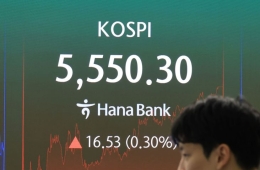
As tensions in the Middle East escalate and international oil prices surpass $100 again, the domestic stock market is also being affected. On the 11th, employees at the dealing room of Hana Bank headquarters in Jung-gu, Seoul were monitoring the stock market and exchange rates. On that day, the KOSPI opened at 6,802.50, down 231.42 points (3.29%) from the previous close, while the KOSDAQ opened at 816.91, down 20.01 points (2.39%), gradually reducing the scale of the decline. September 11, 2026 Photo by Jo Yongjun
View original imageAccording to the “Market Stabilization Measures” released by the Bank of Korea on September 30, the foreign exchange authorities made a net sale of 9.612 billion dollars in the foreign exchange market during the second quarter to stabilize the market. When converted at the average won-dollar exchange rate for the second quarter—1,502 won—the amount reaches 14.437 trillion won. On a quarterly basis, this was the fifth-largest net selling volume in history. It also marks the seventh consecutive quarter of net sales since the fourth quarter of 2024.
Since the second half of last year, as the exchange rate soared, the authorities have been engaging in large-scale net dollar sales. In the fourth quarter of last year, the net selling amount reached a record-breaking 22.467 billion dollars, and in the first quarter of this year, it amounted to 13.628 billion dollars.
Hot Picks Today
 "The Transfer Failed, but 'Ding-Dong,' Money Came In"... KRW 32.5 Billion Financial Incident at Toss Bank
- Shark 'Bukkangi' Missing... Oil Spill off Busan North Port Raises Concerns
- "Made 12 Billion Won Cleaning Up Other People's Dog Poop With Just a Rake"... 'Poop Scoop Millionaire' Is All the Rage in the U.S.
- [2026 Parliamentary Audit] Education Ministry Pushes New Applicant Numbers That Make the "Competition Rate Impossible to Infer" for Regular Admissions
- Woman Who Bought Economy Ticket Causes Uproar, Demands "Put Me in Business Class," Delays Flight
In the second quarter of this year, the authorities are believed to have intervened in the market through dollar sales as a result of the sharp rise in exchange rates, which was triggered by the ongoing Middle East war and profit-taking by foreign investors due to a rise in the KOSPI. However, it is expected that in the third quarter, as the won-dollar exchange rate falls into the 1,300-won range, currency defense through dollar sales will decrease.
© The Asia Business Daily. All rights reserved. Unauthorized AI training and use prohibited.