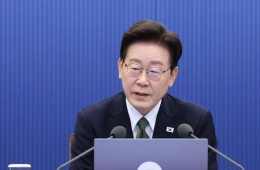
[Interview] "Avoid Holding Leveraged Products for a Week... KOSPI Is Likely to Be Rerated"
Scott Acheichek, COO of Rex Financial, Interview
Average Holding Period for U.S. Single-Stock Leverage ETFs Is Two Days
"With Continued Value-Up Initiatives and Solid Corporate Earnings, Korean Stock Market Can Keep Rising"
"Excessive Concerns About a Downturn in the AI Cycle Should Be Eased"
"Excluding mainland U.S. investors, Korean retail investors are among the most active investor groups in the U.S. ETF market. The speed at which Korean investors acquire information and execute trades is among the best in the world."

Scott Acheichek, Chief Operating Officer (COO) of Rex Financial—a leading U.S. innovation-driven asset management company—shared this assessment of Korean retail investors, including the so-called 'Seohak ants' investing overseas, in an interview with The Asia Business Daily.
Rex Financial specializes in providing innovative exchange-traded products (ETPs) focused on income, thematic, and leverage strategies. Its current assets under management (AUM) amount to approximately USD 8 billion (about KRW 1.1 trillion). The firm manages the well-known leverage and inverse ETF brand 'T-REX', as well as the leverage and inverse ETN brand 'MicroSectors'. Especially through collaborations with global financial institutions such as Bank of Montreal (BMO), Rex Financial is rapidly growing by introducing differentiated ETN and ETF products to the market.
COO Acheichek diagnosed the extreme volatility recently experienced by the Korean stock market due to global risks and concerns about the semiconductor industry, stating, "The expansion of short-term volatility was an unavoidable phenomenon shared not only by Korea but across all global stock markets." He specifically pointed to the market capitalization concentration in major blue-chip stocks such as Samsung Electronics and SK hynix as a key cause. "This year, the combined market capitalization of these two stocks exceeded 50% of the overall market in Korea, leading to increased volatility in the broader market—a perhaps inevitable development," he explained. "However, if the value-up program continuously pursued by Korean authorities and solid earnings by Korean companies persist, there is a very high possibility that the Korean stock market will be rerated in the mid- to long-term."
He distanced himself from the 'peak out' debate regarding the global semiconductor cycle. Referring to the strong conviction Korean retail investors have in the structural growth of the artificial intelligence (AI) and semiconductor sectors, he stressed that this perspective is aligned with global trends. "While semiconductors were previously categorized as a typical cyclical sector, the current growth driven by AI infrastructure development represents a structural shift," Acheichek said. "As the AI ecosystem expands, demand for memory semiconductors such as high bandwidth memory (HBM), as well as related equipment, will inevitably persist; thus, excessive concerns about a downturn in the cycle can be set aside."
Addressing recent debates in the Korean market about single-stock leverage products increasing volatility, Acheichek—who has specialized in leverage and inverse derivatives—analyzed that this is a "natural growing pain" associated with the introduction of new products. "When a new type of derivative product enters the market, unforeseen impacts may arise and the market needs time to adapt," he said. "In the U.S., it has been five years since single-stock leverage products were introduced and the leveraged ETF market itself has a 20-year history; the early days saw numerous controversies and growing pains as well."
He emphasized the necessity of thorough risk management when investing in leveraged products. "According to our analysis, the average holding period for single-stock leverage products is about two days, and for index leverage products, only three to four days," Acheichek pointed out. "Holding leverage products—which are designed to capitalize on short-term volatility—for a week or a month is dangerous. The importance of investor protection and education by financial authorities cannot be overstated, and investors themselves must be fully aware of the structural risks involved."
Rex Financial is also planning to further strengthen its lineup of innovative thematic products for long-term investors. Following the launch of 'DRMZ', the first U.S. ETF investing exclusively in pure-play drone companies, and 'CHIP', which tracks an index of AI chip makers, the company is preparing to list a product themed around oral anti-obesity peptide treatments as its next offering. If listed, this will become the world's first peptide-based thematic ETF.
Hot Picks Today
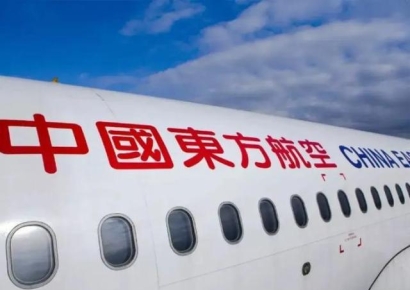 Flight Attendant Kneeled to Apologize... China Eastern Airlines Bans Passenger Who Continued to Complain
- An Apartment Once Worth 400 Million Won Nears 1 Billion... "Still Worth It" as 1990s-Born Pangyo Workers Flock to Gyeonggi Gwangju [Report]
- "Didn't Want to Buy a Home"... Seoul Apartment Buyers Flocked to Mid- to Low-Priced Segment After Tax Reform Plan [Real Estate AtoZ]
- "Huge Sum in Pension Account He Never Knew About... What Happened to Chinese Man in His 70s Who Collected Scrap for 21 Years?"
- Musk's Partner Reveals Sudden Breakup Just a Week After Saying "I Love You"
Acheichek stated, "Rex Financial aims to be the first to identify structural growth sectors that will change the market landscape and deliver them to investors." He added, "Over the mid- to long-term, we plan to discover outstanding local partners in markets across Asia, including Korea, to jointly supply unique investment products through joint ventures or partnerships, and to further strengthen our branding."
© The Asia Business Daily. All rights reserved. Unauthorized AI training and use prohibited.