KOFST Marks 60 Years: “Turning Voices from Research into Policy”
Federation of 604 Science and Technology Organizations Launches New Vision
“Warm Future Forum” for AI, Biotechnology, and Quantum Technology Established
The Korean Federation of Science and Technology Societies (KOFST), which encompasses 604 science and technology organizations, is marking its 60th anniversary by strengthening its role in connecting the voices from research sites to policy. While the past 60 years have been focused on gathering and representing the opinions of those in the science and technology field, the future will emphasize creating policy alternatives that collect and reflect on-site demands across disciplines and generations, aiming to ensure the achievements of science and technology are linked to industry and enhance the lives of citizens.
On September 30, KOFST held its 60th Anniversary Ceremony at the Korea Science and Technology Center in Gangnam-gu, Seoul, and declared a new vision: “A Human-Centered Future Together Opened by Science and Technology.” The event was attended by over 500 people, including Bae Kyunghoon, Deputy Prime Minister and Minister of Science and ICT, Song Kiheon, Chair of the National Assembly’s Science, ICT, Broadcasting, and Communications Committee, Assemblywoman Hwang Jeongah, representatives of KOFST member organizations, and figures from the science and technology community.

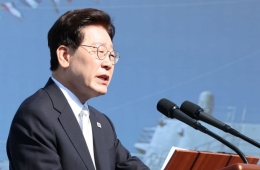
Kwon Onam, President of the Korean Federation of Science and Technology Societies, is delivering the opening speech. Provided by the Ministry of Science and ICT
View original imageFounded in September 1966 by a coalition of science and technology organizations, KOFST has grown into a federation involving 604 member societies, 13 regional associations, and 20 associations of overseas Korean scientists and engineers in 22 countries.
In his commemorative address, Kwon Onam, President of KOFST, reflected on the organization’s history of advocating for the establishment of science and technology administrative systems and the enactment of the Science and Technology Promotion Act immediately after its founding, saying, “KOFST has always taken the initiative in proposing science and technology, and those proposals have become institutionalized. That is the 60-year history of KOFST.”
KOFST emphasized that while the last 60 years were devoted to building the collective strength of science and technology professionals, the next 60 years should be a period of ‘connection and change.’ The goal is to connect scientists and citizens, government and businesses, regions and the world, and to ensure that the achievements of scientific and technological progress are translated into tangible benefits for people’s lives.
To this end, three core strategies and nine implementation tasks have been set: 1) strengthening the policy formation role to realize a strong nation in science and technology, 2) building an open platform for mutual resonance, and 3) enhancing the value of science and technology that earns citizens’ trust and empathy.
Kwon Onam stated, “The next 60 years must be an era in which the fruits of science and technology reach everyone’s lives equally. The future cannot be unlocked by the science and technology community alone—it must be created together with the people, the government, businesses, regions, and the world, and ultimately, the goal of science and technology is to serve humanity.”

Bae Kyunghoon, Deputy Prime Minister and Minister of Science and ICT (third from right in the front row), is taking a commemorative photo with key attendees at the '60th Anniversary Ceremony of the Korea Federation of Science and Technology Societies' held on the afternoon of the 30th at the Korea Science and Technology Center in Gangnam-gu, Seoul. Provided by the Ministry of Science and ICT
View original image"Looking 10–20 Years Ahead and Investing in Future Growth Engines"
The government also announced its commitment to support the science and technology community’s long-term challenges.
Deputy Prime Minister Bae stated, “The past 60 years have seen science and technology become the key driver not only for industrial and economic growth but also for shaping the future of Korea. Given that the choice of which technologies and talents to invest in and which future to pursue will decide the next 60 years for Korea, proactive preparation is essential.”
He went on to reference the abolition of R&D preliminary feasibility studies and the project-based system (PBS), reforms the government is currently pursuing in the R&D sector, and declared, “Rather than focusing on short-term outcomes, we will plant new seeds for Korea’s future growth engines by looking 10 and 20 years down the road.”

Bae Kyunghoon, Deputy Prime Minister and Minister of Science and ICT, delivers a congratulatory speech on the afternoon of the 30th at the Korea Science and Technology Center in Gangnam-gu, Seoul, at the '60th Anniversary Ceremony of the Korea Federation of Science and Technology Societies.' Photo provided by the Ministry of Science and ICT
View original imageHe especially emphasized the need for connection between fields of technology and collaboration among industry, academia, and research institutes. Deputy Prime Minister Bae stated, “The technologies of the future will not advance through a single technology or player alone. Real innovation happens when we connect our respective strengths. Based on its network of more than 600 member organizations, I hope KOFST becomes a hub that fosters new cooperation across industry, academia, and research, going beyond the traditional science and technology field.”
Chairman Song cited attracting young talent to science and engineering as a key task. He said, “We need to create a society where more young talents enter the science and technology field and those who dedicate themselves to science and technology receive the recognition they deserve.” He added that both the government and the National Assembly will support improvements in the research environment.
Assemblywoman Hwang stressed the importance of balanced growth across various research fields, including basic science and AI investment. She stated, “It is critical to create a research environment where scientists and engineers can fully exercise their abilities,” noting that the National Assembly will provide support through funding, legislation, and policy.
KOFST also launched the “Warm Future Forum” to carry forward its new vision into policy discussion. The forum will serve as a standing platform that collects voices from research sites across disciplines and generations and discusses the changes and challenges science and technology bring to industry and society.
At the first special discussion session, Yoon Jiwoong, President of the Science and Technology Policy Institute, served as moderator, joined by Lim Woohyung, Head of LG AI Research, Yoon Taeyoung, Professor of Biological Sciences at Seoul National University, and Lee Seongbin, Professor of Physics at KAIST. The panel discussed the future of AI, biotechnology, and quantum technology, the convergence among these technologies, and priorities such as talent, infrastructure, systems, and research culture needed to prepare for the coming 10 to 20 years.
Hot Picks Today
 Some Earn Over $200,000 a Year... US Women Choosing Trades Over Office Jobs
- "Falling Asleep Instantly in Bed"...Is a Nightly Pattern a Warning Sign for Your Health?
- [Exclusive] Over KRW 400 Billion in Loans Recalled in Four Months After Ban on Multi-Homeowners' Loan Extensions... Minimal Impact on Property Listings
- [Exclusive] Concerns Over Public Agency’s Monopoly of PPA Brokerage Market... Private Platform Companies Push Back
- "Thought She Was AI, So Pretty"... Viral Female Spectator Turns Out to Be First-Year Med Student
At the event, the Deputy Prime Minister and Minister of Science and ICT presented awards to contributors to scientific and technological advancement, and the 36th Excellent Paper Awards in Science and Technology were also bestowed.
© The Asia Business Daily. All rights reserved. Unauthorized AI training and use prohibited.