[Exclusive] Concerns Over Public Agency’s Monopoly of PPA Brokerage Market... Private Platform Companies Push Back
Korea Climate and Energy Industry Association Submits Proposal to Ministry
Incentives Provided Only for Korea Energy Agency PPA Brokerage Platform
Concerns Over Fairness and Potential for Public Institution Monopoly
Excessive Government Int

As the Ministry of Climate, Energy and Environment and the Korea Energy Agency have launched an online 'Power Purchase Agreement (PPA) intermediary platform' to connect renewable energy producers with RE100 demand companies, private companies that have previously offered similar services are now expressing their opposition. The Korea Energy Agency's intermediary platform offers incentives such as subsidizing metering installation costs, but concerns are being raised about fairness and the risk of a public institution monopolizing the market.
According to the energy industry on September 30, the Korea Climate Energy Industry Association, which was established by a group of innovative energy companies, submitted a proposal to the climate ministry on the same day. The proposal calls for policy improvements to extend incentives provided through the PPA intermediary platform to private platforms as well.
Previously, the climate ministry announced in July that it would set up and operate a PPA intermediary platform that allows renewable energy producers and businesses wishing to enter into a PPA to post their intended contract quantities on an online portal and facilitates the negotiation and conclusion of actual contracts.
A PPA refers to a purchase agreement in which a power producer directly supplies electricity to users outside of the power market. The Korea Energy Agency's PPA intermediary platform was in a trial phase until the end of July before officially launching in early August. During the trial period, 43 companies and organizations participated, including power producers, electricity suppliers, and RE100 demand companies.
The main goal of opening the PPA intermediary platform was to bridge the information gap between renewable energy demand and supply companies, thereby expanding the renewable energy market. The government provides benefits for contracts concluded using this platform, such as support for meter installation costs, an extension of the support period for grid usage fees, and broadened coverage for guarantee insurance premiums for rooftop solar business sites.
However, by granting these incentives only to those who use the Korea Energy Agency platform, private platform companies that have provided similar services are now protesting.
In its submission to the climate ministry, the Korea Climate Energy Industry Association pointed out, "Although these are the same RE100 compliance transactions, the level of government support varies depending on which platform the agreement is made through. This could entrench a de facto market monopoly by a specific public institution, hindering the growth of a RE100 electricity trading market that ought to be led by the private sector."

Many of the member companies of the Korea Climate Energy Industry Association are businesses that bring together small-scale solar operators and link them with renewable energy demand companies.
The association argued, "While the incentive structure of the Korea Energy Agency intermediary platform might boost transaction volumes in the short term, in the long term, it will undermine market development driven by private sector competition in technology and service. Ultimately, this outcome could run counter to policy objectives."
The association further stated, "Genuine market activation is achieved when many private entities compete freely and foster innovation. Excessive government intervention can discourage investment and the pursuit of new projects by power producers, and hamper voluntary PPA participation and the expansion of renewable energy adoption by the private sector."
The association proposed that: ▲the same incentives—support for meter installation costs, an extension of the support period for grid usage fees, and broader guarantee insurance premium support—should be applied to all direct PPA transactions for RE100 compliance, regardless of whether the transaction occurs on the intermediary platform, and ▲a public-private consultative body be established to ensure fair competition between public and private platforms.
In response to these concerns, the climate ministry explained that small-scale solar operators using private intermediary platforms can also receive the same incentives, provided they register on the public platform.
Hot Picks Today
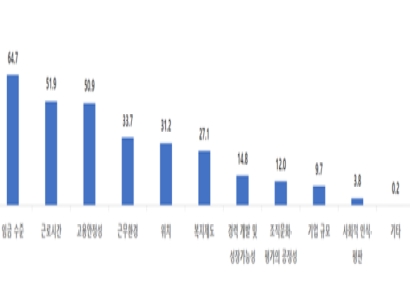 "Please Pay Me at Least 3 Million Won a Month": More Than Half of Young People Today Prioritize "Working Conditions" Over Company Size
- Selling Like Crazy Every Year... 30-Year-Old Hetbahn Takes on a New Challenge: Tastes Better Than "Mom's Home Cooking" [On-Site Report]
- Ran 18 km With 9-Year-Old Tied to Him at the Waist... "Man Banned From Competing for 3 Years"
- "Hey, Lady, Teach Your Kids to Behave!" ... 300,000 Won in Cash and a Bodily Injury Claim Demanded Over Child's Door Ding
- Beachgoer Finds 'Plastic' That Turns Out to Be Perfume Ingredient Worth More Than Twice as Much as Gold
An official from the climate ministry added, "Despite the Korea Energy Agency’s PPA intermediary platform, the negotiating function still rests with private intermediary platforms. Private companies can utilize information from the Korea Energy Agency platform to match supply with demand."
© The Asia Business Daily. All rights reserved. Unauthorized AI training and use prohibited.