Kolon Life Science Expands PPO Production Capacity to Strengthen Electronic Materials Business
Gimcheon Plant to Achieve Annual CAPA of 5,400 Tons
Kolon Life Science is expanding the production of core raw materials for next-generation electronic materials used in artificial intelligence (AI) semiconductors and 6G communication devices.

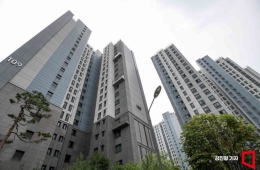
Kolon Life Science headquarters building in Gangseo-gu, Seoul. Kolon Life Science
View original imageOn September 30, Kolon Life Science announced plans to expand the annual production capacity (CAPA) of polyphenylene oxide (PPO) at its Gimcheon plant in North Gyeongsang Province to 5,400 tons by adding more production facilities. The company is set to introduce new reactors and enhance related equipment, aiming to commence operations from the first half of 2027.
PPO is a low-dielectric plastic material that reduces losses generated when electrical signals travel. With its heat resistance and insulation properties, it is used in electronic devices that require rapid signal transmission at high temperatures. As the demand for high-speed, large-capacity data processing products such as AI servers and 6G communication devices increases, demand for related materials is also expanding.
Modified polyphenylene oxide (mPPO), which is processed from PPO, boasts insulation performance three to five times superior to conventional epoxy resin and is thus gaining attention in the semiconductor market. mPPO is used in copper-clad laminates (CCLs), which are utilized in the manufacturing of printed circuit boards (PCBs). CCLs are materials made by plating thin copper sheets on insulating boards, serving as the substrate for PCBs.
This expansion is also in line with Kolon Group’s strategy to scale up its electronic materials business. In June last year, Kolon Life Science transferred mPPO-related technology and rights to Kolon Industries for KRW 17 billion and has since been producing and supplying PPO, the key raw material for mPPO. Kolon Industries has recently completed expanding its mPPO production line and begun mass production.
With the expanded PPO production capacity, Kolon Life Science aims to provide a stable supply of raw materials needed for the group’s electronic materials business and actively respond to the growth of the high-performance electronic device market. To this end, the company plans to reinforce its foundation for expanding the electronic materials business by newly introducing reactors—key equipment for converting materials into PPO.
Hot Picks Today
 "From 20s to 60s, Everyone Rushed In"...The 'Top License' Also Obtained by Actors Yoo Yeon-seok and Sung Hoon Revealed
- "Unbelievable Event" in Tokyo Leaves Japan Stunned...Even 'Weather-Related Illnesses' Emerge
- [Exclusive] Korea's Low Birthrate Solution Backfires: Foreigners Receive More National Pension for Overseas Births
- [Breaking] President Lee urges swift and bold action for the establishment of the Korea Military Academy
- "Nothing Left to Buy, Feeling Indifferent"... 'Rich Daughter' Vibe in Department Stores with 'Hyunbaek Core'
Lee Hankook, CEO of Kolon Life Science, stated, "This investment will serve as an opportunity to further expand the production base of our raw materials business for electronic materials. Through the expansion, we will secure manufacturing flexibility and supply stability to meet diverse customer demands, and, leveraging our differentiated synthetic technology, enhance our competitiveness in the electronic materials sector."
© The Asia Business Daily. All rights reserved. Unauthorized AI training and use prohibited.