From 7,800 to 6,800... Can the National Growth Fund Continue Its 'Sellout Fever' in a Down Market With the Second Round?
Second Round of Sales Begins for 600 Billion Won, 50% Reserved for Low-Income Households
KOSPI Drops 12% Since First Launch... Sales Pace in the Spotlight
Riding the recent uptrend in the domestic stock market, the National Participation Growth Fund—a fund designed for broad public participation—sold out within five days of its initial launch. Now, a second round of offerings totaling 600 billion won has begun. With the KOSPI having dropped by more than 12% in just four months, investor sentiment has cooled, raising questions over whether the fund can replicate its initial success.

According to the Financial Services Commission on September 30, the second tranche of the National Participation Growth Fund will be available for sale at ten banks and fourteen securities companies from today until October 15. The unexpected popularity of the first round, which sold out in just five days, prompted the government to release an additional tranche that was not originally planned.
The government has also expanded opportunities for participation by the working class and youth. The priority allotment for the working class has been significantly increased from 20% of the total in the first round to 50%—equivalent to 300 billion won—in this second round.
Investor enthusiasm was high during the initial launch. On May 22, when the fund was first introduced, the KOSPI closed at 7,847.71, up 86.2% from the previous year-end. The index soared to 9,114.55 within a month, but as of the previous day, it had dropped to 6,870.81—down 24.6% from its recent peak. Compared to the launch date of the first fund, it has fallen 12.4%.
The first fund has also yet to post significant returns. According to the Korea Financial Investment Association, the public National Participation Growth Fund managed by Mirae Asset, Samsung, and KB Asset Management recorded a net asset value of about 1,006.45 won per share as of September 29, up 0.65% from its initial price of 1,000 won.
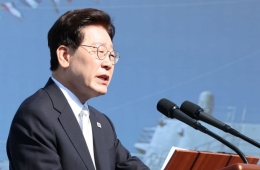
Amid changing market conditions, the financial authorities did not issue a separate 'advisory against enrolling' for this round. In the first round, internal staff were discouraged from participating so that more members of the public could invest, out of concern that the allocated amount might be quickly exhausted; only Financial Services Commission Chairman Lee Okwon enrolled symbolically at that time. This time, Vice Chairman Kwon Daeyoung personally visited a sales branch and enrolled in the fund, and it is reported that most staff responsible for the National Growth Fund have also signed up.
The financial sector is also closely monitoring the pace of sales for this second fund amid the changed stock market environment. During the first round, recommendations against enrollment extended to sales outlet staff, and even executives refrained from joining, in keeping with this policy. There is speculation that, depending on sales results, the prevailing attitude may shift towards encouraging employees and executives to enroll during this round.
An executive at one bank stated, "If the performance of the second round falls short of expectations, banks and other distributors may actively encourage their staff to enroll, which makes us pay close attention to sales momentum."
Despite the stock market correction, there is still room for long-term investment demand to flow in. The National Participation Growth Fund is structured to allow citizens to directly participate and share the fruits of growth in the 200 trillion won National Growth Fund, which makes long-term investments in advanced strategic industries. The fund also offers significant tax benefits: investing through a dedicated account allows income tax deductions of up to 40%—capped at 18 million won—based on the amount invested. In addition, for dividend income, a separate tax rate of 9.9% applies for up to five years.
With both government funding and the management companies’ own capital absorbing initial losses, this structure provides a buffer for investors. For the second round, the government will contribute 120 billion won on a subordinated basis in addition to the 600 billion won from public investors. The combined loss absorption rate by government and management company capital per sub-fund is set at 18.8% to 23.3%.
Hot Picks Today
 "Falling Asleep Instantly in Bed"...Is a Nightly Pattern a Warning Sign for Your Health?
- Some Earn Over $200,000 a Year... US Women Choosing Trades Over Office Jobs
- [Exclusive] Over KRW 400 Billion in Loans Recalled in Four Months After Ban on Multi-Homeowners' Loan Extensions... Minimal Impact on Property Listings
- Caterpillar Catching Contest Held in China to Combat Deadly Pest That Survives from -16°C to 40°C
- "Thought She Was AI, So Pretty"... Viral Female Spectator Turns Out to Be First-Year Med Student
A Financial Services Commission official stated, "This second round significantly broadens participation opportunities for the working class and youth, and the product itself remains highly attractive given the tax benefits and loss-buffering features. While stock market corrections may slow sales compared to the first round, there will be ample investment demand from a long-term perspective."
© The Asia Business Daily. All rights reserved. Unauthorized AI training and use prohibited.