"I Thought It Was Gen Z Slang": The Trendy Word "Yar" Revives Memories for Millennials and Gen X
From the 2003 Film to "Infinite Challenge" and "Boys Over Flowers"
Young Generations Expand the Meaning and Usage
The expression "Yar," which has recently become popular among teenagers and people in their twenties, is stirring up conversation online after it was revealed that the word was actually in use about 20 years ago. In the past, it was used mainly as an exclamation to express joy or excitement, but its range has recently expanded to phrases like "Yarhada" or "Yarham," which are used to positively evaluate a person, object, or mood. According to online communities and X (formerly Twitter) on September 30, behind-the-scenes footage from the 2009 KBS drama "Boys Over Flowers" has recently drawn renewed attention.

In the first Infinite Creative Children's Song Festival aired on MBC's "Infinite Challenge" in 2008, there is a scene where Jung Hyungdon shouts "Yareu" during the song. SNS
View original imageIn the footage, actress Lee Min-jung asks a child actor, "You know 'Yar,' right?" The word "Yar," previously accepted as a newly coined term among young people, appears in footage filmed about 17 years ago. As this scene spread online, reactions included: "I thought it was a new word," "I thought it was a newly coined term, but apparently I used it when I was young too," and "Trendy words seem to go in cycles." In fact, traces of "Yar" go back even further than "Boys Over Flowers."
Actor Bong Tae-gyu recently claimed on a broadcast that he was the original creator of "Yar" in mass media, having ad-libbed the expression during the filming of the 2003 film Windy Family. It is also known that as early as January 2006, "Yar" was registered in the Naver Open Dictionary as a word used among teenagers to mean "good."
Transformation Beyond Mere Revival
The expression "Yar" also appears in the first Infinite Creative Children's Song Festival segment of the 2008 MBC show "Infinite Challenge," where Jung Hyungdon shouts "Yar" during a song. In 2009, the same expression appears in the filming of "Boys Over Flowers," confirming that "Yar" was used at least through the late 2000s among young people.

Actor Bong Taegyu recently claimed on a broadcast that he used the expression "Yar" ad-libbed during the filming of the 2003 movie The Wayward Family, stating, "I am the original in mass media." SNS
View original imageWhat is interesting is that, nearly 20 years later, "Yar" has not just been revived but has also evolved in new ways. In the past, "Yar" was mostly used as an exclamation, like "Awesome," "Nice," or "Great," shouted when something went well or things turned out happily. For example, one might shout "Yar!" when something desired happens, "Yar~" after winning a game, or "Yar" when eating delicious food.
Recently, however, among teenagers and people in their twenties, the phrase "Yarhada"—which adds the verb ending "-hada"—has become common. Instead of simply shouting "Yar!," people use it in sentences such as "Today’s vibe is pretty Yar," "This food is pretty Yar," or "This place is totally Yarham," applying the word to food, fashion, mood, or situations that feel good or are to their liking. In context, it functions as a broad, positive term meaning "good," "cool," "has a great vibe," "on point," or "feels good."
It's also used as a noun: for example, "Today is so Yar," or "It’s Yar itself," or as a quick way to leave a positive comment on SNS posts or in short-form video comments. The phenomenon of past expressions being revived by a new generation isn't unique to "Yar."
'Retro' Phenomenon Appearing in Language
At the press conference for the Netflix variety show "19/20," singer Kyuhyun commented, "All newly coined words seem to come back," referring to contestants using phrases like "Jal meokgetseumnamjwi" (a playful phrase meaning "Bon appétit, squirrel") that were once in vogue. As pop culture and speech styles from the past are rediscovered and consumed via YouTube, short-form videos, and online communities, the trendy words of those times are also being rediscovered by younger generations. This "retro" phenomenon in language is similar to the recent "Y2K" trend of reconsuming 1990s–2000s music and fashion.

What's especially different today is that broadcast footage, internet forums, and dictionary entries from the past now survive almost completely in digital format. Expressions that seemed to have disappeared can instantly become popular again if a short video clip or meme from an old broadcast goes viral on social media. Contrary to the common belief that new slang hampers communication between generations, some analysts say "Yar" is actually becoming an expression that connects generations.
Hot Picks Today
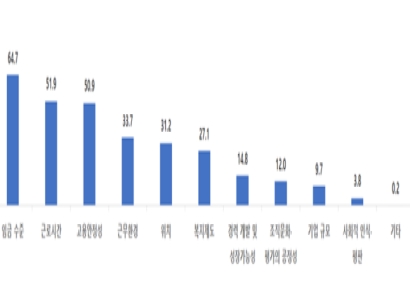 "Please Pay Me at Least 3 Million Won a Month": More Than Half of Young People Today Prioritize "Working Conditions" Over Company Size
- Selling Like Crazy Every Year... 30-Year-Old Hetbahn Takes on a New Challenge: Tastes Better Than "Mom's Home Cooking" [On-Site Report]
- I Thought Only 'Old Guys' Ate It... Young People Are Hooked on This 'Unusual Food' at Risk of Disappearing? [Delicious Stories]
- "Hey, Lady, Teach Your Kids to Behave!" ... 300,000 Won in Cash and a Bodily Injury Claim Demanded Over Child's Door Ding
- Beachgoer Finds 'Plastic' That Turns Out to Be Perfume Ingredient Worth More Than Twice as Much as Gold
For people in their thirties and forties, it feels like the word they used as students has made a comeback, while for people in their teens and twenties, it's fun to discover that an expression they thought was new was also used by their parents or older siblings. Some internet users have commented, "I opened the coffin and found the word I used in elementary school," "It feels strange to hear kids nowadays saying 'Yarhada,'" and "We just used to say 'Yar!' but its usage has evolved." Yoon Seokmin, a professor in the Department of Korean Language and Literature at Jeonbuk National University, explained that it is natural for the meaning and usage of the same word to differ from generation to generation, and that the very process of recognizing these differences can foster mutual understanding of each other's linguistic culture.
© The Asia Business Daily. All rights reserved. Unauthorized AI training and use prohibited.