[AK View] AI with Eyes Must Also Know When to Close Them
Smart Glasses Integrated with AI Hit the Market
Concerns over Infringement on the Privacy of Unspecified Individuals
The Need for Sophisticated Information Collection Policies
![[AK View] AI with Eyes Must Also Know When to Close Them](http://www.asiae.co.kr/news/img_view.htm?img=2025041511022220243_1744682542.jpg)
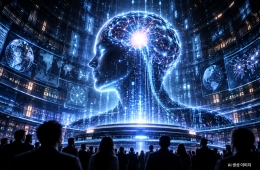
While walking down the street, you glance at a nearby restaurant and ask, “Does this place look good?” Without ever needing to pull out your smartphone, the AI in your smart glasses finds reviews of the eatery and answers. Even those who struggle to find their way no longer fear exploring unfamiliar cities—because an AI with ‘eyes’ now serves as a friendly guide.
On September 23 (local time), the American IT company Meta announced at its annual technology conference, “Connect 2026,” that it will integrate its AI assistant, “Muse,” into smart glasses. The concept is for the AI to understand what the user sees and help them take whatever action they need. Google also unveiled Gemini-based smart glasses last May. Smart glasses are rapidly evolving into devices that enable users to see the world together with AI.
These glasses offer convenience in many ways: they can provide help if you lose your way, translate unfamiliar foreign languages, or explain surroundings to the visually impaired. However, the issue arises when unspecified others—such as the commuter across from you on the subway, the couple at the next table in a cafe, or parents and children in a park—become part of the AI’s field of view without having consented. The smart glasses could easily discern the price of someone’s jacket or even estimate their height and weight.
Thus far, personal information protection has been designed around the service user—starting from what information they share and which agreements they consent to. However, with smart glasses, individuals who have never installed an application or agreed to any terms can nevertheless be caught in someone else's glasses. It is difficult for them either to explicitly give or withhold consent. The existing framework of "user consent" is no longer sufficient to address this issue.
This problem cannot be solved simply with an indicator light blinking only when video is being recorded or analyzed. While a light may signal “I’m recording now,” it does not reveal what the AI is actually reading or processing. Even without saving a single photo, AI can recognize people, objects, and places right in front of your eyes. In the era of smartphones, you could just say, “Please don’t take my picture.” In the age of smart glasses, that alone no longer suffices. AI is capable of seeing and making judgments, even when nothing is being recorded.
This issue is already being acknowledged in South Korea. According to a report published last month, the Personal Information Protection Commission ordered the addition of a device to alert bystanders to image capture or data collection on a domestic company’s smart glasses set for release later this year. Sung Kyunghee, Chairperson of the Personal Information Protection Commission, also emphasized, “It is extremely important for others to be able to recognize when their information is being collected.”
Hot Picks Today
 "No Age or Income Limits, Everyone Gets 100,000 Won... This City to Provide Subsidies to All Residents"
- Some Earn Over $200,000 a Year... US Women Choosing Trades Over Office Jobs
- "Thought She Was AI, So Pretty"... Viral Female Spectator Turns Out to Be First-Year Med Student
- "Falling Asleep Instantly in Bed"...Is a Nightly Pattern a Warning Sign for Your Health?
- "Boss, Please Reduce My Working Hours"... The Strange Phenomenon Following Wage Increases
Future information protection policies must go beyond the question of non-consensual recording, such as with hidden cameras. We need to distinguish between identifying signposts for navigation and recognizing the faces of passersby. Specific restrictions ought to be imposed on features that allow identification or tracking of individuals nearby. Just because I choose to show the world to AI does not mean the world has chosen to show itself to AI. Now that AI has opened its eyes, it must also learn when to close them.
© The Asia Business Daily. All rights reserved. Unauthorized AI training and use prohibited.