"Government Must Present Concrete Roadmap for AIDC Electricity Usage and Pricing System"
Assemblyman Jo Kyung-tae: "Ministry of Science and ICT Excluded from Rate Design Discussions"

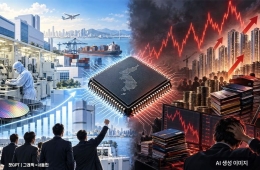
Although South Korea has unveiled plans to expand its AI Data Center (AIDC) capacity to 18.4GW by 2035, concerns have been raised due to the lack of a concrete roadmap for AIDC electricity consumption and the corresponding pricing structure.
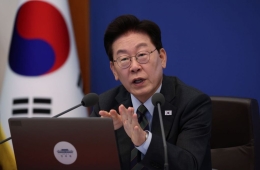
Jo Kyung-tae, a member of the National Assembly's Science, ICT, Broadcasting and Communications Committee from the People Power Party, stated on September 29, "The introduction of a dedicated electricity pricing system for AIDCs is being delayed," adding, "The government needs to promptly present a detailed implementation timeline and pricing levels."
Assemblyman Jo pointed out, "The government has already set a goal to expand AIDC capacity to 18.4GW by 2035 and attract more than KRW 1,000 trillion in private sector investment. However, it still remains unclear how much these facilities will have to pay for electricity."
On June 29, the government announced plans to introduce regional electricity tariffs and a dedicated AI DC rate at the "Republic of Korea Big Leap Three Mega Projects National Briefing." This commitment was reaffirmed at the presidential work briefing on August 4, emphasizing the system's implementation before the end of this year.
Assemblyman Jo noted, "Now there are only a little over three months left until the promised year-end deadline. However, there has been no disclosure of the draft plan for the dedicated rate, no schedule for public hearings, and none of the criteria essential for investment decisions—such as capacity requirements, discount structure, or application period—have been officially confirmed."
He further explained, "One GW is 1 million kW. Assuming uninterrupted operation for 8,760 hours a year, this amounts to 876 million kWh in annual power consumption. A mere KRW 1 difference per kWh translates into KRW 8.76 billion a year, or KRW 131.4 billion over 15 years." He added, "For global big tech firms, Korea is just one of many options. In the AIDC sector, where electricity costs account for the largest portion of operating expenses, if the rate is not finalized or is less competitive than in rival countries, investment will inevitably flow to the location that offers clear and favorable terms first."
He also commented, "Talking about attracting big tech companies based solely on an investment sum of over KRW 1,000 trillion, without a concrete roadmap for AIDC power usage and the applicable rates, is nothing but an illusion."
Assemblyman Jo identified another problem: While the dedicated electricity rate is overseen by the Ministry of Climate, Energy and Environment and Korea Electric Power Corporation (KEPCO), the Ministry of Science and ICT—which is driving the Special Act on AIDCs—is excluded from the discussions about rate design.
Hot Picks Today
 "Kim Jong Un Dies of Brain Hemorrhage, Body Secretly Transferred": Death Rumors Rock World... North Korea's Photos Tell a Different Story
- "It Wasn't Jeju or Busan"... 'Santorini of Korea' Draws Crowds of Travelers in Their 20s and 30s Lately
- Three Free Meals a Day, Botox with a 1.69 Million Won Allowance... Japan Expands Benefits Instead of Raising Wages
- “I Thought It Was Just Inflammation”: 70 Men Have Died of Breast Cancer in This Country in 5 Years
- "Korean Beef for Dinner Tonight" - Drawn in by Half-Price Deals, but... "What Else Is There to Buy?" at 'Empty' Homeplus
During the upcoming parliamentary audit, Assemblyman Jo plans to question the Ministry of Science and ICT about the timeline for releasing the draft of the dedicated rate, the feasibility of implementing the system within this year, specifics such as the rate level and application period, the status of inter-ministerial discussions with the Ministry of Climate, Energy and Environment and KEPCO, plans for establishing an inter-agency consultative body, and to urge the presentation of a concrete roadmap.
© The Asia Business Daily. All rights reserved. Unauthorized AI training and use prohibited.