Monetary Policy Committee Calls for Detailed Explanation Behind Consecutive Rate Hikes, Emphasizes Need to Address Decline in Youth Employment
Monetary Policy Committee Prepares for Release of Monetary and Credit Policy Report
"Efforts to Build the Future Digital Finance Ecosystem,
Including Second Phase of Project Hangang and Project Agora, Must Be Addressed"
Ahead of the release of the Bank of Korea’s Monetary and Credit Policy Report for September 2026, members of the Monetary Policy Committee recommended that the report should sufficiently explain the background behind the consecutive base rate hikes in July and August. They also pointed out the need to address efforts to build a digital finance ecosystem—such as Project Hangang—the ongoing decline in youth employment amid current labor market trends, and key risk factors in the financial and foreign exchange markets, especially as government bond yields rise in major economies like the United States.

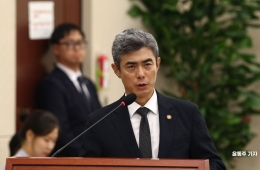
Shin Hyun-sung, Governor of the Bank of Korea, attended the Monetary Policy Committee plenary meeting held at the Bank of Korea in Jung-gu, Seoul, on the morning of the 27th of last month and struck the gavel. Photo by Joint Press Corps
View original imageAccording to the minutes of the regular Monetary Policy Committee meeting held on the 10th, which were released on the 29th by the Bank of Korea, the committee member in charge of the Monetary and Credit Policy Report emphasized the importance of thoroughly explaining the reasons for the committee’s decisions—particularly the consecutive base rate hikes in July and August during the reporting period (from immediately after the Monetary Policy Direction meeting in February until the August meeting)—to enhance understanding among economic stakeholders.
It was also suggested that the report should clearly convey the details of the conditional rate outlook introduced in February, which projects rates for six months ahead, and indicate plans to evaluate its effectiveness by referencing communication approaches adopted by major countries such as the United States. Additionally, the need to provide detailed explanations about future digital finance ecosystem initiatives, including the second phase of Project Hangang and Project Agora, was highlighted.
Some committee members noted that, although the pace of economic growth has recently increased, employment recovery remains sluggish and youth employment continues to decline. They stated that these employment conditions should be carefully outlined in the report. Furthermore, given the recent rise in major countries’ government bond yields and their potential impact on domestic financial markets, they stressed the importance of identifying this as a key risk factor for financial and foreign exchange markets moving forward.
Hot Picks Today
 Sangwook Kim's Assets Soar from 3.75 Billion to 5 Billion Won: "Invested All My Assets in Funds on President Lee's Advice"
- "Thinking of Visiting a Sauna in the Cold?" This Bacterium Found in Bulk Can Be Fatal
- Couple in Their 30s Fed Buldak Sauce and Soju to 2-Year-Old Daughter... Prosecutors Seek Heavy Sentences
- "One in Three Unsuitable for Marriage": 72-Year-Old Professor's Diagnosis Sparks Fierce Debate Among Chinese Netizens
Other committee members proposed that the report should contain a detailed explanation of the data and estimation methods used in analyzing the impact of the rise in nominal growth rates, in order to improve readers’ understanding.
© The Asia Business Daily. All rights reserved. Unauthorized AI training and use prohibited.

!["Failed Even With Net Assets of 400 Million Won?"... Six Criteria That Define 'The Real Middle Class' [Data Pick]](https://cwcontent.asiae.co.kr/asiaresize/307/2026092809144741876_1790554486.jpg)