[Policy Pulse] Housing New Deal: Time to Transform Policy, Not Just Rebrand
The New Deal: More Slogan Than Substance
Borrowing Only the Name Without Changing Policy Framework or Funding
Building a Lifelong Housing Welfare Platform to Gain Public Consensus
Integrating Housing with Care, Jobs, and Community Services
![[Policy Pulse] Housing New Deal: Time to Transform Policy, Not Just Rebrand](http://www.asiae.co.kr/news/img_view.htm?img=2025081909381987541_1755563899.jpg)
Kim Minseok, leader of the Democratic Party of Korea, proposed a new housing policy governance framework and a 'Housing New Deal' during his first negotiation group representative speech after taking office on the 7th. He called for transforming the policy decision-making process into a structure that involves central and local governments as well as various stakeholders, and for bold fiscal investment in the housing sector. Much of this direction was also reflected in the 'Housing Stability Plan' announced by the Ministry of Land, Infrastructure and Transport on the 21st. The plan aims to supply 1.19 million public housing units by 2030, increasing the long-term public rental housing stock to over 10% of total housing, and to strengthen the housing welfare delivery system through the participation of local governments.
Can the Housing Stability Plan, which seeks to expand public housing supply and strengthen housing welfare, be seen as a Housing New Deal? Or is a separate Housing New Deal being considered? The term 'New Deal' refers to the comprehensive economic and social reforms initiated to overcome the disastrous crisis of the Great Depression. The public's expectation for something branded 'Housing New Deal' is not merely a supplementary measure to existing policies, but rather a fundamental shift in the approach to housing policy itself.
In Korea, policies aimed at overcoming crises or shifting paradigms have often been labeled as 'New Deal' initiatives. In 2004, a comprehensive investment plan to boost social infrastructure investment with pension funds was called the 'Korean-style New Deal.' In 2006, Kim Geuntae, then chairman of the Uri Party, proposed a New Deal in the form of a grand social compromise—trading investment and jobs for regulatory relaxation. Examples such as the Urban Regeneration New Deal under the Moon Jae-in administration, the Ministry of Oceans and Fisheries’ Fishery New Deal 300, and the Korean New Deal after COVID-19 all followed this lineage. However, there is skepticism over whether these initiatives actually produced transformative results that restructured the policy frameworks themselves. Why has this outcome occurred?

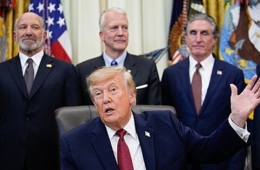
Kim Minseok, leader of the Democratic Party of Korea, is delivering a negotiation group representative speech at the 3rd plenary session of the 439th National Assembly (regular session) held at the National Assembly main hall on the 7th. At this event, Kim announced his intention to promote the Housing New Deal. 2026.09.07 Photo by Dongju Yoon
View original imageIt is often because the term 'New Deal' has been used for branding rather than reflecting substantive policy change. In many cases, the core frameworks and funding mechanisms remained intact, and only the name was borrowed. A real New Deal demands new governance frameworks, but in reality, existing organizations mainly focused on increasing the scale and speed of projects in ways familiar to them. When a new administration entered office, both the branding and the projects lost momentum.
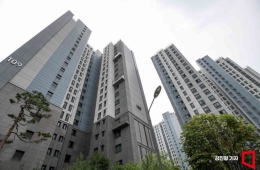
What is needed now for the Housing New Deal is not just a new label, but an overhaul of the policy framework and the governance structure itself—not merely a reshuffling within existing organizations. It must start from the most urgent everyday struggles: young people spending a large portion of their income on rent; renters anxious about losing their deposit; seniors whose only preparation for old age is owning a single home; and small towns in the provinces facing an increasing number of vacant houses.
There are four essential execution conditions for a successful Housing New Deal. First, it must begin by recognizing housing not as the root of various problems, but as infrastructure and a platform for solving problems. Housing has become more than simply a place to live; it is now a means for asset accumulation and investment, while policy has focused excessively on suppressing price and rent increases fueled by excessive demand.
If housing can be transformed into a platform that integrates care, jobs, energy transition, and community services—and if local infrastructure and services are designed in an integrated way beyond individual housing units—it can help resolve various socio-economic issues. The three major government-driven mega-projects—semiconductor, physical artificial intelligence (AI), and AI data centers—should also be linked to the Housing New Deal. If job creation and industrial facilities development are accompanied by provision of housing, education, care, and transportation, workers and their families will be able to settle in these regions, and large-scale investments can lead to sustained local development.
Second, the success of the Housing New Deal requires bold fiscal investment in the housing sector by the government. Housing issues are both a core task of national governance and a variable that influences approval ratings. Despite this, this year’s housing sector budget in the general account of the Ministry of Land, Infrastructure and Transport is only 3.478 trillion won, less than 0.5% of the total government expenditure of 727.9 trillion won. Deducting the 3.23 trillion won in housing benefits for low-income households leaves only about 250 billion won. Housing policy has relied on fund loans that must be repaid and on the development or sale proceeds of public enterprises. This structure has already revealed its limitations. Stable fiscal support is needed not only for construction expenses but also for operating and service costs. Without changing the entire fiscal framework, the Housing New Deal will end up as just another empty slogan.
![[Policy Pulse] Housing New Deal: Time to Transform Policy, Not Just Rebrand](http://www.asiae.co.kr/news/img_view.htm?img=2026093010583545562_1790733514.png)
Third, for the Housing New Deal to gain national attention and consensus, it must be underpinned by an innovative plan to build a lifelong housing welfare platform for all citizens. One of the leading examples of the U.S. New Deal was the establishment of the Federal Housing Administration, which introduced long-term installment mortgages and created a housing ladder for the middle class through innovations in housing finance. A new framework is needed that goes beyond the supply strategies led by public enterprises like LH, and instead connects institutions like the National Pension Service, Korea Housing Finance Corporation, and the Housing and Urban Fund. Much like Singapore’s Central Provident Fund (CPF), Korea can establish a lifelong housing welfare model that supports home ownership for youth, helps people accumulate assets in their 40s and 50s, and provides reverse mortgages in old age. If homes in the metropolitan and large urban areas can be securitized and shifted to provincial hubs that combine housing with healthcare, care, and culture, housing can become a vehicle for asset accumulation, management, and balanced regional development.
Fourth, above all, the governance of housing policy decision-making and implementation must be restructured. The U.S. New Deal drew its power from legislative acts and broad political coalitions. By contrast, Korea’s New Deal initiatives typically began with administrative announcements, lacking a legal basis and social consensus. Simply micromanaging supply by the President, the Prime Minister, or the Ministry of Land, Infrastructure and Transport—or tightening tax and regulation—will not stabilize housing prices or ensure policy success. There needs to be a legally established entity such as a National Housing Policy Committee, which brings together all relevant ministries, local governments, public agencies, and stakeholders.
Local governments should not be limited to planning; they must be given the authority and resources to implement local housing policies. Furthermore, a basic law encompassing the goals, resources, and governance of the Housing New Deal must be enacted through bipartisan consensus, so that the system remains in place regardless of changes in administration. Kim’s statement that housing policy would be treated as a priority agenda at the bipartisan public livelihoods and economic cooperation body could mark the starting point.
It is hoped that the Housing New Deal will not become just another slogan that borrows the legacy of the historic New Deal, but will instead become the catalyst for a fundamental shift in housing policy—designed in tandem with both citizens’ lives and the balanced development of the nation’s territory.
Hot Picks Today
 "From 20s to 60s, Everyone Rushed In"...The 'Top License' Also Obtained by Actors Yoo Yeon-seok and Sung Hoon Revealed
- "Unbelievable Event" in Tokyo Leaves Japan Stunned...Even 'Weather-Related Illnesses' Emerge
- [Exclusive] Korea's Low Birthrate Solution Backfires: Foreigners Receive More National Pension for Overseas Births
- "A Pack of Cigarettes at 57,000 Won: Who's Buying? ... Australia's Black Market Captures 55%"
- "Nothing Left to Buy, Feeling Indifferent"... 'Rich Daughter' Vibe in Department Stores with 'Hyunbaek Core'
Byun Chang-heum, Professor of Public Administration, Sejong University and former Minister of Land, Infrastructure and Transport
© The Asia Business Daily. All rights reserved. Unauthorized AI training and use prohibited.