Japan Targets 20 Trillion Yen in Overseas Content Sales [K-Content Japan]
Ministry of Economy, Trade and Industry Announces Future Goals and Support Policies
Support for Collaboration with Overseas Partners Including Korea
The Japanese government is positioning the content industry as a core pillar of its national strategy. On September 29 in Tokyo, the Ministry of Economy, Trade and Industry announced its goal and support policies to increase overseas sales to 20 trillion yen by 2033 during the "Korea-Japan Content Co-production Week."

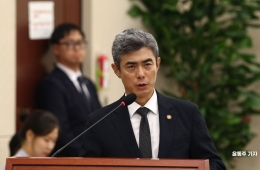
Oi and Hiroyuki, Executive Director of the Ministry of Economy, Trade and Industry and Assistant Manager of the Cultural Creation Industry Division of the Service Group, spoke about the Japanese government's content support direction at the 'Korea-Japan Content Co-Production Week' held in Tokyo on the 29th./Korea Creative Content Agency Tokyo Business Center.
View original imageOiwa Hiroyuki, Assistant Manager of the Culture and Creative Industry Division, Service Group at the Ministry of Economy, Trade and Industry, identified content as one of the seventeen key sectors in the national strategy. He expects its economic impact to be the third largest after artificial intelligence (AI) and semiconductors, and new drug development, estimating the effect at 326 trillion yen.
He stated, "The content industry can yield results relatively early, which is why it has been positioned at the forefront of our growth strategy."
By sector, the overseas sales targets are 12 trillion yen for games, 6 trillion yen for animation, 1 trillion yen for manga, 700 billion yen for music, and 500 billion yen for live-action visual content. Oiwa emphasized, "Since the domestic industry has already reached a certain stage of maturity, it is crucial to generate profits from overseas and create a circulating ecosystem by reinvesting these earnings back into the domestic market."
To this end, Japan plans to invest a combined 34 trillion yen from both the public and private sectors by 2033. Private investment alone will be expanded from the current 8.7 trillion yen per year to approximately 25 trillion yen.

'Korea-Japan Content Co-production Week' on site. / Korea Creative Content Agency Tokyo Business Center.
View original imageTo achieve these goals, the ministry will focus its policies on production, distribution, and combating piracy. Measures include reducing uncertainties at the production stage and improving the overseas revenue recovery rate, which currently remains at 10–20% in the video and publishing sectors. To address annual piracy losses reaching 10 trillion yen, Japan will implement measures such as access blocking, takedown requests, and legal support, while simultaneously bolstering legitimate distribution platforms. In particular, priority will be given to localizing and securing distribution platforms for works that lack an official overseas edition yet face significant piracy damage.
The key initiative for production support is the IP360 large-scale project support program, which assists in the comprehensive deployment of intellectual property (IP). The program covers half the production costs for major games, animations, and live-action projects, with a cap of 1.5 billion yen per applicant.
To ensure smooth implementation, the ministry has dramatically increased its support budget over the past one to two years. It is also reviewing enhancements for its budget allocation system, drawing on examples from the Korea Creative Content Agency and the Centre National du Cinéma et de l'Image Animée (CNC) in France.
Additionally, the ministry is promoting five key structural reforms to enhance IP value: nurturing and securing creators, obtaining funds through loans, balancing AI utilization and rights protection, ensuring appropriate remuneration based on performance, and strategic IP usage.

Oi and Hiroyuki, Executive Director of the Ministry of Economy, Trade and Industry and Assistant Manager of the Culture and Creative Industries Division in the Service Group, are discussing the Japanese government's content support direction at the "Korea-Japan Content Co-production Week" held in Tokyo on the 29th. / Korea Creative Content Agency Tokyo Business Center.
View original imageThe compensation system will be reformed to include a minimum guaranteed amount and a profit-sharing model that allocates at least 10% of the proceeds to producers. Oiwa explained, "This is to ensure that profits are not concentrated solely on the platforms."
The Ministry of Economy, Trade and Industry will also support joint projects with overseas partners, including those in Korea. Oiwa said, "There are limits to producing content solely within Japan by Japanese creators," and revealed plans to establish a system where overseas creators can collaborate within Japanese territory.
Hot Picks Today
 Japanese Women Smitten by the Irresistible Charm of Korean Men: "Great Looks, Age, Income... and Thoughtfulness"
- "Unprecedented": Atmosphere Shifts Live On-Air Amid Sighs Over Japan's 34 Consecutive Rainy Days
- Former Manager of Narae Park, Who Demanded 10% of Revenue, Claims "Exercising Legitimate Rights" at First Trial
- "One in Three Unsuitable for Marriage": 72-Year-Old Professor's Diagnosis Sparks Fierce Debate Among Chinese Netizens
This initiative is divided into general support and location support. For general support, only Japanese corporations may apply, but Korean companies may participate as outsourcers or contractors. For location support, if the work is produced by an overseas company, the project must have less than 50% investment by a Japanese corporation and spend over 800 million yen filming within Japan to qualify.
© The Asia Business Daily. All rights reserved. Unauthorized AI training and use prohibited.

!["Failed Even With Net Assets of 400 Million Won?"... Six Criteria That Define 'The Real Middle Class' [Data Pick]](https://cwcontent.asiae.co.kr/asiaresize/307/2026092809144741876_1790554486.jpg)