KHIDI President Sangbaek Ko: "Strengthening Research and Policy Functions to Support Biohealth Innovation"
Declaration to Become a 'National Biohealth Innovation Policy Platform'
Connecting Academia, Industry, Research, Hospitals, and Government in the Public Sector
"Institutional Integration as an Opportunity to Reduce Redundancy and Enhance Efficiency"
The Korea Health Industry Development Institute (KHIDI) has announced its intention to expand the role of the health industry beyond technology development and industrial fostering, to include solutions for regional and essential healthcare and care for an ultra-aged society. The institute also plans to reinforce its internal research and policy functions, and to redefine its role as an institution supporting the national biohealth strategy by expanding the use of medical data and artificial intelligence (AI).

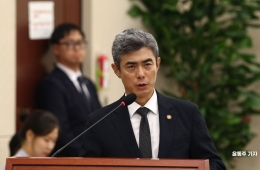
Sangbaek Ko, President of the Korea Health Industry Development Institute, held his first press conference since taking office at a restaurant in Gwanghwamun, Seoul, on the 29th. He stated, "The paradigm of the health industry is changing," and stressed, "We must lead the health industry in a direction that addresses key social issues, such as regional and essential healthcare and care for an ultra-aged society, in a way the public can feel."
He went on to say, "We will expand our role as a national biohealth innovation policy platform that covers the entire lifecycle of the health industry. Through collaboration with academia and industry, we aim to secure future growth engines; by expanding access to healthcare data and testbeds, we will cultivate an innovation ecosystem for AI and digital health." He explained that the KHIDI aims to support the development of a virtuous cycle that organically connects initial research at universities and hospitals, corporate technology commercialization, and market entry. This will help KHIDI redefine its role as an institution that supports the national biohealth strategy.
This indicates the KHIDI’s intention to expand its R&D functions from simple project management to include the development of national strategies and research direction. President Ko noted, "Recently, the KHIDI's R&D budget has increased significantly, but most of it has been managed in a top-down manner. We need to strengthen our research and policy functions, develop not only short-term but also mid- to long-term strategies, and ensure R&D is heading towards its ultimate goals."
He particularly emphasized that AI should not be treated merely as a national agenda item but actively used in combination with the health industry as a means to solve public health issues. He added, "While Korea has grown as a ‘fast follower’ until now, we must now transform into a ‘first mover.’ There is a need to establish new strategies, such as investment-driven R&D, beyond the existing R&D framework."
He also pointed out that the institute’s objectives should not be limited to the scale of the industry itself or to achieving short-term performance indicators. President Ko said, "It is important to foster the health industry and generate R&D performance indicators, but our ultimate goals are economic growth and the health and quality of life of the people. Considering the significant role that small- and medium-sized enterprises play in fields such as medical devices and cosmetics, the KHIDI should focus on helping the creative ideas of SMEs and mid-sized companies grow within a full-cycle support system, rather than on large corporations."
He added, "KHIDI, as a public entity, must support high-risk, long-term R&D projects and address market failures that the private sector cannot undertake. We must create policy and institutional foundations and foster an innovation ecosystem."
Hot Picks Today
 "Eat and Play All Day for Just 20,000 Won"... Rise of 'Chinese Gatherings' Spreading by Word of Mouth
- "I Washed Dishes Too"... The '22,000-Won Jensen Huang' Who Went Viral Makes a Sincere Request to NVIDIA
- Korean Student Among Alleged Perpetrators in Cornell University Gang Rape Case... US Actress Florence Pugh Calls Incident "Disgusting"
- "One in Three Unsuitable for Marriage": 72-Year-Old Professor's Diagnosis Sparks Fierce Debate Among Chinese Netizens
Regarding the ongoing integration with the Foundation for Regenerative Medicine and the Cosmetics Industry Research Institute, in line with the government’s recent policy to consolidate public institutions, President Ko noted, "Specific timelines have not yet been determined," but added, "This is aimed at reducing overlapping functions and improving efficiency among institutions. We will ensure smooth communication and integration among the organizations to serve as a springboard for further growth."
© The Asia Business Daily. All rights reserved. Unauthorized AI training and use prohibited.

!["Failed Even With Net Assets of 400 Million Won?"... Six Criteria That Define 'The Real Middle Class' [Data Pick]](https://cwcontent.asiae.co.kr/asiaresize/307/2026092809144741876_1790554486.jpg)