[Mental Health Blind Spot, University ⑦] Lee Kijeong, Council President: "University Students Enduring Alone... The Nation Must Reach Out"
University Students Are Legal Adults, but Left on the Margins of National Policy
Outwardly Attending Classes and Preparing for Jobs, but Issues Remain Hidden
A Society That Does Not Tolerate Failure... Many Endure Isolation and Helplessness Alone
Regular Surveys on Mental Health and New Support Systems Under Review
"Each year, the number of deaths by suicide exceeds 10,000. (As of 2024, the figure is 14,872.)
This is equivalent to losing 400 elementary schools, or, in military terms, the size of an entire division. The government pours tens of trillions of won into raising the birth rate, but what if a portion of that funding were invested in the mental health of children who are already born?"
On October 7, in an interview with The Asia Business Daily, Ki Jeong Lee, President of the Korean Council for University Education (President of Hanyang University), emphasized, "The crisis in university students' mental health has gone beyond the scope of an issue for individual universities or a few students."

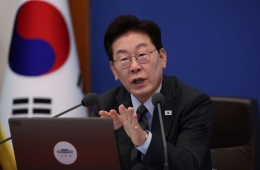
Lee Kijeong, President of the Korean Council for University Education and President of Hanyang University, is being interviewed by The Asia Business Daily in the president's office at Hanyang University in Seongdong-gu, Seoul. Photo by Jo Yongjun
View original imagePresident Lee recalled that during a meeting with other university presidents, when a president of a national key university reported the suicide of a medical student, other presidents quickly added that similar incidents had occurred at their schools as well. Lee expressed his regret, saying, "It’s the same at my university."
As the mental health crisis among university students has become more serious, the Korean Council for University Education recently proposed to the National Assembly the 'regularization of university student mental health surveys' and the 'establishment of a support system for universities'. This stems from a need for national-level standards and support to address each university's disparate counseling and crisis response systems. In particular, Lee highlighted the necessity of regular national-level surveys because even the current state of university students' mental health is not fully understood. While elementary, middle, and high school students' mental health is surveyed by local education offices, university students are excluded from such management.
Lee also pointed out, "What’s most important is not just the number of students who have died by suicide, but the fact that more students are experiencing these feelings. Yet, university students are left on the fringes of national policy simply because they’re considered legal adults." He stressed, "In order to address this, we must clearly distinguish between what universities can do and what the state must do, while ensuring linkage between the two. Universities need to thoroughly create environments where there are strong relationships between professors and students, spaces for in-person activities, and facilities for early crisis response, so students can feel 'I am not alone.' The nation, in turn, must establish institutional and financial support systems for these efforts."
The following is a Q&A with President Lee.

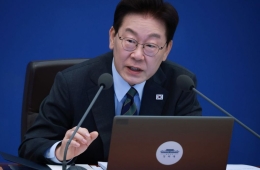
Lee Kijeong, President of the Korean Council for University Education and President of Hanyang University, is being interviewed by The Asia Business Daily in the President's Office at Hanyang University in Seongdong-gu, Seoul. Photo by Jo Yongjun
View original image-How serious do you think the university students' mental health issue is in reality?
▲At first, I thought it was just our university’s problem. But after becoming president of the Korean Council for University Education and talking with other presidents, I realized that this issue (suicide within universities) is prevalent everywhere. That’s why I am striving to address mental health issues through the Council. Every time I meet National Assembly members, I bring this up. In fact, at a recent National Assembly report, mental health was the very first thing on the agenda.
There was an incident where a student at the College of Arts unexpectedly collapsed during orchestra practice. When asked if anyone nearby had tranquilizer medication, most students produced some. After hearing this, at a faculty meeting, I suggested that anyone with a university-age child ask them whether they carry tranquilizers. That evening, a dean contacted me, saying, "President, I checked and my own child also carries tranquilizers." While we cannot generalize from one case, it illustrates that a significant number of students are living with hidden anxiety and difficulties that are not outwardly visible.
-What should we examine first?
▲Rather than just the number of student suicides, it’s more important to investigate 'how many students feel suicidal' and 'why they have such feelings.' Even in the past, university students experienced stress and anxiety about academics, employment, and relationships. Recently, however, these difficulties have become more complex and prolonged among students.
Particularly concerning are those students who outwardly participate in classes and prepare for employment without any apparent problems, but inside, are enduring severe isolation and helplessness. What universities need now is not just to respond after students are in crisis, but to build systems that can spot small warning signs earlier and naturally connect students to support.
In this context, professors are encouraged to do more student counseling, but students reportedly become nervous when told to come in for counseling. Some even ask, during team projects, "Can I just do it alone?" — something rarely seen in the past. I suspect COVID-19 could be related to this phenomenon, which should be examined closely.

Lee Ki-jung, President of the Korean Council for University Education (and President of Hanyang University), is interviewed by The Asia Business Daily at the President's Office of Hanyang University in Seongdong-gu, Seoul. Photo by Jo Yongjun
View original image-Although student counseling centers serve as the first line of defense for university students' mental health, many institutions suffer from budget shortfalls, a lack of specialists, and unstable employment for counseling staff. There are calls to establish a legal basis for counseling centers' installation and mental health support for university students under the Higher Education Act. What is your view on this?
▲There are currently grounds for checking, counseling, and managing students’ mental health, or referring them to specialized institutions when needed. However, I believe there are not yet sufficient, concrete, and common standards for the organization of university counseling centers, professional staffing, budgets, and crisis response systems. From this point of view, I agree that the legal status of student counseling centers and universities' responsibility for mental health support should be more clearly specified within the legal framework governing higher education.
If a legal basis is established, discussions should include not only whether to install centers, but also appropriate staffing standards for full-time professional counselors, the professionalism and employment stability of counseling staff, crisis response systems for high-risk students, collaboration with medical and local professional institutions, and privacy protection standards. The foundation for national financial support must also be provided. If the law only mandates the establishment of centers, differences in support among universities could actually worsen depending on their financial situation. The goal of legislating is not simply to create another organization called a counseling center, but to guarantee at least a minimum safety net so that students in need can receive specialized support without having to wait.
-There are also studies showing that not only students but also professors have poor mental health indicators.
▲I believe that a 'society that does not tolerate failure' is one reason for the deterioration of mental health indicators. Professors can experience stress from relationships with colleagues, research, and tenure issues — stresses not easily understood by the general public. They are constantly evaluated and compete with one another. In the U.S., even if one doesn’t receive tenure (tenure, i.e., long-term employment security), one can usually move to another university, but here, it is difficult to get another chance after a single failure. The same applies to students. If a student receives an F, they should be able to study again, improve, and try again, but our society doesn’t allow for this. If society could be more forgiving of failure and extend understanding and support to those who have failed, stress could be somewhat alleviated.
-What specific actions is the Korean Council for University Education planning to pursue?
▲First, we will review ways to continuously grasp what difficulties university students are facing, as well as the status of counseling staff, budgets, accessibility to counseling, and conditions for crisis response at universities, and what gaps exist. Only when the actual situation is thoroughly understood can appropriate policies and support priorities be set.
Second, we aim to establish common response guidelines that can be used at universities. Because universities differ in scale and conditions, a single standardized method is not feasible. However, basic principles and procedures for crisis intervention should be shared. Based on field opinions and expert reviews, we will actively consider creating manuals or operational guidelines as references for counseling and crisis response, while also examining early detection and screening systems tailored to university students' mental health.
Third, we seek to bridge the gaps among universities. While some institutions have sufficient counseling staff and programs, others struggle with resources. We will work to strengthen inter-university cooperation so that universities can share training for professionals, excellent programs, crisis response experiences, and, if necessary, link up with local medical and counseling specialists.

Lee Kijung, Chairman of the Korean Council for University Education and President of Hanyang University, poses for an interview with The Asia Business Daily at the President's Office of Hanyang University in Seongdong-gu, Seoul. Photo by Jo Yongjun
View original image-Ultimately, the role of the government seems crucial. What would you like to ask of the Ministry of Education and the National Assembly?
▲I urge the Ministry of Education to explicitly include university students as a clear target group in national mental health policies for students. Instead of just assigning responsibility to universities, support should be provided by funding professional counselors and crisis response systems, and by establishing national-level support frameworks that link universities with the Ministry of Health and Welfare, regional mental health welfare centers, and medical institutions.
I also ask the National Assembly to establish not only the legal basis for mental health support for university students, but also a foundation for actual financial support. If legal obligations are strengthened without supporting budgets and staffing, disparities in the support students receive will only grow as a result of financial differences between universities.
Each university should recognize, at the level of the president and the executive management, that the life and safety of students are a core duty, and establish a university-wide response system that involves not only the student affairs and counseling centers, but also academic departments, dormitories, health and medical services, and student support services. University achievement should be measured not only by the number of students admitted or successfully employed, but also by how well the institution protects and supports students in difficulty so that they can continue their studies rather than giving up.
Related Articles
 [Exclusive] The Child Who Was Always on Edge in the Classroom Couldn't Face the World Either
- [Exclusive] “Even Professors...” University Faculty Tasked with Student Care Are Failing Too; 1 in 4 in Seoul Area Have Made a Dangerous Attempt
- [Exclusive] Crisis Among University Students... Junior College Crisis Index Up Sixfold in Two Years
- Abroad, the Entire Campus Serves as a Safety Net... Korean Universities Lag Behind in Mental Health [Mind Health Blind Spot, University ④]
To students, I also want to say: enduring alone is not the only sign of maturity. Asking for help is not a sign of weakness, but an act of safeguarding one's own life.
© The Asia Business Daily. All rights reserved. Unauthorized AI training and use prohibited.