Special Law for Nuclear-Powered Submarine Introduction and Project Implementation Passed at Cabinet Meeting
Approval of Amendments to Income Tax, Comprehensive Real Estate Holding Tax, and Local Tax Enforcement Decrees
Temporary Two-Home Ownership Disposal Period Shortened from Three Years to Two
Stricter Capital Gains, Real Estate Holding, and Acquisition Tax Rules in Regulated Areas
Actual Occupancy Requirements Deferred for Rental Housing Transactions
Occupancy Deferral Possible for Up to Three Years and Three Months
Extension of Fuel Tax Cut Through November
Integrated Regulation on Acquisition, Operation, and Nuclear Safety Management of Nuclear-Powered Submarines
The government is set to tighten real estate tax requirements, including reducing the period allowed for temporary two-home owners in regulated areas to dispose of existing properties, from three years to two years. In contrast, special tax exemptions for newly constructed unsold homes in non-metropolitan areas will be extended, and the requirement for actual occupancy in properties located within land transaction permission zones (LTPZ), currently leased to tenants, will be deferred to facilitate smoother transactions. Additionally, in response to high oil prices caused by developments such as the war in the Middle East, the government will extend the reduction in fuel taxes for another two months until the end of November. The government has also finalized a special legislative proposal to expedite the introduction and operation of nuclear-powered submarines, which will be submitted to the National Assembly.

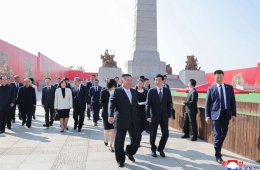
President Lee Jae-myung is speaking at the Cabinet meeting held at the Blue House on the 29th. September 29, 2026. Photo by Yonhap News Agency
View original imageOn September 29, the government held a Cabinet meeting at the Blue House, where it reviewed and approved these measures, which include amendments to the Income Tax Act, Comprehensive Real Estate Holding Tax Act, and Local Tax Act Enforcement Decrees. The agenda also included a special bill for the nuclear-powered submarine project, 14 presidential decrees, and two general items.
In the field of real estate, tax regulations for designated regulated areas will be further strengthened. When a household that owns one house in a regulated area purchases another property in the same regulated area, thus becoming a temporary two-home owner, the period allowed to dispose of the original home in order to benefit from single-home tax advantages will be reduced from the current three years to two years. This rule will apply to both the comprehensive real estate holding tax and the acquisition tax.
Taxation policies targeting owners of multiple homes will also be revised. The capital gains tax exemption for multiple-home owners selling private rental apartment units in regulated areas will now be limited only if they dispose of the property within a specified period. In an effort to address unsold new homes outside the Seoul metropolitan area, the acquisition period for capital gains tax exemptions and special comprehensive real estate tax relief on purchases of such properties will be extended to the end of 2027.
Some regulations surrounding transactions of rental properties within land transaction permission zones will be relaxed. If a person without a home purchases a qualifying rental home, they will be required to occupy the property for two years starting from the expiration of the existing lease, enabling them to proceed with the transaction even if immediate occupancy is not possible. In cases where the existing tenant signs a renewal of less than two years, the two-year occupancy requirement will begin after the renewal ends. This exception will apply to those who apply for land transaction permission until the end of 2027. As a result, from the date of enforcement, occupancy may be postponed for up to three years and three months. This measure follows up on the government’s previously announced plan to extend the deferral of the actual occupancy requirement within LTPZs.
Responding to High Oil Prices… Fuel Tax Cut Extended by Two Months
The government is also continuing measures to ease the burden on households and industries caused by high oil prices. The reduction in the flexible tax rates for the transportation, energy, and environment tax applied to gasoline and diesel will be extended for two additional months, from the end of September to the end of November. The same extension applies to the reduced individual consumption tax rate on liquefied petroleum gas (LPG) butane. Currently, gasoline is subject to a 15% reduction, while diesel and butane are reduced by 25%.
To alleviate fuel costs for farmers and fishers, 79.142 billion won in contingency funds will also be allocated. Of this, 65.964 billion won will be provided for price-linked subsidies for tax-free diesel used in three types of agricultural machinery and duty-free fuel for greenhouse farms, and 13.178 billion won will be allocated to support tax-free diesel for fishermen.
Special Act on Nuclear-Powered Submarines… Institutionalizing the Introduction of National Strategic Assets
A special legislative proposal establishing the legal basis for the nuclear-powered submarine project, which is being pursued as a national strategic asset, was also included on the Cabinet's agenda on this day. The core of the special law is to regulate not only the acquisition and operation of nuclear-powered submarines but also military nuclear safety management through a consolidated legal framework. Instead of supplementing the existing Defense Acquisition Act and Nuclear Safety Act, the government has opted to create a separate legal system, recognizing the unique nature of combining weapon systems and nuclear technology for the first time.
The government explained that, during the nuclear-powered submarine project, it is particularly important to secure the trust of the international community, including the United States and the International Atomic Energy Agency (IAEA), while ensuring effective nuclear safety management. The intent is to rapidly acquire and operationally deploy nuclear-powered submarines and to standardize the entire project as a state-led initiative.
Legislative bills related to US investment were also discussed. The Cabinet approved an amendment to the Enforcement Decree of the Inheritance and Gift Tax Act, which exempts the Korea-US Strategic Investment Fund, established under the Korea-US Strategic Investment Corporation, from paying gift tax on donated assets. For the stabilization of supply chains, the Cabinet also decided to add the Minister of Planning and Budget to the Supply Chain Stabilization Committee and expand the number of specialized committee members from 10 to 20, amending the Enforcement Decree of the Basic Act on Support for Supply Chain Stabilization for Economic Security.
The Cabinet also approved an amendment to the Information and Communications Network Act enforcement decree, requiring information and communication service providers to promptly notify users in the event of major security breaches and to impose fines on providers with repeated incidents.
Hot Picks Today
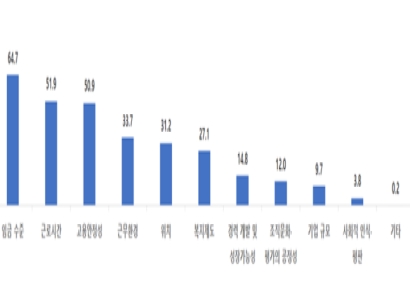 "Please Pay Me at Least 3 Million Won a Month": More Than Half of Young People Today Prioritize "Working Conditions" Over Company Size
- Selling Like Crazy Every Year... 30-Year-Old Hetbahn Takes on a New Challenge: Tastes Better Than "Mom's Home Cooking" [On-Site Report]
- Sleep Is Koreans' 'No. 1' Health Interest, but the 'Twist' Is They Averaged Less Than 7 Hours a Night This Year
- Ran 18 km With 9-Year-Old Tied to Him at the Waist... "Man Banned From Competing for 3 Years"
- Beachgoer Finds 'Plastic' That Turns Out to Be Perfume Ingredient Worth More Than Twice as Much as Gold
On the same day, the government received reports on emergency national management and response status related to the Middle East war, plans to address and improve the distribution structure for agricultural products, and power grid innovation measures to secure more than 100GW of renewable energy by 2030. The government's achievements and follow-up measures from President Lee's recent trips to the United Nations (UN) General Assembly and Mexico, as well as plans for the first Korea–Central Asia Summit, were also discussed.
© The Asia Business Daily. All rights reserved. Unauthorized AI training and use prohibited.





![[Market ING] KOSPI Seeks Rebound in Superweek Packed with Corporate Earnings and FOMC](https://cwcontent.asiae.co.kr/asiaresize/307/2026102514484873155_1792907327.jpg)