"Enjoy Unlimited Sirloin Steak and 150 Dishes"—Why the Largest U.S. Buffet Chain Stays Profitable
Introducing Pork Ribs at 40% of the Sirloin Steak Cost
Diversifying Menu Lineup to Spread Demand
Preparing 80% of Dishes In-House to Cut Ingredient Costs
In the United States, where soaring prices are driving up the cost of dining out, the "formula for profitability" used by large buffet chains offering unlimited steak and more for around 20,000 won is drawing attention. The secret is not simply to serve large volumes of cheap food. Instead, meticulous operations are at the core, including tracking the cost of each menu item, monitoring leftover food, and even calculating demand in 15-minute intervals.

On the 26th (local time), The Wall Street Journal (WSJ) introduced the business know-how of Golden Corral, the largest buffet chain in the United States. Golden Corral operates approximately 350 stores and analyzes not only what foods customers eat but also what foods they leave uneaten. Tripadvisor
View original imageOn September 26 (local time), The Wall Street Journal (WSJ) introduced the business strategies of Golden Corral, the largest buffet chain in the United States. Golden Corral operates about 350 stores, analyzing not only what foods customers choose but also what foods they leave behind. The dinner buffet at Golden Corral costs about $15.99 to $18.99 depending on the store, which is roughly 20,000 won. For this price, customers can eat as much as they like from a selection of around 150 dishes, including sirloin steak.
At first glance, it might seem that the more customers eat, the bigger the loss for the restaurant. However, Golden Corral is more concerned with "wasted food" than "heavy eaters." Lance Trenary, CEO of Golden Corral, explained that if the food is not properly prepared, customers leave it behind and return for something else, which ultimately increases ingredient costs. CEO Trenary emphasized, "You can't fool the customer," stressing that maintaining food quality is key to the all-you-can-eat business model.
The Placement Principle: Shrimp Next to Fries, 150 Menu Items Strategically Arranged
Golden Corral separately calculates the cost for each of its approximately 150 menu items. However, this does not mean that expensive items are hidden at the back while only cheap ones are displayed up front. Instead, high-cost and low-cost foods are grouped together as a single meal. For example, relatively expensive shrimp is placed next to hush puppies (fried cornmeal balls) and French fries. Around the meatloaf, mashed potatoes, gravy, and green beans are arranged.

Golden Corral calculates the cost for each menu item, totaling an average of 150 items. However, it does not hide expensive dishes and only display inexpensive ones upfront. Instead, it arranges high-cost and low-cost foods together, presenting them as a single meal. TripAdvisor
View original imageThis arrangement encourages customers to naturally fill their plates with a variety of items, reducing the demand for any single high-cost ingredient. When the price of beef surged, Golden Corral even created new alternative menu items. Recently, pork ribs fried with the bone, which cost about 40% of the price of sirloin steak, were added to the menu. By prompting some customers to choose pork instead of sirloin, the company aims to curb the overall increase in ingredient costs.
Calculating Consumption for Every 15 Minutes
Making too much food in advance is also a challenge for all-you-can-eat restaurants. Food that sits on warmers for a long time declines in quality, and dissatisfied customers are more likely to leave food on their plates and go back for something else. Golden Corral franchises use historical sales data to estimate the required quantity of each item in 15-minute increments. Instead of preparing food in bulk all at once, the restaurant continuously cooks just enough to meet real-time customer demand.

About 80% of the food offered at the buffet is also prepared directly on-site for the same reason. This is to consistently maintain the freshness and quality of the food and to minimize food waste. Tripadvisor
View original imageFor the same reason, about 80% of buffet items are prepared fresh in-store. This consistent focus on freshness and quality helps reduce overall food waste. Food costs at Golden Corral account for about 38% of sales, a higher percentage than at typical restaurants. One factor making the all-you-can-eat business model viable is labor costs. Because customers serve themselves, there is no need to staff as many servers as in a traditional restaurant.
The company also aims to keep other expenses, such as electricity, gas, and rent, to about 10% of sales. Each location strictly manages its customer count. According to CEO Trenary, at some high-rent stores, just 500 fewer weekly customers can significantly affect profitability. Ultimately, the all-you-can-eat business is based on high volume and low margin, relying on a steady stream of customers rather than making large profits per individual. Some popular Golden Corral locations reportedly generate annual revenue of $7 million (about 980 million won). Golden Corral's revenue fell by more than half in 2020 due to restrictions on indoor dining imposed during the COVID-19 pandemic but has since recovered significantly.
Beverages Sold Separately... All-You-Can-Eat Popular Again Amid Rising Prices
Selling beverages separately is a key revenue driver. Golden Corral sells refillable soft drinks for about $3.20. Most customers opt for paid drinks rather than free water. In contrast, taking unlimited buffet food home is not allowed. CEO Trenary explained that allowing unlimited takeout would make it "extremely difficult" to maintain profitability, as there is a natural limit to how much customers can eat on-site, but that limit disappears with takeout.
Golden Corral adheres to the principle that once food leaves the premises, the all-you-can-eat policy no longer applies. While customers can eat as much as they want inside the restaurant, takeout items are clearly priced separately. The official Golden Corral website also classifies takeout as a distinct "To Go" product, separate from in-store unlimited service.

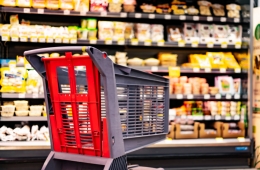
In all-you-can-eat restaurants, making too much food is also a problem. Food left on the warmer for a long time loses quality, and customers who find it unappetizing are likely to leave it behind and return for another dish. The photo is unrelated to the specific content of the article. Pixabay
View original imageRecently, the unlimited menu concept itself—not just Golden Corral—has been regaining popularity in the U.S. restaurant sector. According to market research firm Datassential, only about 13% of casual dining restaurants offer unlimited menu items, but 53% of consumers expressed interest in such promotions. Datassential's social media analysis showed posts mentioning "buffet" and "all-you-can-eat" increased by 30% in 2025 compared to the previous year.
As inflation drives up restaurant prices, the appeal for consumers lies in being able to eat as much as they like for a set price. According to restaurant industry research firm Technomic, there were 150 all-you-can-eat promotions at major U.S. dining chains in the first half of this year, nearly four times as many as in 2021.
Hot Picks Today
!["Let's Hit It Big in Korea"... Foreigners Flock to 'This Place' [Weekend Money]](https://cwcontent.asiae.co.kr/asiaresize/93/2026101613053663640_1792123535.jpg) "Let's Hit It Big in Korea"... Foreigners Flock to 'This Place' [Weekend Money]
"Let's Hit It Big in Korea"... Foreigners Flock to 'This Place' [Weekend Money]
- “What Now for Samsung and SK hynix?” ... Could News from China Rattle the KOSPI? Shareholders Anxious
- "I Had Just Lain Down to Sleep..." Woman in Her 30s Sets Fire to Songpa Villa Parking Lot, Destroying 3 Cars
- Korea Eximbank Strengthens Financial Cooperation with IFC on Critical Minerals and Advanced Industries
- 'Little BoA,' They Said... Apology Over Unpaid Wages Fails to Quell Fury: "Do They Have Money to Debut Their Daughter?"
The essence of the all-you-can-eat business does not lie in hoping customers eat less. It's about reducing labor costs through self-service, mixing high- and low-cost menu items to balance demand, minimizing waste through precise forecasting, and boosting additional revenue with drinks and more. This year in the United States, not only beef and labor costs but also diesel prices have risen, with many Golden Corral suppliers imposing fuel surcharges, increasing the overall cost burden for restaurant operators. CEO Trenary described this year's business climate as "challenging" and said the company is working hard just to maintain its current level.
© The Asia Business Daily. All rights reserved. Unauthorized AI training and use prohibited.

!["Please, Just Take Them Off" - They Made It All the Way to Bed... Then Fecal Bacteria Struck [Deep Scroll]](https://cwcontent.asiae.co.kr/asiaresize/307/2026101610053063338_1792112730.png)