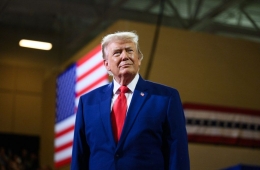
President Lee Orders Expansion of Transportation Fare Refunds: "Excess Tax Revenue Should Directly Support Public Welfare"
“Everyone’s Card” Flexible Commuting 30% Refund Deemed “Too Small”
Expansion of Holiday Agricultural, Livestock, and Fisheries Discounts Considered
“It Will Also Help Mitigate Inequality”
President Lee Jae-myung has instructed that the increased tax revenue resulting from the economic recovery should be actively used to support the livelihoods of ordinary citizens in ways they can directly feel. He proposed expanding the benefits of staggered commuting hours for the "Everyone’s Card," which reimburses public transportation expenses, as well as significantly increasing the scale of discount support for agricultural, livestock, and fishery products during the Lunar New Year and Chuseok holidays. This approach suggests the government intends to use its fiscal capacity not only for housing, jobs, and financial assistance for low-income groups, but also to reduce household burdens such as transportation costs and grocery prices.

President Lee Jae-myung is speaking at the Cabinet meeting held at the Blue House on September 29, 2026. Photo by Yonhap News
View original imageAt the Cabinet meeting held at the Blue House on the 29th, President Lee received a report from the Ministry of Land, Infrastructure and Transport on the "Everyone’s Card" policy, focusing his questions on the staggered commuting incentive. The ministry reported that users are currently receiving an average monthly reimbursement of 40,000 won through the expanded and reorganized Everyone’s Card, which replaced the K-Pass as of January this year. It also explained that staggered commuting incentives are being operated.
After hearing the report, President Lee said, "Recently, we have been experiencing a continued surplus in tax revenue, and economic conditions are improving significantly," adding, "I think we should further expand support in these areas that citizens can truly feel." Referring to people who travel an hour or two earlier to avoid rush hour in order to save on transportation costs, he remarked, "This is genuinely urgent," and questioned, "Isn’t a 20% or 30% discount too little?" The intention is to enhance the scope of support, considering both the policy effect of dispersing rush hour traffic and lessening the transportation burden for vulnerable groups.
President Lee’s concerns also extend to the discount support for agricultural, livestock, and fishery products during national holidays. It has been pointed out that the current program concentrates its benefits on only some traditional markets and stores, causing disparities even within a single market depending on whether vendors qualify for support, and driving consumers to those designated markets. There were also opinions raised that not only should the number of supported markets be expanded to over 1,000 nationwide, but also that the structure of the program itself must be reorganized.
In response, President Lee stated, "Next year, how about substantially increasing the budget for discount support, aiming for nearly 1 trillion won during Lunar New Year and Chuseok?" Referring to a "future response fund," he added, "It will also help to ease polarization." The government currently has a budget of about 210 billion won for this year, and has allocated an annual average of 160 billion won over five years in the budget proposal for next year, explaining during the National Assembly review process the need for an increase.
Hot Picks Today
 Sangwook Kim's Assets Soar from 3.75 Billion to 5 Billion Won: "Invested All My Assets in Funds on President Lee's Advice"
- "Try Spraying Water If You Can": Bukang-i Dodges Every Move...Rescue Operation Halted
- "Thought It Was Just a Cold From Coughing" ... Deadly Bacteria Detected in Jjimjilbangs Can Be Fatal
- "One in Three Unsuitable for Marriage": 72-Year-Old Professor's Diagnosis Sparks Fierce Debate Among Chinese Netizens
Discussions on the Everyone’s Card and discount support for agricultural, livestock, and fishery products at the meeting are closely linked to President Lee’s opening remarks, in which he outlined principles for utilizing surplus tax revenue. He projected that this year’s tax revenue would significantly exceed initial expectations, stating, "The surplus tax revenue, a fruit of growth and recovery achieved by the efforts of all citizens, should be actively used to bring about tangible improvements in people’s lives and to help mitigate polarization." President Lee plans to allocate fiscal resources in a way that increases the sense of livelihood benefits for citizens, not only through stabilized housing and jobs or inclusive finance, but also by easing transportation and grocery expenses.
© The Asia Business Daily. All rights reserved. Unauthorized AI training and use prohibited.

!["Failed Even With Net Assets of 400 Million Won?"... Six Criteria That Define 'The Real Middle Class' [Data Pick]](https://cwcontent.asiae.co.kr/asiaresize/307/2026092809144741876_1790554486.jpg)