Naju, the City of the Artificial Sun, Maps the Future Energy Industry with Global Scholars
"Naju Global Energy Forum 2026" Opens on September 30
Focus on Fusion, Talent, and Power Grids
Key Challenge: Attracting Companies and Talent Beyond Hosting Research Facilities
Naju is accelerating its efforts to establish itself as a global hub for the future energy industry by leveraging its bid to host an artificial sun research facility. The key challenge now is not only to secure large-scale research infrastructure, but also to create an industrial ecosystem that brings together companies, technology, and talent. The first test of this ambition will be the "Naju Global Energy Forum 2026," opening on September 30.
Naju City, together with Jeonnam-Gwangju Metropolitan City and Korea Energy Polytechnic University, will jointly host the forum at the university campus for two days from September 30 to October 1. This marks the third edition of the event.

The "Naju Global Energy Forum 2026" will be held for two days from September 30 to October 1 at the Korea Energy Technology University. Photo provided by Naju City
View original imageThe theme of this year's forum is "Artificial Sun and Energy Transition." The main agenda, 'F3,' brings together three core concepts: 'Fusion'—referring to nuclear fusion, 'Future'—meaning future talent and innovative entrepreneurship, and 'Flexibility'—referring to a flexible power grid designed to adapt to the changing energy environment.
These three topics are closely aligned with Naju's blueprint for its future energy industry. The city's vision is to build R&D capabilities centered on the artificial sun research facility, foster companies and talent to commercialize the technologies, and ultimately connect them to the next-generation power grid.
The first day, September 30, will focus intensely on the artificial sun. Dr. Howard Wilson, who leads the UK's next-generation commercial fusion demonstration project, will deliver the keynote speech. Panelists including Professor Noh Seung-Jung of Dankook University, Professor Hwang Yongseok of Seoul National University, and Yang Hyung-ryeol, PD of the K-Moonshot Project, will discuss the current state of fusion technology, its commercial viability, and directions for cultivating an industrial ecosystem.
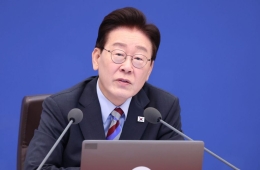
Mayor Yoon Byung-tae of Naju will also present directly on "The Future of Naju Changing with the Artificial Sun." He will outline strategies for attracting research institutions, companies, and talent to Naju following the successful bid to host the research facility last year, and explain how the city plans to grow into a global center for fusion research and industry.
The core focus is on "what comes after winning the bid." Merely hosting a research facility does not create an industry. Real economic growth for the region depends on combining businesses that can commercialize research results and the professional workforce to support them.
On the second day, discussions will broaden to companies, talent, and power grids. Participants such as Cary Forrest, Chief Science Officer of U.S. fusion startup Realta Fusion, as well as university and startup representatives, will discuss technology commercialization, startup creation, and nurturing the next generation of talent.
Further, Professor Thomas Gries of RWTH Aachen University in Germany, together with experts from Korea Electric Power Corporation, Korea Energy Polytechnic University, and other local university and industry specialists, will examine strategies for building next-generation power grids and fostering related industries in response to the growth in renewable and distributed energy.
The forum will conclude with a lecture by Professor Omar Yaghi of Tsinghua University, winner of last year’s Nobel Prize in Chemistry. Professor Yaghi will speak on "Precision Materials and Artificial Intelligence for a Sustainable Earth" and join Park Jin-ho, Acting President of Korea Energy Polytechnic University, for a discussion on the role of advanced materials and artificial intelligence in the future energy industry.
Naju is already home to Korea Electric Power Corporation, several state-run energy enterprises, and Korea Energy Polytechnic University, creating an established foundation for energy research and education. With the addition of the artificial sun research facility, the industrial base for the future energy industry is expanding further. Ultimately, Naju's success depends on how seamlessly it can connect these resources into a dense ecosystem. The ideal is a virtuous cycle in which university talent and the research facility’s technology lead to business commercialization, and in turn, generate further investment and job creation.
Mayor Yoon emphasized, "The Naju Global Energy Forum is a platform for world-class experts, companies, research institutes, and young talent to gather in Naju and explore how to connect technology, industry, and talent in the future energy sector. This year is especially meaningful because, based on the significant milestone of securing the artificial sun research facility, we will discuss with global experts how to further extend this achievement to companies, talent, and an expanded industrial ecosystem."
Hot Picks Today
![Received a Galaxy Watch as a Chuseok Gift, but Use Prohibited for Under 22s and Pregnant Women [Why&Next]](https://cwcontent.asiae.co.kr/asiaresize/93/2026092909233143401_1790641411.png) Received a Galaxy Watch as a Chuseok Gift, but Use Prohibited for Under 22s and Pregnant Women [Why&Next]
Received a Galaxy Watch as a Chuseok Gift, but Use Prohibited for Under 22s and Pregnant Women [Why&Next]
- Thought They Were Working as Usual...The Quiet Trend of Double Lives: U.S. Office Workers "Exploring Alternative Career Paths"
- October SME Business Outlook at 83.3...Down 1.5 Points from Previous Month
- "One in Three Unsuitable for Marriage": 72-Year-Old Professor's Diagnosis Sparks Fierce Debate Among Chinese Netizens
Meanwhile, to promote science among the broader public and nurture regional talent, Naju City will offer free admission to all events. There are 645 seats available, allocated on a first-come, first-served basis, and advance registration via the official website will allow quicker entry on-site.
© The Asia Business Daily. All rights reserved. Unauthorized AI training and use prohibited.

!["Failed Even With Net Assets of 400 Million Won?"... Six Criteria That Define 'The Real Middle Class' [Data Pick]](https://cwcontent.asiae.co.kr/asiaresize/307/2026092809144741876_1790554486.jpg)