[Feature] Mokpo Tourism Rebounds... 'Stay-Type Travel' Linking Night Sea, Islands, and Old Downtown
Expanding Attractions and Improving Parking Facilities for Visitor Convenience
Connecting Tourist Influx to Accommodation, Dining, and Local Businesses
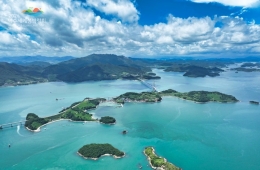
Mokpo City, located in Jeonnam-Gwangju Integrated Metropolitan City, is preparing for a new leap in tourism by connecting night-time sea performances, island trips, and the historical and cultural assets of its old downtown. The main goal is to expand from simple sightseeing visits to immersive, stay-type tourism, encouraging visitors to spend a night in Mokpo to eat, enjoy, and experience more.
Various initiatives are underway to revitalize tourism, including the development of night tourism content, support for travel expenses, improvements to parking facilities, and the establishment of mid- to long-term tourism strategies.

The Marine W Show clearly demonstrates the special demand for nighttime tourism in Mokpo. Provided by Mokpo City.
View original imageThe potential for a tourism renaissance in Mokpo lies in the ability to link diverse tourist attractions into a single travel experience. According to the Korea Tourism Organization, Mokpo’s Special Tourist Zone includes Bukhang Port, Yudalsan Mountain, the old downtown, Samhakdo Island, Gatbawi, and Peace Square. This structure allows visitors to complement journeys exploring modern historical and cultural spaces and museums with the sea and nightscapes.
During the day, travelers can explore the history and culture of the old downtown, enjoy performances at Peace Square in the evening, and embark on an island journey the following day. This approach goes beyond simply raising awareness of individual attractions, focusing instead on creating reasons for visitors to extend their stay in Mokpo.
One of the main night-time attractions is the Mokpo Maritime W Show—a program that combines K-POP performances, a dancing sea fountain, and fireworks displays on the maritime stage at Peace Square. This year, the show was scheduled to take place three times: May 9, August 1, and September 19, all from 8:00 p.m. to 9:00 p.m.
Night performances offer visitors schedules for after-dark activities once sightseeing is finished for the day. However, watching a performance does not automatically translate into an overnight stay. For night-time content to support stay-type tourism, there must be seamless connections to dining, transportation, and accommodation before and after performances. The true effectiveness will be measured by whether the foot traffic drawn to performance venues extends naturally to nearby restaurants and lodging businesses.
The "Island Half-Price Travel" project is an effort to expand the spatial scope of tourism across the sea. From August 29 to November 4, Mokpo City is running this program for Oedal and Dalli Islands. Under this initiative, tourists whose residence is outside Mokpo receive a reimbursement of 50% of their ferry fares, accommodation, food, and experience costs (up to a maximum of 100,000 won per person) via mobile local currency.
The city selected these two islands by considering their tourism conditions and consumption base. The aim is to encourage trips that combine the beaches and coastal trails of Oedal Island with the rural scenery of Dalli Island and complement them with historical, cultural, and culinary experiences in the urban area.
This project goes beyond simply reducing travel costs. By issuing reimbursements as local currency, support funds are designed to feed back into local spending. Tourists get a partial refund of their expenses on the islands, which can be used for a return visit or shopping through local online malls.
If night performances are a tool for extending visitors’ time in Mokpo, the Island Half-Price Travel project broadens the geographical reach of trips. When these two initiatives are connected to accommodation, dining, and old downtown exploration, there is a greater opportunity to build a “stay one more night in Mokpo” travel product. Crucially, it is essential to link information so that visitors can plan their itinerary without having to find each initiative separately.
Facilities set up to welcome visitors are also evolving. On September 19, Mokpo City held an opening ceremony for the Roundabout 2 Public Parking Tower near Peace Square. With a total investment of 4.7 billion won, parking spaces increased from 100 to 174, providing not only regular and expanded parking spots but also spaces exclusively for people with disabilities and electric vehicle charging facilities.
The city expects increased parking capacity to improve convenience for Peace Square visitors and stimulate nearby commercial districts and tourism. However, it is premature to conclude that one new parking tower will resolve all parking issues in the area. To reduce inconveniences experienced by visitors, vehicle distribution during events, pedestrian access routes, and public transport guidance must also be addressed.
There are also platforms to help tourists easily locate information. The “Visit Mokpo” tourism platform offers details on tourist destinations, accommodations, restaurants, themed itineraries, and AI-recommended schedules. It highlights various travel styles, including old downtown walking tours, explorations of modern historical and cultural spaces, trips to Oedal Island, and suggested two-night, three-day journeys.
For this information to translate into actual visits, introductions to attractions must be combined with practical usage guidance. Performance times, transport methods, island journeys, and city accommodations should be accessible within a single schedule. From the traveler’s perspective, knowing "how to get around and where to stay" is just as important as having plenty of sights to see.
There are also efforts to bring together various tourism projects under long-term strategies. On August 13, Mokpo City held a briefing session to kick off the “Five-Year Mokpo Tourism Development Plan.” With researchers from Mokpo National University participating, the study will address tourism environment analysis, market and demand assessment, long-term vision formulation, discovery of tourism assets and content, and improvement of tourism infrastructure.
At the briefing, it was suggested that changes in the tourism environment—such as the opening of National Route 77 and the Southern Regional Tourism Development Project—should be reflected, and practical strategies developed to encourage visitors to extend their stays. The city also plans to relate these strategies with those of the Special Tourist Zone Development Plan, further specifying the direction of future tourism policies.
In this process, it is not just the number of new facilities that matters. It is important to ensure sufficient connectivity between existing attractions, the availability of content on non-performance days, and whether tourism consumption extends from a few attractions to local restaurants and neighborhood shops. Evaluating “Mokpo with increased visits” and “Mokpo where more income remains in the community” should be separate tasks.
Based on currently available public data, it is difficult to definitively say to what extent tourism numbers, accommodation rates, and commercial district sales have recovered. While project implementation and facility expansions are evident, their true impact can only be gauged by comparing visit, stay, and spending trends over time. The Korea Tourism Organization also notes that mobile communication-based visitor numbers are estimates, recommending that emphasis be placed on trends rather than absolute figures.
Therefore, the next success factors for Mokpo tourism must be confirmed not only by crowd sizes at events but also through visits that lead to overnight stays, repeat visitors, and continued local spending. Sustainable recovery depends on giving tourists reasons to stay an extra day and providing residents with experiences in which tourism directly benefits their daily lives.
At the kick-off briefing for the tourism development plan, Mokpo Mayor Kang Seong-hwi expressed his aspirations: “We will do our utmost to become a global stay-type tourism city that capitalizes on Mokpo’s unique strengths.”
Hot Picks Today
![Received a Galaxy Watch as a Chuseok Gift, but Use Prohibited for Under 22s and Pregnant Women [Why&Next]](https://cwcontent.asiae.co.kr/asiaresize/93/2026092909233143401_1790641411.png) Received a Galaxy Watch as a Chuseok Gift, but Use Prohibited for Under 22s and Pregnant Women [Why&Next]
Received a Galaxy Watch as a Chuseok Gift, but Use Prohibited for Under 22s and Pregnant Women [Why&Next]
- Thought They Were Working as Usual...The Quiet Trend of Double Lives: U.S. Office Workers "Exploring Alternative Career Paths"
- "The System Is in Place, Now Execution Is Key: Experts Outline the Essentials for 'Korea Premium'"
- "One in Three Unsuitable for Marriage": 72-Year-Old Professor's Diagnosis Sparks Fierce Debate Among Chinese Netizens
The path to revitalizing Mokpo’s tourism does not depend on the creation of a single, new attraction. It lies in enabling a seamless experience where visitors watch evening performances by the sea, walk on the islands, dine, and stay in the old downtown. When current initiatives are linked into one journey and the spending remains in the local community, the revitalization of tourism can become part of the city’s daily life.
© The Asia Business Daily. All rights reserved. Unauthorized AI training and use prohibited.

!["Failed Even With Net Assets of 400 Million Won?"... Six Criteria That Define 'The Real Middle Class' [Data Pick]](https://cwcontent.asiae.co.kr/asiaresize/307/2026092809144741876_1790554486.jpg)