Choo Mi-ae: "Future Response Fund Must Reinvest in Line with Local Governments' Contributions and Sacrifices"
Gyeonggi Province Governor Choo Mi-ae stated that, regarding the government's "Future Response Fund," it is necessary to incorporate reinvestment reflecting the contribution to additional tax revenue, convert basic youth income into a national pilot project, and establish rational criteria for the allocation of Local Future Growth Support Funds.
Governor Choo delivered these suggestions while attending the "Party-Government Council on the Creation of the Future Response Fund and the Reform of Local Allocation Tax," hosted by the Democratic Party of Korea and the government, held at the National Assembly in Yeouido, Seoul, on the 29th.
The Future Response Fund is a national fund being promoted by the government to invest in four major areas—youth, growth engines, regional development, and education/talent—by accumulating additional tax revenue (beyond expectations due to the semiconductor boom and other factors) in a separate fund.
The main resources for the fund will come from additional tax revenues exceeding the 10-year trend line (6.2%) of national taxes, including corporate and income taxes. According to the government plan for next year, the estimated size of the fund has reached approximately 162.3 trillion won.
On this day, Governor Choo explained the background for submitting these proposals, saying, "While I agree with the intent to create a fund that will drive the country's future, the policy cannot achieve its original goals if it overlooks the contributions and sacrifices of local governments that have been practically supporting the nation's finances."
She further emphasized, "Following the principle that funding should accompany burden and ladders should be placed solidly for the future generation, I urge the government and the party to take responsible and decisive action, so that Gyeonggi Province—which has the largest population, jobs, and businesses in Korea and implements national policies at the largest scale—can fully play its role."
Regarding the operation of the Future Response Fund, Governor Choo proposed three key points: ▲ reinvestment reflecting the contribution to the creation of additional tax revenue in the growth engine account, ▲ converting basic youth income into a national pilot project in the youth account, and ▲ establishing rational allocation criteria for local future growth support funds in the local account.
On the subject of bold reinvestment based on contributions to additional tax revenue, Governor Choo pointed out, "Although the origin of the 162 trillion won fund lies in the strength and dedication of industrial sites in Gyeonggi Province—such as Yongin, Pyeongtaek, and Icheon—which drove the semiconductor boom day and night, the government's Future Investment Fund does not consider regions that create additional tax revenue at all. Gyeonggi Province is building large-scale semiconductor clusters in Yongin and Pyeongtaek, but it is unavoidable that enormous fiscal expenditure is required for power, water, transportation networks, and residential infrastructure."

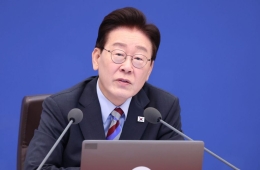
Gyeonggi Province Governor Choo Mi-ae participated in the "Party-Government Council on the Establishment of the Future Response Fund and the Reform of Local Allocation Tax," hosted by the Democratic Party of Korea and the government, held at the National Assembly in Yeouido, Seoul, on the 29th, and is seen speaking. Provided by Gyeonggi Province
View original imageShe emphasized, "It is only possible to ensure a virtuous cycle in the Korean economy if the expansion of national funding for large-scale strategic industry infrastructure is paired with decisive reinvestment in the production bases that generate additional tax revenue."
In this context, Gyeonggi Province proposed that, when selecting projects for the fund, key evaluation elements should include contributions to tax revenue, investment size in national strategic industries, and the concentration of related companies. The province also called for raising the fund's support ratios and expanding the scale of support—potentially to full coverage by the national government—for large-scale strategic industry infrastructure developed as part of national policies.
Regarding the paradigm shift in the youth account, which has a scale of 13 trillion won, Governor Choo said, "Current youth policy only targets those who meet specific criteria like employment, housing, or asset formation, making it impossible to fully support the diverse career paths and lives of young people. Gyeonggi Province has demonstrated the effectiveness of 'basic youth income,' and this should be adopted as a national pilot project to ensure that all young people are given a fair starting line to prepare for the future."
Basic youth income is a Gyeonggi Province-style basic income scheme that was first introduced in 2019 in the province. Regardless of employment status, income, or assets, it provides 1 million won per year (250,000 won each quarter) in local currency to 24-year-olds who have resided in Gyeonggi Province for a certain period. The province maintains that a national basic youth income should be newly established in the youth account of the Future Response Fund, with a standardized minimum level of support set nationwide to reduce regional disparities in youth support.
Regarding the rational adjustment of distribution standards for the 'Local Future Growth Support Fund,' Governor Choo asserted, "Despite the additional tax revenue from the semiconductor boom, simply applying the existing allocation formula for general allocation tax to the new fund's distribution methods means that Gyeonggi Province, a non-recipient area, would once again be excluded from resource allocation. This is a clear contradiction and reverse discrimination. At the very least, separate allocation standards that fairly reflect factors like population, per capita GRDP, future growth investment demand, and contributions to the national economy must be established to ensure equitable distribution."
Gyeonggi Province requested the adoption of an allocation formula consisting of basic allotment (30), balanced development (40), and future growth demand (30) to ensure that all local governments receive a baseline allocation from the Future Growth Support Fund.
Governor Choo also proposed four institutional improvements for securing financial soundness at the metropolitan government level: ▲ improvement of the general allocation tax calculation standards, ▲ increase of the regional consumption tax rate, ▲ converting the local education tax portion of tobacco consumption tax to the local resource and facilities tax for fire services, and ▲ transferring 5% of the corporate tax (national tax) and certain large-scale local taxes to local governments.
Hot Picks Today
 "I Don't Want Office Romance or Blind Dates"... Why Young Japanese Professionals Are Flocking to 'Imperial Palace Running'
- [Exclusive] Prosecutors Reopen Hanaro Mart Purchase Corruption Case After 4 Years in Cabinet [World of Rebates] ①
- President Lee Seeks to Soothe Agriculture and Fisheries over CPTPP: "Compensate Losses with Export Gains"
- "One in Three Unsuitable for Marriage": 72-Year-Old Professor's Diagnosis Sparks Fierce Debate Among Chinese Netizens
Meanwhile, Democratic Party leader Kim Minseok, Floor Leader Han Byungdo, Policy Committee Chair Kwon Chilseung, National Assembly Special Committee on Budget and Accounts Chair Lee Kwangjae, and Public Administration and Security Committee Chair Kim Youngjin attended the meeting.
© The Asia Business Daily. All rights reserved. Unauthorized AI training and use prohibited.

!["Failed Even With Net Assets of 400 Million Won?"... Six Criteria That Define 'The Real Middle Class' [Data Pick]](https://cwcontent.asiae.co.kr/asiaresize/307/2026092809144741876_1790554486.jpg)