Eighteen AI-Focused Universities and Fifteen AX Graduate Schools Launched... Transforming University Education to Be AI-Centered
Expanding Foundational AI Education and Interdisciplinary Majors for All Undergraduates
Plan to Transition 38 SW-Focused Universities to AI-Focused Universities Next Year
The government will officially begin its project to transform the university education system with a focus on artificial intelligence (AI). All undergraduate students will receive foundational AI education, and curricula that combine students' majors with AI will be expanded. At the graduate level, master's and doctoral programs will cultivate AI convergence talent capable of solving real-world industrial problems in partnership with companies.
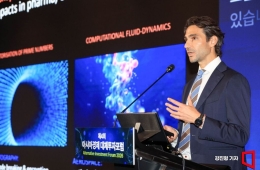
On September 29, the Ministry of Science and ICT held a joint launching ceremony for "AI-Focused Universities and AX Graduate Schools" at Baekyangnuri Hall, Yonsei University in Seoul. Eighteen universities selected as AI-Focused Universities and fifteen selected as AX Graduate Schools for this year participated in the event.

Reference photo to aid understanding of the article. Main gate of Seoul National University. Photo by Yonhap News Agency
View original imageThe AI-Focused University initiative expands existing software (SW)-centered education to encompass AI education for the entire university. This year, 18 schools were chosen, including three newly selected universities and 15 that have transitioned from the SW-Focused University program. Each university will receive up to 3 billion won per year for a maximum of eight years.
The selected universities are required to strengthen AI major education while also mandating a foundational AI curriculum for all students. They will also introduce new interdisciplinary courses that merge each major with AI. The vision is not merely to increase the number of AI-related departments, but to redesign the entire university education system to be in line with the AI era.
The Ministry of Science and ICT plans to evaluate the 38 SW-Focused Universities that have not yet made the transition next year, with the goal of converting all of them to AI-Focused Universities.
Graduate Schools and Companies Collaborate to Train Advanced AI Talent
The AX Graduate School initiative aims to nurture highly skilled convergence professionals equipped with both AI technology and specialized industrial knowledge. This year, 15 universities were selected, each to receive up to 3 billion won annually for up to six years.
Twenty-six companies, including Samsung Electronics, Hanwha Aerospace, POSCO Holdings, Doosan Robotics, and LIG D&A, are participating as joint research and development partners. Universities and companies will establish "AX Research Collaboration Centers" to conduct research specialized in various industrial sectors. A system of multiple academic advisors, in which university faculty and company-affiliated professors jointly mentor students, as well as project-based learning led by students, will also be implemented.
Participation by regional universities accounts for more than half. Among the 18 AI-Focused Universities, 11 (61%) are located outside the Seoul metropolitan area; among the 15 AX Graduate Schools, 8 (53%) are in non-capital regions. The Ministry aims to increase the share of non-metropolitan universities among newly selected schools to more than 70% after 2027.
Additional support will be provided to enhance AI research capabilities at regional universities. All 20 new projects selected this year for the "AI Star Fellowship," which supports the creative and challenging AI research of early-career researchers, went to universities outside of Seoul. Support is also provided for 10 regionally-led industry-academic cooperation projects in partnership with local businesses, and for 10 interdisciplinary fundamental technology projects conducted jointly across universities. Each project will receive up to 2 billion won annually for up to six years.
The Ministry of Science and ICT plans to connect AI-Focused Universities and AX Graduate Schools, establishing a talent development pathway from undergraduate to master's and doctoral levels. It aims to spread the AI education model more broadly by promoting educational exchanges between universities, regional cooperation, and industry-academic partnerships.
Hot Picks Today
 "Eat and Play All Day for Just 20,000 Won"... Rise of 'Chinese Gatherings' Spreading by Word of Mouth
- "I Washed Dishes Too"... The '22,000-Won Jensen Huang' Who Went Viral Makes a Sincere Request to NVIDIA
- Korean Student Among Alleged Perpetrators in Cornell University Gang Rape Case... US Actress Florence Pugh Calls Incident "Disgusting"
- "One in Three Unsuitable for Marriage": 72-Year-Old Professor's Diagnosis Sparks Fierce Debate Among Chinese Netizens
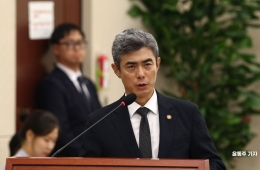
Ryu Jemyung, Second Vice Minister of Science and ICT, stated, "Universities in the AI era must go beyond teaching AI to become engines of innovation that transform education itself to fit the needs of the AI era. The government will provide full support to ensure AI education innovation led by universities leads to innovation throughout South Korea."
© The Asia Business Daily. All rights reserved. Unauthorized AI training and use prohibited.

!["Failed Even With Net Assets of 400 Million Won?"... Six Criteria That Define 'The Real Middle Class' [Data Pick]](https://cwcontent.asiae.co.kr/asiaresize/307/2026092809144741876_1790554486.jpg)