US-China Tariff Cuts Lack Substance... Trump Denies Proposal for Chinese Purchase of US Weapons
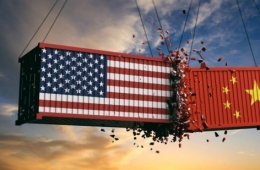
The United States and China have agreed to lower reciprocal tariffs on goods worth 60 billion dollars each on both sides, totaling 120 billion dollars (approximately 81.5 trillion won), following a summit agreement. However, the tariff reduction did not extend to U.S. soybeans, which was a core item in the negotiations. There was no significant agreement reached in the energy and metals sectors, and the much-anticipated Chinese commitment to additional purchases of U.S. liquefied natural gas (LNG) was also excluded from this announcement.

The United States Trade Representative (USTR) and China's Ministry of Commerce each announced on the 27th and 28th (local time) the lists of reciprocal tariff reduction items agreed upon at the 8th round of economic and trade negotiations, held in New York and Washington, D.C. from the 20th to the 23rd.
The U.S. agreed to lower tariffs on 77 categories of Chinese products, including fireworks, household goods, and sports equipment. China included 1,619 U.S. products such as meat, seafood, dairy, grains, coal, lumber, and medical devices in its tariff reduction list. Notably, for more than 90% of the covered items, both countries agreed to remove all additional tariffs previously imposed and to apply only the Most Favored Nation (MFN) rates. The tariff reductions will be implemented simultaneously in both countries as soon as each completes its respective domestic legal procedures.
U.S. coal also made China's tariff reduction list. China's Ministry of Commerce explained that this measure would help expand imports of U.S. coal next year and the year after. The White House announced that China would import 10 million tons of U.S. coal annually for the next two years. However, China's own announcement on this day did not specify the import volumes. USTR representative Jamieson Greer noted that the items subject to tariff reductions largely avoid goods tied to the most sensitive interests of either country.
Experts have pointed out the limitations of the outcomes of this negotiation. Zhang Su, Chief Asia Economist at Bloomberg Economics, said, "Although this round of tariff reductions signals progress in U.S.-China relations, the economic impact is limited," and added, "The included items are mostly limited to agricultural products and medical devices from the U.S. side and mostly low-cost consumer goods from China."
Notably, U.S. soybeans were left out of this round of tariff reductions. Previously, China had agreed in a separate deal to purchase 25 million tons of U.S. soybeans annually until 2028. Peng Chuqing, founding partner at Hutong Research, assessed that by leaving soybeans as a separate negotiation card, China has secured more leverage to pressure the United States.
This is especially significant ahead of the November midterm elections, as soybeans are directly linked to agricultural regions that form the core support base for President Trump, thus enhancing China's bargaining power. He said, "China is well aware that U.S. soybean purchases have a direct influence on the agricultural states that are President Trump's political heartland."
Bloomberg News also assessed that there were limited concrete results outside of agriculture. There were no significant agreements in energy or metals, and the much-anticipated Chinese commitment to purchase additional U.S. LNG was not included in the announcement. The market had been watching the possibility that China would abolish its 15% tariff on U.S. LNG in exchange for expanding imports.
Hot Picks Today
 "The Transfer Failed, but 'Ding-Dong,' Money Came In"... KRW 32.5 Billion Financial Incident at Toss Bank
- "People with money have already moved," they say... 1,700-ton underground vault full as the wealthy flock to this country
- Legend Who Turned 40-Store Olive Young into a "KRW 1 Trillion Giant"... Returns to Shinsegae After 25 Years as a Rescuer
- Saemaul Geumgo Posts 3.6 Trillion Won in Net Losses Over 3.5 Years... "Comprehensive Measures Needed"
- 'Hangover Legend' Returns After 11 Years... Lee Sunmin Hyung's 'Captain Q' Sells Out
Meanwhile, President Trump denied comments made by David Perdue, the U.S. Ambassador to China, regarding a proposal for China to purchase U.S. weapons. Ambassador Perdue stated in an interview with Fox News the previous day that President Trump had asked Chinese President Xi Jinping about his willingness to buy U.S. weapons. President Trump said, "I've never heard anything like that. I'll have to ask Ambassador Perdue directly," denying the report. He added, "China might want to buy superior American equipment as well," saying, "It might be a good idea, but I haven't had that discussion with President Xi." He also suggested that Ambassador Perdue might have been referring to U.S. arms sales to Taiwan, rather than to China.
© The Asia Business Daily. All rights reserved. Unauthorized AI training and use prohibited.