Expanding Renewable Energy by 100GW by 2030...Easing Grid Bottleneck in Honam Region
Ministry of Climate, Energy and Environment Announces Innovation Measures at Cabinet Meeting
Grid Management Substation Designation to Be Lifted in Honam in October
The government will significantly expand grid connections for renewable energy in the Honam region to address the rapid increase in electricity demand from the Honam Semiconductor Cluster, data centers, and similar sources. In preparation for expanding renewable energy generation facilities to 100 GW by 2030, the authorities plan to remove the designation of grid management substations and use flexible grid connections and energy storage systems (ESS) to increase the capacity of existing power grids.

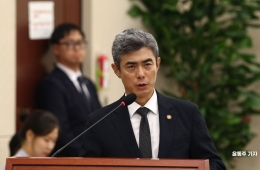
The Ministry of Climate, Energy and Environment announced on September 29, during a Cabinet meeting, that it presented a "Grid Innovation Plan" containing these measures. Minister Kim Sunghwan stated, "The goal of this plan is not to wait for new grids to be built, but instead to make the most efficient use of the grids we currently have," and added, "Only one year after the launch of the Ministry of Climate, starting in September 2024, restrictions on renewable energy connections have been lifted, and new grid connections for renewable energy in Honam have resumed."

As of October 1, the government will remove the designation of 164 grid management substations in the Honam region, thus allowing new renewable energy facilities to connect to the power grid. In the East Coast region, the authorities plan to lift the designation of grid management substations in the first half of 2027 after completion of the "East Coast to New Gapyeong HVDC Phase 1" project. The government will also introduce flexible grid connections, which limit solar output only when generation temporarily exceeds capacity. Through these measures, solar grid connection capacity on distribution lines will increase from the current 14 MW to 16 MW, and on substations from 50 MW to 60 MW, respectively. The Ministry of Climate, Energy and Environment estimates that, even without building additional transmission lines, these policies will enable the Honam region—long constrained by grid limitations—to accommodate an additional 2.6 GW of solar energy.
From next year, following a pilot project this year, the government will fully implement a new "autonomous connection system," in which business operators can install renewable energy facilities exceeding their connection capacity, provided that the energy produced is managed and limited to the authorized capacity using energy storage systems (ESS) or similar solutions. Another plan is to install ESS in transmission/distribution lines and substations—storing daytime solar energy and then delivering it to the grid at night—offering a non-wires alternative (NWA) to grid expansion.
Thus far, the government has recovered about 9 GW of grid connection rights since 2024 through inspection and elimination of non-viable projects. Moving forward, the authorities will proactively adjust connection timings for long-delayed projects as well. By rescheduling connection rights for projects experiencing actual delays, such as offshore wind power in the Honam region, it is expected that more than 10 GW of grid connections could be reclaimed there by 2030. The extra capacity secured will be reallocated based on actual progress in power generation projects. The grid connection costs previously borne by initial project operators will now be covered first by Korea Electric Power Corporation, which will invest in distribution network upgrades. In the future, generation project operators using the grid will share costs proportionate to their facility capacities.
Hot Picks Today
 "Eat and Play All Day for Just 20,000 Won"... Rise of 'Chinese Gatherings' Spreading by Word of Mouth
- "I Washed Dishes Too"... The '22,000-Won Jensen Huang' Who Went Viral Makes a Sincere Request to NVIDIA
- Korean Student Among Alleged Perpetrators in Cornell University Gang Rape Case... US Actress Florence Pugh Calls Incident "Disgusting"
- "One in Three Unsuitable for Marriage": 72-Year-Old Professor's Diagnosis Sparks Fierce Debate Among Chinese Netizens
As a result of these new policies, the Ministry of Climate, Energy and Environment anticipates that by 2030, the grid's renewable energy capacity for transmission will expand from 119 GW to 171 GW (an increase of 52 GW), and for distribution from 84 GW to 110 GW (an increase of 26 GW). In the Honam region in particular, the transmission capacity is expected to increase from 37 GW to 64 GW, and the distribution capacity from 18 GW to 30 GW, thus simultaneously easing bottlenecks in both transmission and distribution.
© The Asia Business Daily. All rights reserved. Unauthorized AI training and use prohibited.

!["Failed Even With Net Assets of 400 Million Won?"... Six Criteria That Define 'The Real Middle Class' [Data Pick]](https://cwcontent.asiae.co.kr/asiaresize/307/2026092809144741876_1790554486.jpg)