Central and Local Governments Wrestle Over Future Response Fund... Park Hongkeun: "Local Finances Will Not Thin" vs Park Chandae: "We Must Refill Local Coffers"
Party-Government Consultation on Future Response Fund Held
Democratic Party: "We Recognize Local Governments’ Concerns"
Yoon Hojung: "Fund to Serve Multiple Purposes Beyond Economic Growth, Including Easing Difficulties of Local Governments"
In response to concerns about the possible reduction of the Local Allocation Tax due to the establishment of the Future Response Fund, the Democratic Party of Korea, the government, and Democratic Party-affiliated metropolitan government heads initiated discussions. While the government expressed its intention to expand local support through the Future Response Fund, local governments cited the poor state of local finances and went further to call for an adjustment of the Local Allocation Tax rate.
On September 29, Democratic Party leadership, Lee Kwangjae, Chair of the Special Committee on Budget and Accounts at the National Assembly, Kim Youngjin, Chair of the Public Administration and Security Committee at the National Assembly, Yoon Hojung, Minister of the Ministry of the Interior and Safety, Park Honggeun, Minister of the Ministry of Planning and Budget, and Democratic Party-affiliated metropolitan government heads gathered at the National Assembly to hold the 'Future Response Fund Government-Party Consultation' to discuss directions for the Future Response Fund and the restructuring of the Local Allocation Tax.
Kim Minseok, leader of the Democratic Party of Korea, stated, "A new and unique fiscal environment has been created. Since tax revenues are temporarily increasing, the government and party must collaborate on how to utilize these resources to respond to revenue fluctuations and support the country's medium- to long-term investment needs." He emphasized, "Alongside the heads of local governments, we need to concretize the methods for forming and operating these funds and resources." In particular, Kim stressed, "We are paying careful attention to concerns that the establishment of the fund could lead to a decrease in local tax revenue or reduced autonomy in local finances. We must listen to those concerns as well."

On the 29th, Kim Minseok, the leader of the Democratic Party of Korea, Yoon Hojung, Minister of the Ministry of the Interior and Safety, and governors from across the country's provinces posed for a photo before the start of the 'Future Response Fund Government-Party Consultation' held at the National Assembly Members' Office Building. September 29, 2026 Photo by Dongju Yoon
View original imageHan Byungdo, Floor Leader of the Democratic Party of Korea, added, "We have heard many concerns from the field, through forums like the Budget Policy Council, regarding the potential reduction of the Local Allocation Tax and apprehension over the increased financial burden on local governments," and "We will fully listen to local voices and do our utmost to carefully reflect them in the future budget and legislative review processes in order to enhance the completeness of the Future Response Fund. The underlying stance is that support for local governments will be strengthened under the framework of the Future Response Fund."
Divergent Views between Central and Local Governments
However, differences in perspective between the government and local governments became apparent with respect to local fiscal issues. The main source of concern was that the adjustment of the Local Allocation Tax factors could weaken the framework of local finances.
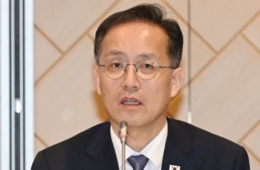
Minister Park Honggeun explained, "Due to the recent boom in semiconductors, we project that next year’s national tax revenue will increase by more than 190 trillion won." He continued, "The government established the Future Response Fund as a strategic investment platform to support a rebound in the potential growth rate and as a fiscal stabilization mechanism to alleviate revenue volatility, leveraging these exceptional yet possibly temporary excess tax revenues more efficiently."
He added, "Support for local governments will by no means be diminished. We will foster regional industrial hubs through three major mega projects and the creation of special mega-regional accounts, and improve living conditions through the establishment of special accounts for regional talent development and essential medical services." In addition, "To improve the financial conditions of local governments, we will expand the scope of locally preferred financial projects and broaden the coverage of regional balanced development special accounts grants," he stated.

Kim Minseok, leader of the Democratic Party of Korea, is delivering opening remarks at the 'Future Response Fund Party-Government Consultation' held at the National Assembly Members' Office Building on the 29th. 2026.09.29 Photo by Yoon Dongju
View original imageMinister Park also promised to establish local accounts within the Future Response Fund, increase investments responsive to local demands such as local future growth support funds and integrated convenience centers for public living, and expand points of interaction with local governments through bodies such as the Fund Management Deliberation Council. He reiterated that support for local governments would be strengthened under the current framework of the Future Response Fund.
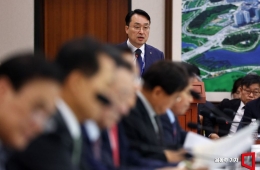
In contrast, Park Chandae, Mayor of Incheon and Chair of the Democratic Party Governors Association, argued for expanding resources for local governments. Mayor Park remarked, "The fund will be most effective when the country’s and regions’ responses to the future are aligned." He added, "I ask you to ensure that the Future Response Fund can fully support local readiness for the future." Referring to past fiscal challenges during the Yoon Sukyeol administration due to tax shortfalls, he commented, "Now that tax revenues are recovering, we also hope that a share of this recovery will flow to local governments, refilling their empty coffers."
Furthermore, Mayor Park stated, "The less fiscally self-reliant a local government is, the more sensitive it is to even minor changes. The Local Allocation Tax rate has not changed for 20 years since 2006. In line with the government’s fiscal decentralization agenda, we also hope for a discussion on adjusting the Local Allocation Tax rate." He further emphasized, "We ask that the unique circumstances of local governments be carefully considered during the design of the Future Response Fund."
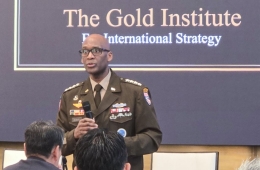
Differences in perspective were also evident among government ministries. Minister Yoon Hojung stated, "Although the 2027 Local Allocation Tax is designed to increase compared to this year, there is still some discrepancy compared to local governments’ expectations. Especially with the launch of the 9th popularly elected local governments, we are well aware that the current fiscal situation facing local governments is challenging and thus the heads of local governments have many concerns." He added, "Based on the opinions shared today between the government, party, and local governments, we hope to supplement the design and operation of the Future Response Fund."
He particularly emphasized, "The Future Response Fund is not limited to a growth policy led by the central government—it should serve as a comprehensive policy tool that can play a central role in resolving the fiscal challenges of local governments, such as integrated support for metropolitan governments and addressing their financial difficulties."
Hot Picks Today
 "I thought getting into a big company was the goal"... The 'position' only 1 in 121 employees reaches
- [Exclusive] Piling medicines into a basket and setting them on the counter: "Ready to check out?" ... Misuse concerns mount, but the government remains in the dark.
- "Jealous of Koreans" - Now a Must-Do on Every Trip... The Place Where Foreigners Spent KRW 229.8 Billion
- "'No! Dad, Run!'... Father Moved by 5-Year-Old Son Who Shielded Him from Ghost at Korean Folk Village"
- "Please Let Me Go Home"... Customers Trapped in Department Store Parking Lot for 5 Hours Vent Their Anger
Meanwhile, on this day, the ruling party and government agreed to use the occasion mainly as an opportunity to listen to opinions, rather than to draw a conclusion.
© The Asia Business Daily. All rights reserved. Unauthorized AI training and use prohibited.


!["Please, Just Take Them Off" - They Made It All the Way to Bed... Then Fecal Bacteria Struck [Deep Scroll]](https://cwcontent.asiae.co.kr/asiaresize/307/2026101610053063338_1792112730.png)