"Military Criminal Law for Students?"... Recommendation for System Reform at Air Force Aviation Science High School
Human Rights Commission Criticizes Application of Military Criminal Act to Minor Students
Justice Ministry: “Accepts Application of Juvenile Act, Will Pursue System Reforms”
Defense Ministry Reviews Special Provisions: “Military Law to Be Limited to Necessity Only”
The National Human Rights Commission of Korea has recommended revising the system that applies the Military Criminal Act and Military Court Act to students of the Air Force Aviation Science High School, solely based on their status as noncommissioned officer (NCO) candidates.

In May, a prototype of the domestically produced supersonic fighter jet KF-21 took off at the Air Force 3rd Training Flight Group in Sacheon, Gyeongnam. This is not directly related to the article. Photo by Joint Press Corps
View original imageOn the 29th, the Commission announced that it had recommended to both the Ministry of National Defense and the Ministry of Justice that the system be revised so that students at the Air Force Aviation Science High School, as minors, are subject to the Juvenile Act. The Ministry of Justice has accepted this recommendation, while the Ministry of National Defense has only partially accepted it.
The Air Force Aviation Science High School is an institution dedicated to training technical noncommissioned officers for the Air Force. While enrolled, students hold the status of NCO candidates. For this reason, unlike other general high school students, they may be subject to the Military Court Act and the Military Criminal Act. However, the Human Rights Commission determined that it is inappropriate to apply military law to students who are minors. The Commission judged that such an approach fails to sufficiently consider the protections necessary for children and adolescents.
The Ministry of Justice said that it would reform the system so the Juvenile Act can also be applied to enrolled students. However, it explained that for actual implementation, measures at the level of the Ministry of National Defense—such as changing the status of students—must precede. The Ministry of National Defense stated that it would prepare special provisions so that military law is applied only to areas necessary for those in military service.
Hot Picks Today
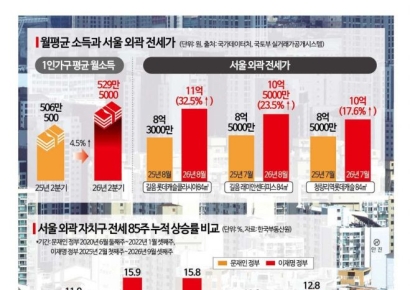 While Monthly Income Rises by 230,000 Won, Jeonse Jumps by 200 Million Won... Jeonse Surpasses Moon Administration after Sales
- [The World of Kickbacks]②Hanaro Mart Vendor Who Refused "Secret Money" Forced to Close After 10 Years
- [Regulation-Bound NPO②] Even a Century-Old Organization Faced High Barriers with the Permit-Based System
- "One in Three Unsuitable for Marriage": 72-Year-Old Professor's Diagnosis Sparks Fierce Debate Among Chinese Netizens
Meanwhile, the Human Rights Commission also raised issues with prohibiting transfers for students of the Air Force Aviation Science High School and restricting midterm discharges during the seven-year mandatory service period after graduation. However, the Ministry of National Defense expressed a cautious stance on this recommendation, citing concerns that securing skilled technical NCOs could be compromised. Instead, it plans to strengthen career guidance and related information at the stage of admission.
© The Asia Business Daily. All rights reserved. Unauthorized AI training and use prohibited.

!["Failed Even With Net Assets of 400 Million Won?"... Six Criteria That Define 'The Real Middle Class' [Data Pick]](https://cwcontent.asiae.co.kr/asiaresize/307/2026092809144741876_1790554486.jpg)